There’s a particular kind of evening that a well-stocked pantry solves: it’s 5:45 p.m., you have no plan, nothing thawed, and the idea of going to the store is unbearable. With the right staples on hand, you can still put a real dinner on the table.
This post gives you a list of the foods that do most of that work. It’s not a minimalist list or a gourmet one. It’s the set of ingredients that combine into the largest number of meals for the least money, so you can cook from what you have.
What makes a good pantry staple
A staple earns its shelf space if it:
- Lasts a long time (shelf-stable, frozen, or long-lasting in the fridge)
- Works in many meals
- Costs little per serving
- Is something your household actually eats
That last point is the most important. A shelf of ingredients you never use is clutter. Adapt the list to your tastes.
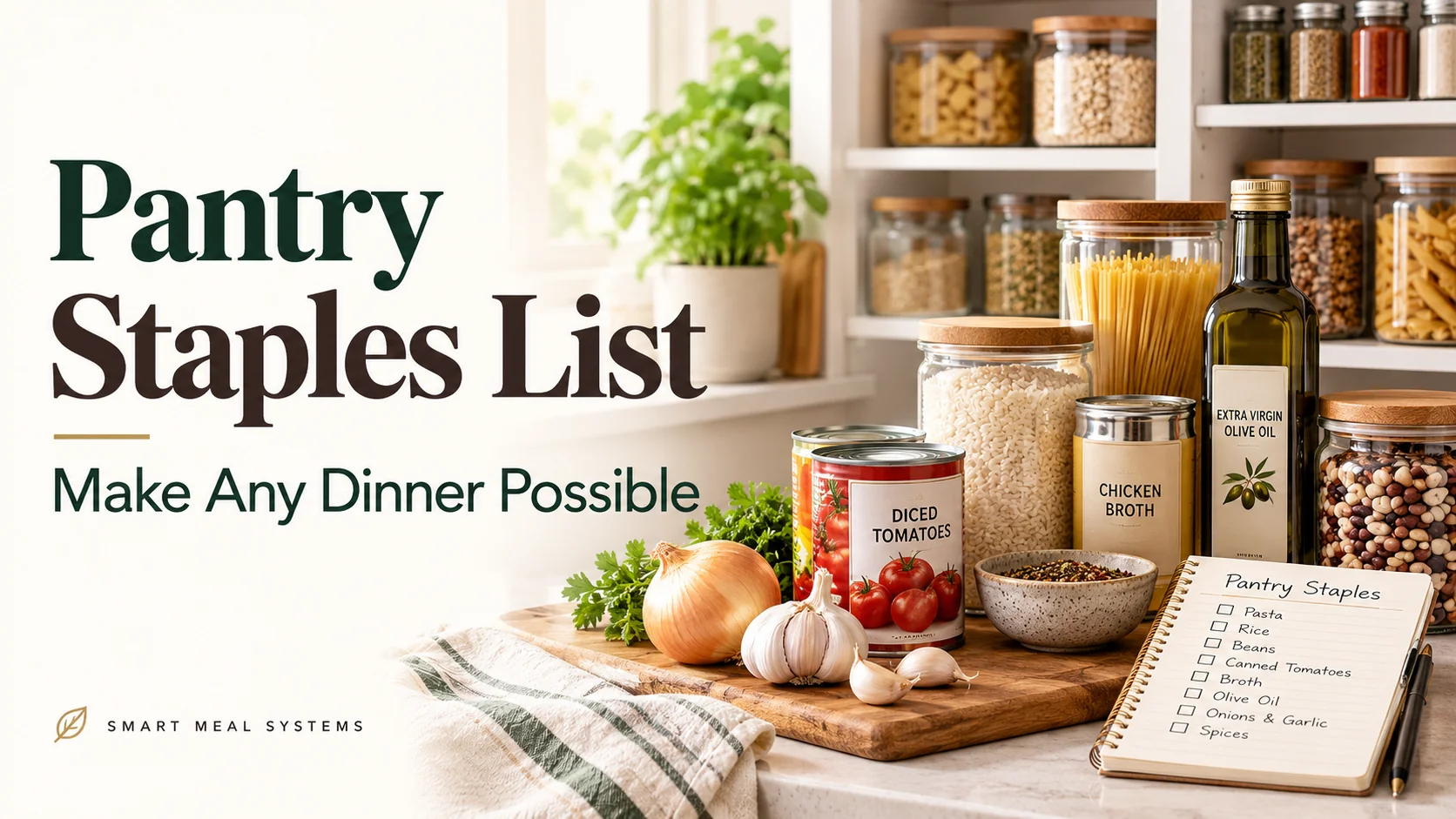
The staples list
Grains and starches
- Rice (white, brown, or both)
- Pasta in two or three shapes
- Oats
- Tortillas (also freeze well)
- Bread or a loaf in the freezer
- Potatoes and sweet potatoes
- Couscous or quinoa
Canned and jarred
- Canned tomatoes (diced, crushed, and paste)
- Canned beans: black, chickpeas, white, kidney
- Canned tuna or salmon
- Broth or stock (cartons or cubes)
- Jarred pasta sauce
- Coconut milk
- Salsa
- Canned corn or other vegetables
- Peanut butter or other nut butter
Dried legumes
- Lentils
- Dried beans (if you plan ahead)
- Split peas
Oils, vinegars, and sauces
- Cooking oil and olive oil
- Vinegar (white, apple cider, or red wine)
- Soy sauce
- Hot sauce
- Mustard, ketchup, mayonnaise
- Honey or maple syrup
Baking and seasoning basics
- Salt and pepper
- Flour, sugar, baking powder, baking soda
- Garlic powder, onion powder
- Paprika, cumin, chili powder
- Italian seasoning or oregano
- Curry powder
- Cinnamon
- Bouillon (if you use it)
Fresh items that keep
- Onions and garlic
- Carrots
- Cabbage
- Apples and citrus
- Eggs
- Butter
- Hard cheese, like cheddar or parmesan
Freezer staples
- Frozen vegetables: peas, broccoli, spinach, corn, mixed
- Frozen fruit
- Chicken breasts or thighs, in portions
- Ground meat or turkey
- Frozen fish fillets or shrimp
- Bread or tortillas
- A couple of prepared freezer meals, if you batch cook
What you can make from this list
Here are a few meals that need only staples plus one or two extras.
| Meal | What you need |
|---|---|
| Pasta with tomato sauce and beans | Pasta, canned tomatoes, white beans, garlic, frozen spinach |
| Bean and cheese quesadillas | Tortillas, canned beans, cheese, salsa |
| Fried rice | Rice, eggs, frozen vegetables, soy sauce |
| Lentil soup | Lentils, onion, carrot, broth, canned tomatoes |
| Chickpea curry | Chickpeas, coconut milk, curry powder, onion, rice |
| Tuna melts | Tuna, mayonnaise, bread, cheese |
| Egg and potato hash | Potatoes, eggs, onion |
| Peanut noodles | Pasta, peanut butter, soy sauce, frozen vegetables |
| Chili | Canned tomatoes, beans, ground meat or extra beans, chili powder |
| Breakfast for dinner | Eggs, oats or bread, frozen fruit |
What to Cook When You’re Snowed In: The Pantry System and The January Pantry-First Meal Plan show how to build whole weeks from these kinds of ingredients.
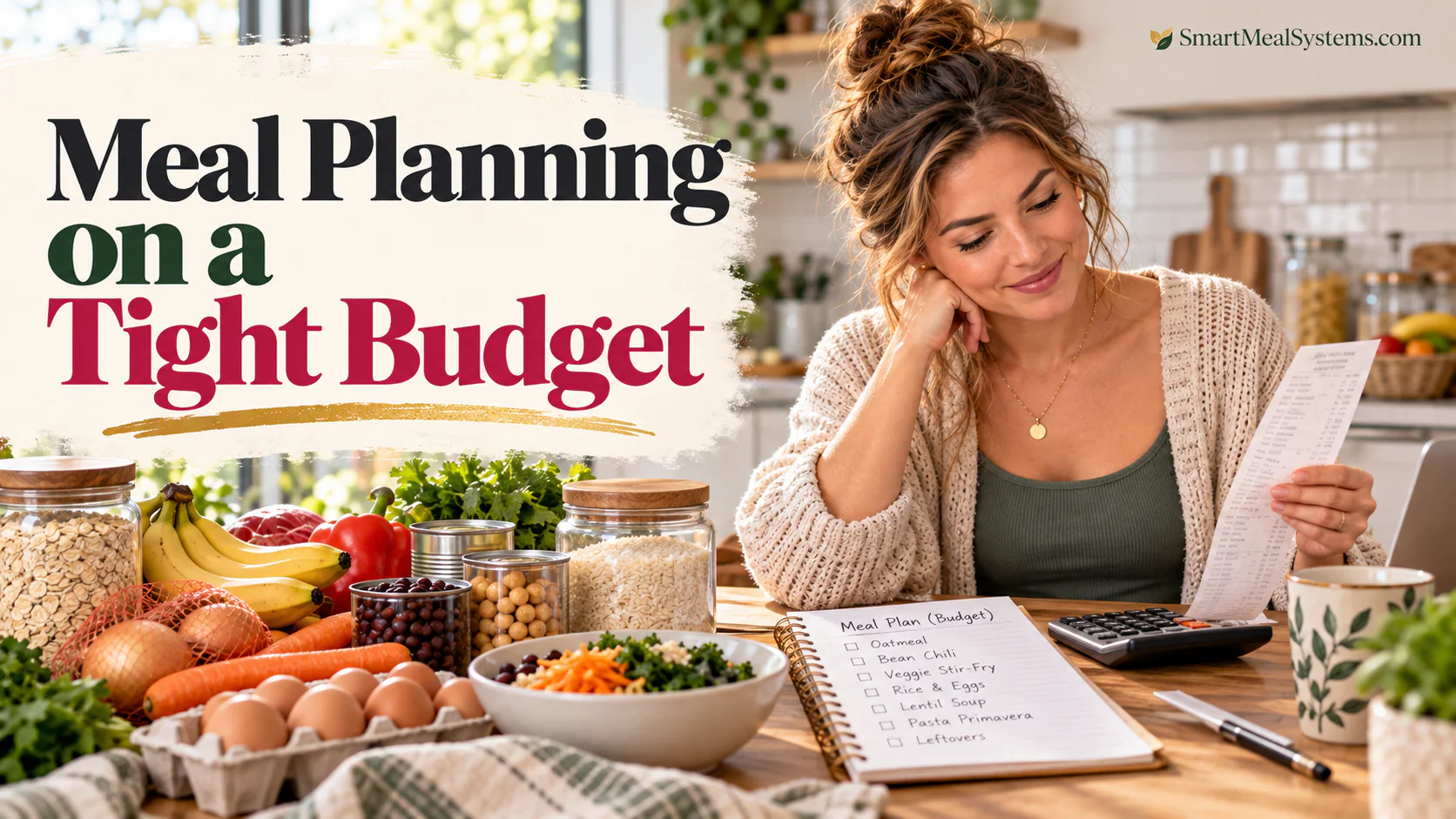
How to build it on a budget
You don’t have to stock the whole list at once.
- Start with what you already use. Check what’s in the kitchen and make a list of your most-used ingredients.
- Add two or three items a week. Buy extras of staples when they’re on sale.
- Prioritize the multi-use items: rice, pasta, canned tomatoes, beans, eggs, and frozen vegetables.
- Buy store brands for basics.
- Skip specialty items until you know you’ll use them.
See How to Build a Grocery Budget From Scratch for the bigger picture.
How to organize it
A pantry is only useful if you can see what’s in it.
- Group by category: grains, cans, baking, snacks.
- Use clear containers for loose items.
- Put older items in front and newer ones behind.
- Label shelves if you share the kitchen.
- Keep a running list of what’s low, on the fridge or in your phone.
Pantry Organization System by Category gives a full approach.
How to keep it from becoming a junk drawer
Pantries tend to fill with duplicates and forgotten cans. A few habits prevent it.
- Check before you buy. Don’t pick up a third jar of cumin.
- Use the oldest first.
- Follow a one-in, one-out rule. The One-Ingredient-In, One-Meal-Out Pantry Method is built around this.
- Do a quick audit every month or two. Pull out what’s expired or unused.
- Plan meals around what needs using up.
Adapting the list
For a small household. Buy smaller sizes or fewer items, and rely more on frozen foods.
For a large family. Buy staples in bulk, and store extra in a freezer or storage bins.
For dietary needs. Swap in gluten-free pasta, plant-based proteins, or lactose-free dairy as needed.
For a vegetarian-leaning kitchen. Add extra beans, lentils, tofu, and nuts. See The Vegetarian-Leaning Week.
For a low-cooking kitchen. Lean on canned soup, frozen meals, and tortillas. See How to Meal Plan When You Hate Cooking.
A printable pantry check
Before you shop, run through the list:
- Which staples are running low?
- Which could I use in the next few meals?
- Do I have a protein, a starch, and a vegetable option for emergency nights?
- What’s expiring soon?
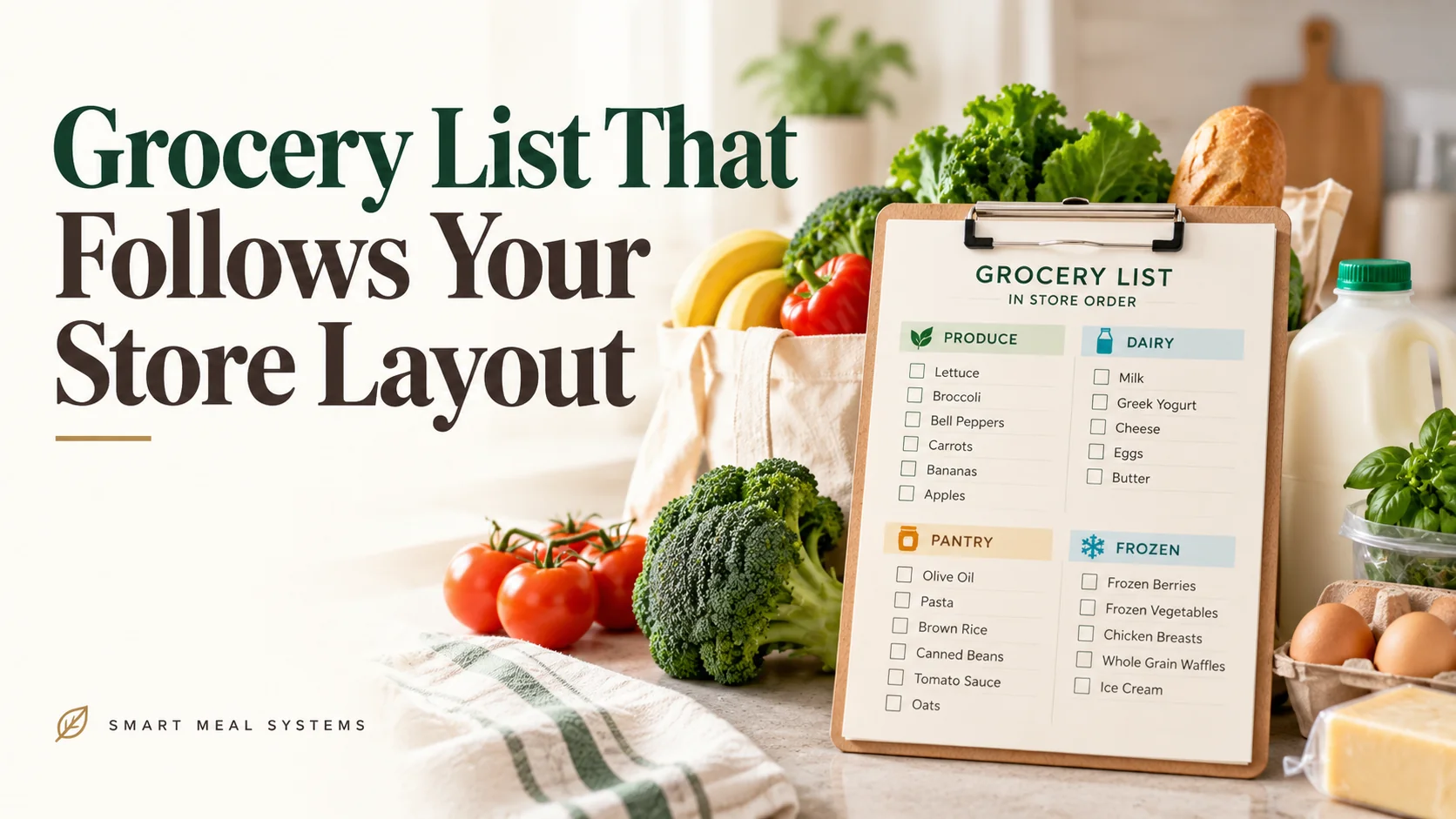
Add whatever’s low to your grocery list. The free Grocery List Generator can organize it by store section.
Common mistakes
Stocking up on trendy ingredients. Buy what you will use.
Having no protein in the pantry. Keep beans, lentils, canned fish, or eggs.
Forgetting seasonings. Spices make staples taste like real meals.
Letting things expire. Rotate and check dates.
Overbuying on sales. Only stock up on what you’ll eat.
Your first pantry check
- Pull everything out of one shelf and see what you have.
- Compare it to the list above.
- Mark what’s missing for your most common meals.
- Add two or three items to your next grocery run.
- Plan a “pantry night” this week.
Make this easier
Tick what you have in the free Pantry Dinner Builder to see what you can cook tonight, then plan a pantry-first week with the Dinner Rotation Builder.
A good pantry is an insurance policy against the worst nights of the week. Stock the basics, keep them visible, and dinner is always possible.
Turn the idea into a system.
Keep Reading