You don’t have to be a strict vegetarian to want more meatless dinners. Many people just want to eat less meat, spend less on groceries, or add more vegetables and beans to their week. The problem is that “go meatless” can feel like starting over: new recipes, unfamiliar ingredients, and a household that asks, “where’s the meat?”
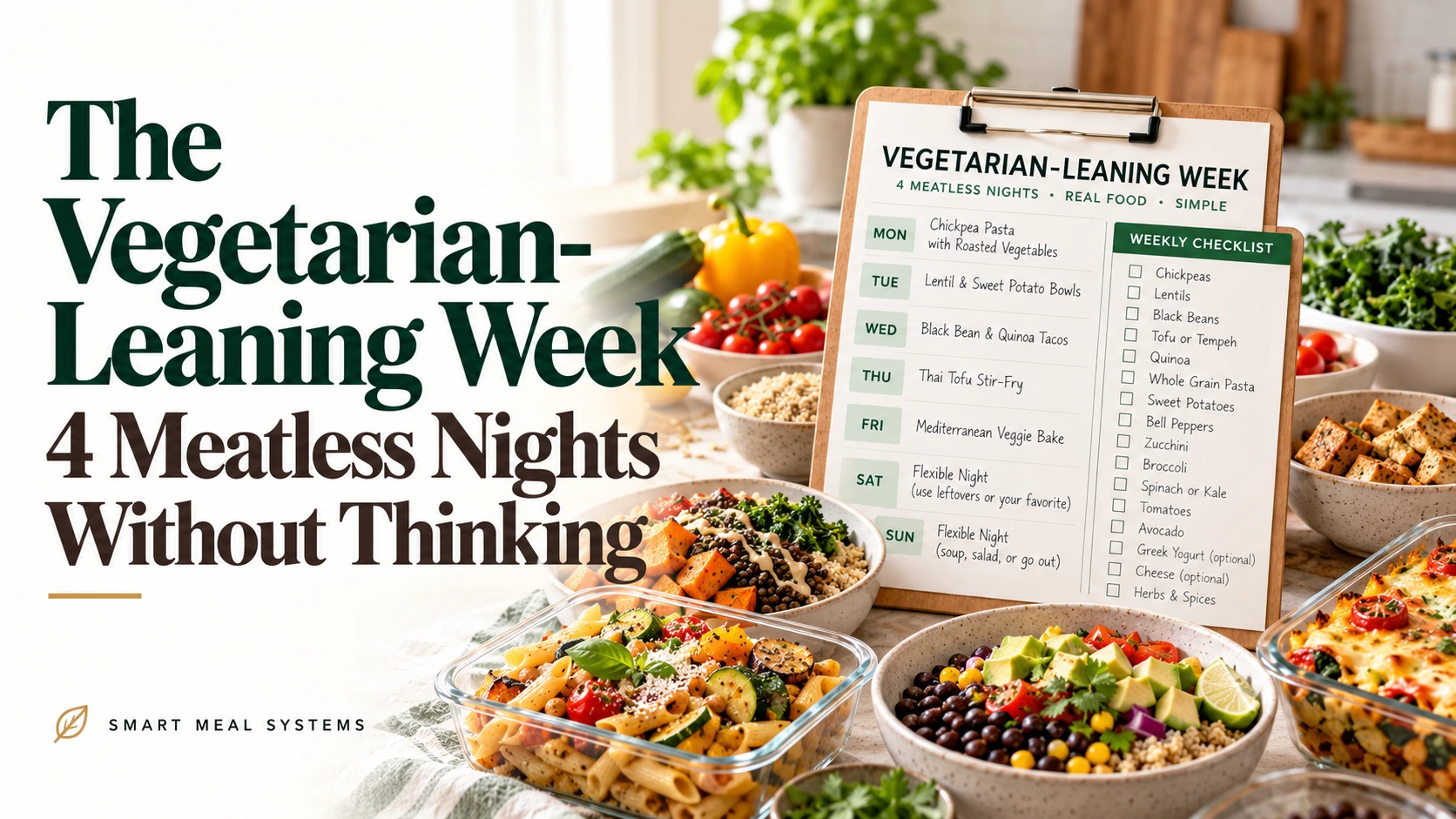
A system helps. This post describes a vegetarian-leaning week: four meatless nights, three flexible ones, and a set of reliable meals so you don’t have to think.
Why a “leaning” approach works
All-or-nothing changes tend to fade. A flexible target is easier to keep.
- It’s less disruptive. Everyone still has familiar meals on some nights.
- It’s cheaper. Beans, lentils, eggs, and vegetables often cost less than meat.
- It’s easier to learn. You build a small repertoire gradually.
- It’s adaptable. You can adjust it for guests, events, and tastes.
Four meatless nights out of seven is a sensible starting point. Adjust to fit your household.
The key to filling meatless meals: protein and substance
The most common complaint about meatless dinners is that they aren’t filling. Fix that by including a satisfying anchor.
| Anchor | Examples |
|---|---|
| Beans and legumes | Black beans, chickpeas, lentils, white beans |
| Eggs | Frittata, omelets, fried rice, shakshuka |
| Tofu and tempeh | Stir-fry, tacos, baked tofu bowls |
| Cheese and dairy | Quesadillas, baked pasta, paneer |
| Grains | Rice, quinoa, barley, farro |
| Nuts and seeds | Peanut sauces, toasted nuts on bowls |
| Starchy vegetables | Potatoes, sweet potatoes, squash |
A plate with a protein anchor, a grain or starch, and vegetables will feel like a full meal.
Step 1: Choose your four meatless meals
Start with a handful of reliable dishes. You can choose from these categories, or use your own.
Pasta night. Pasta with tomato sauce and white beans, pesto pasta with peas, or baked ziti with spinach.
Taco or burrito night. Black bean tacos, sweet potato tacos, or burrito bowls with rice, beans, and corn.
Soup and bread. Lentil soup, minestrone, tomato soup with grilled cheese, or white bean and kale soup.
Egg night. Vegetable frittata, breakfast for dinner, or egg fried rice.
Stir-fry or bowl night. Tofu and vegetable stir-fry, peanut noodle bowls, or grain bowls with roasted vegetables.
Curry night. Chickpea curry, lentil dal, or coconut vegetable curry.
Baked potato bar. Potatoes with beans, cheese, broccoli, and toppings.
Choose four and put them on a rotation. Once they’re familiar, add one new meal a month.
Step 2: Put them where they fit
Match meatless meals to the nights they’re easiest.
| Night | Plan |
|---|---|
| Monday | Meatless: bean tacos |
| Tuesday | Meat: slow-cooker chicken |
| Wednesday | Meatless: pasta with sauce and beans |
| Thursday | Meat or leftovers |
| Friday | Meatless: egg or pizza night |
| Saturday | Flexible |
| Sunday | Meatless: soup or curry |
Many meatless dishes are quick, so they suit busy weeknights. 15-Minute Dinners for the Busiest Weeks has some ideas that work without meat.
Step 3: Stock a meatless pantry
With the right pantry, you can make many meals without a special trip.
- Canned beans (black, white, chickpeas, kidney)
- Dried lentils
- Rice, pasta, quinoa, oats
- Canned tomatoes and tomato paste
- Coconut milk
- Vegetable broth
- Peanut or other nut butter
- Soy sauce or tamari
- Spices: cumin, paprika, chili powder, curry powder
- Frozen vegetables
- Eggs and cheese
Pantry Organization System by Category can help you keep track.
Step 4: Make the whole family comfortable
If other people in your household are skeptical, these strategies help.
- Start with familiar meals that happen to be meatless: pizza, pasta, quesadillas, breakfast for dinner.
- Make meat optional. Serve a meatless base and let people add chicken or sausage on the side.
- Use build-your-own formats like taco bars and bowls.
- Don’t announce it. Just serve a good meal.
- Season well. Flavor makes a difference. Use spices, herbs, acid (lemon, vinegar), and salt.
- Add texture: crispy toppings, nuts, seeds, roasted vegetables.
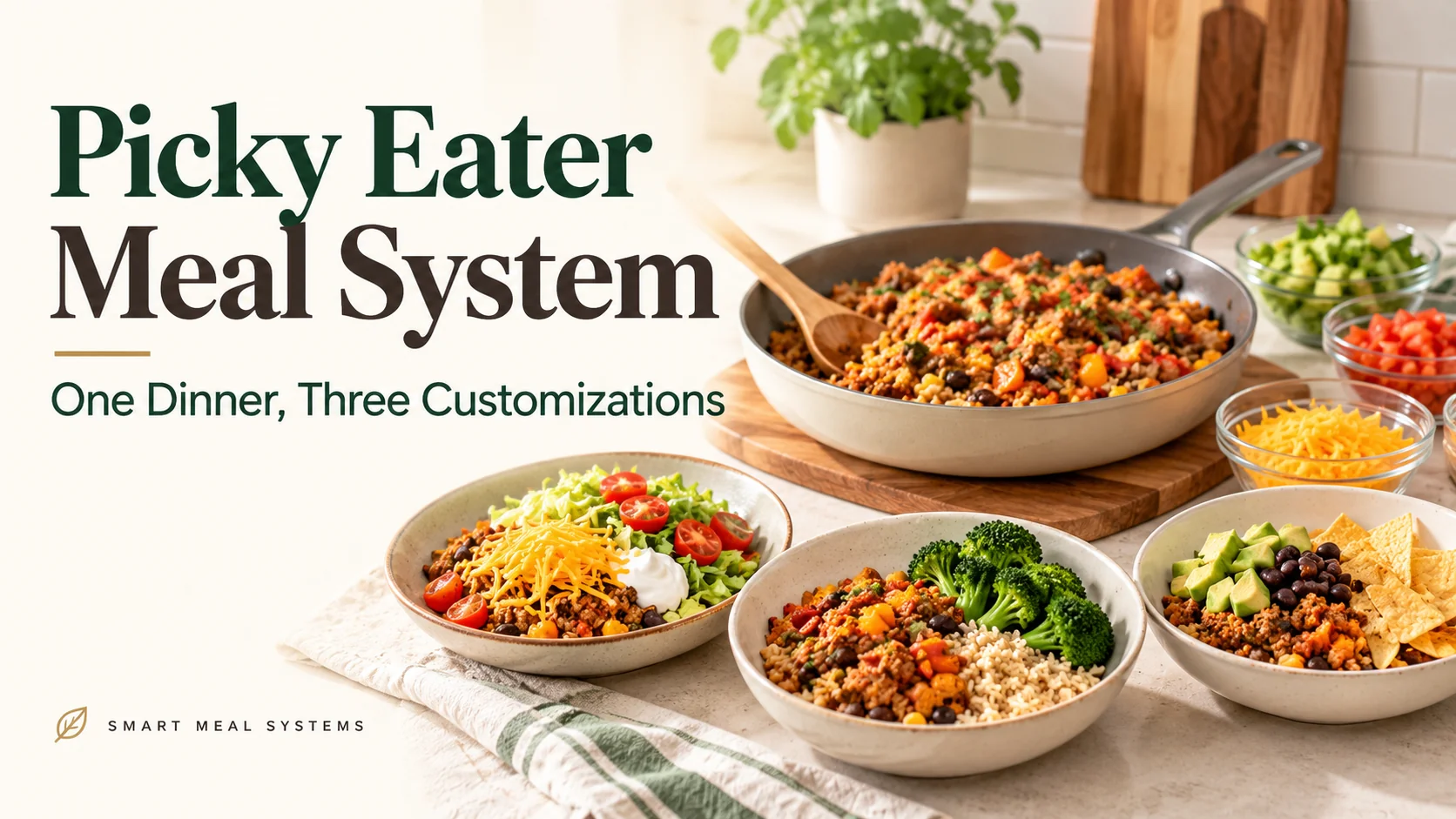
For picky eaters, see The Picky Eater Meal System.
Step 5: Batch cook the basics
A few prepared components make meatless dinners faster.
- A pot of beans or lentils
- A tray of roasted vegetables
- A pot of rice or grains
- A batch of sauce, like tomato sauce or peanut sauce
- Baked tofu
Combine them in different ways: burrito bowls on Monday, pasta with beans on Wednesday, curry on Sunday. How to Batch Cook: The Complete Guide shows how to store them.
A sample vegetarian-leaning week
| Day | Dinner | Type |
|---|---|---|
| Monday | Black bean and sweet potato tacos | Meatless |
| Tuesday | Sheet-pan chicken and vegetables | Meat |
| Wednesday | Pasta with white beans, spinach, and lemon | Meatless |
| Thursday | Leftover chicken in rice bowls | Meat |
| Friday | Vegetable frittata with salad and bread | Meatless |
| Saturday | Burgers or pizza | Flexible |
| Sunday | Lentil soup with grilled cheese | Meatless |
Four meatless nights, with none requiring unfamiliar techniques.
Saving money with meatless nights
Meatless dinners often cost less, particularly when built on beans, lentils, eggs, and seasonal vegetables.
- Dried beans and lentils cost very little per serving.
- Eggs are an affordable protein.
- Frozen vegetables reduce waste.
- Buying in-season produce keeps costs down. See Seasonal Produce Budget Guide.
How to Build a Grocery Budget From Scratch shows how to track the savings.
Nutrition notes
If you’re cutting back on meat, it’s worth paying attention to protein, iron, vitamin B12, and other nutrients, especially if you go fully vegetarian or vegan. A mix of beans, whole grains, nuts, seeds, eggs, dairy, and vegetables covers a lot, but individual needs vary. If you have health conditions, are pregnant, or are feeding young children, consider talking to a doctor or registered dietitian.
Common mistakes
Making meatless meals that are mostly side dishes. Add a protein anchor.
Under-seasoning. Use flavor generously.
Trying too many new recipes at once. Start with four reliable ones.
Replacing meat with only cheese. Add beans, lentils, and eggs.
Giving up after one unpopular dinner. Swap that dish for another.
Your first week
- Choose two meatless meals your family already likes.
- Add two new ones from the lists above.
- Stock a few meatless pantry staples.
- Batch cook beans or rice on the weekend.
- Write the grocery list from the plan.
Make this easier
Use the free Dinner Rotation Builder to place your meatless nights in a repeating week.
A vegetarian-leaning week is a small, flexible change. With a handful of reliable meals, meatless nights become one more part of your routine instead of a project.
Turn the idea into a system.
Keep Reading