When money is tight, groceries are one of the few parts of the budget you can change quickly. But cutting at random can backfire. You end up with food that doesn’t make meals, wasted money, and a household that is hungry and frustrated.
This guide gives you an order. It starts with the cuts that cost you the least and moves toward the harder ones only if you need them.
First, a note
If you are struggling to afford enough food, you are not failing at budgeting. Prices rise, and household incomes do not always keep pace. Local food banks, community fridges, and benefit programs such as SNAP (where eligible) exist for exactly this situation, and using them is practical, not shameful. Check what is available in your area.
Everything below is about stretching the money you do have.
The order of cuts
Think of it as five tiers. Start at the top, and only move down if you still need to.
Tier 1: Cut waste (costs you nothing)
Before you reduce what you eat, reduce what you throw away. Food that gets tossed is money you spent for no benefit.
- Do a weekly fridge check before you shop. See How to Stop Wasting Groceries.
- Plan leftovers on purpose.
- Freeze what you cannot finish.
- Use the oldest items first.
For many households, this tier alone makes a noticeable difference.
Tier 2: Cut convenience (small quality change)
Convenience costs more per serving. Cutting it saves money while giving up little.
- Pre-cut produce, single-serve snacks, and bottled drinks
- Packaged meals and boxed sides
- Pre-shredded cheese and pre-marinated meat
- Name brands for items where the store brand is fine
You pay for the time you save. If your time is tight, keep one or two conveniences that matter most and drop the rest.
Tier 3: Cut extras (moderate)
Extras are items the household wants but does not need to survive a week.
- Snacks and sweets
- Soda, juice, and specialty drinks
- Specialty ingredients for one recipe
- Many types of the same thing (five kinds of cereal)
You don’t have to eliminate these. Reduce them. For example, keep one snack category, or buy treats only every other week.
Tier 4: Cut variety in the expensive categories (more noticeable)
If you are still over budget, shift what you buy in the priciest areas.
- Meat: use smaller portions, mix with beans or grains, and choose cheaper cuts such as chicken thighs, ground meat, or whole chickens.
- Produce: favor in-season, frozen, and long-lasting options such as cabbage, carrots, and onions.
- Dairy: buy larger blocks or store brands.
- Fish: switch to canned or frozen.
See The Seasonal Produce Budget Guide for a way to shop produce by price.
Tier 5: Cut meal complexity (last resort)
If you are still short, simplify the meals themselves: fewer ingredients, fewer sides, more one-pot and pantry-based dinners. This is not a punishment. Many simple meals are filling, cheap, and quick.
What not to cut
Some things are worth protecting, even when money is short.
Protein sources. Eggs, beans, lentils, canned fish, and affordable meats keep people full. A meal without protein leaves you hungry, which leads to more eating later.
Basic produce. Even a small amount of vegetables and fruit makes meals more balanced. Frozen and canned produce are good options.
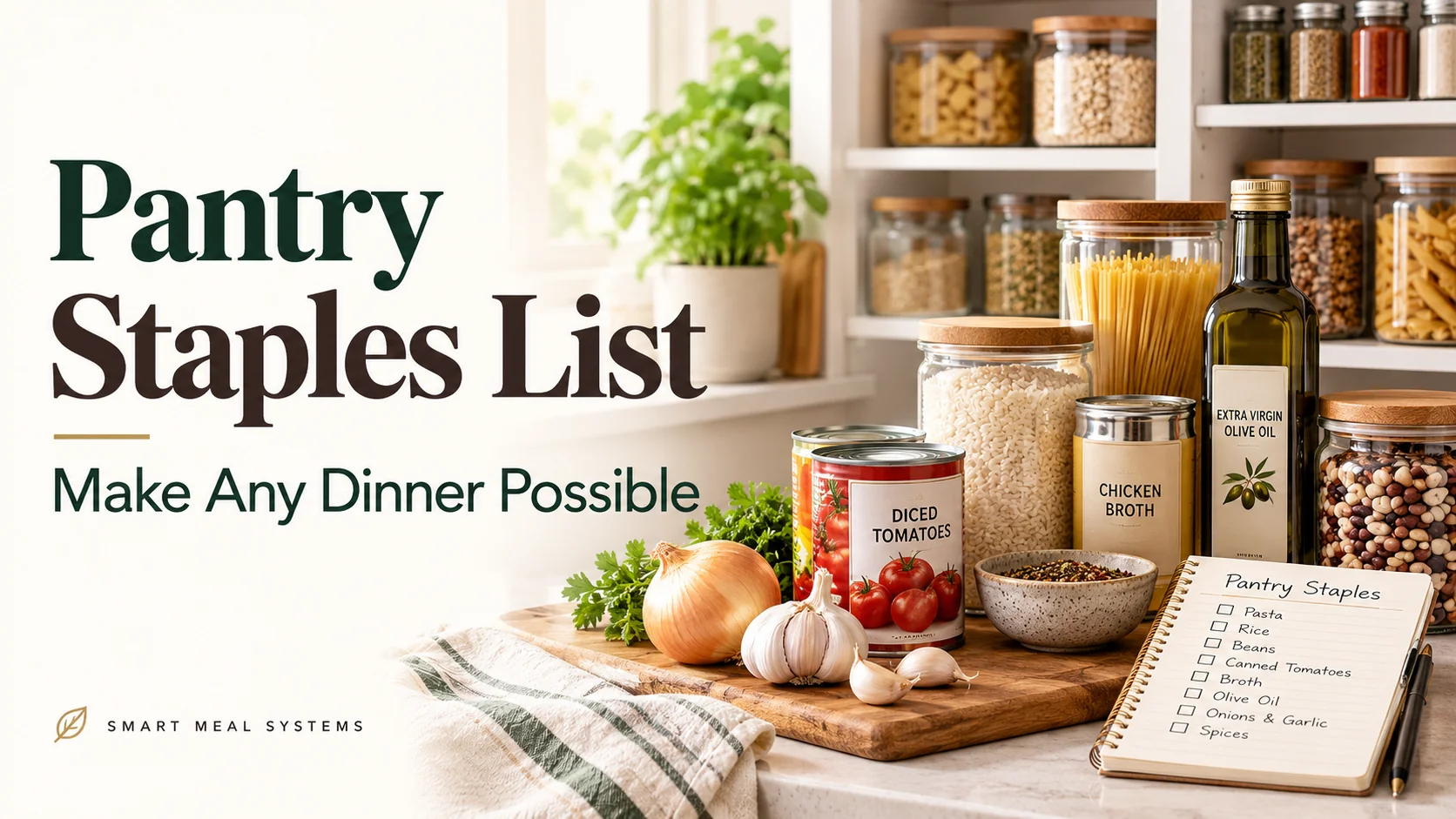
Pantry staples. Rice, pasta, oats, flour, and canned tomatoes make many meals possible. Running out of them leads to expensive emergency purchases.
Your meal plan. The cheapest dinner is one you planned. Unplanned nights lead to takeout and impulse buys.
Cheap staples that carry meals
If you are rebuilding your shopping list, start with foods that offer a lot of meals for the money.
| Food | Why it works |
|---|---|
| Dried or canned beans | Cheap protein and fiber, good in many cuisines |
| Rice | Fills a plate for pennies a serving |
| Pasta | Fast, filling, long shelf life |
| Oats | Cheap breakfast, can be baked into other dishes |
| Eggs | Quick protein for any meal |
| Potatoes | Filling and versatile |
| Cabbage and carrots | Stay fresh a long time and cost little |
| Frozen vegetables | No waste, always available |
| Canned tomatoes | The base for sauces, soups, and stews |
| Whole chickens | Several meals and stock from one purchase |
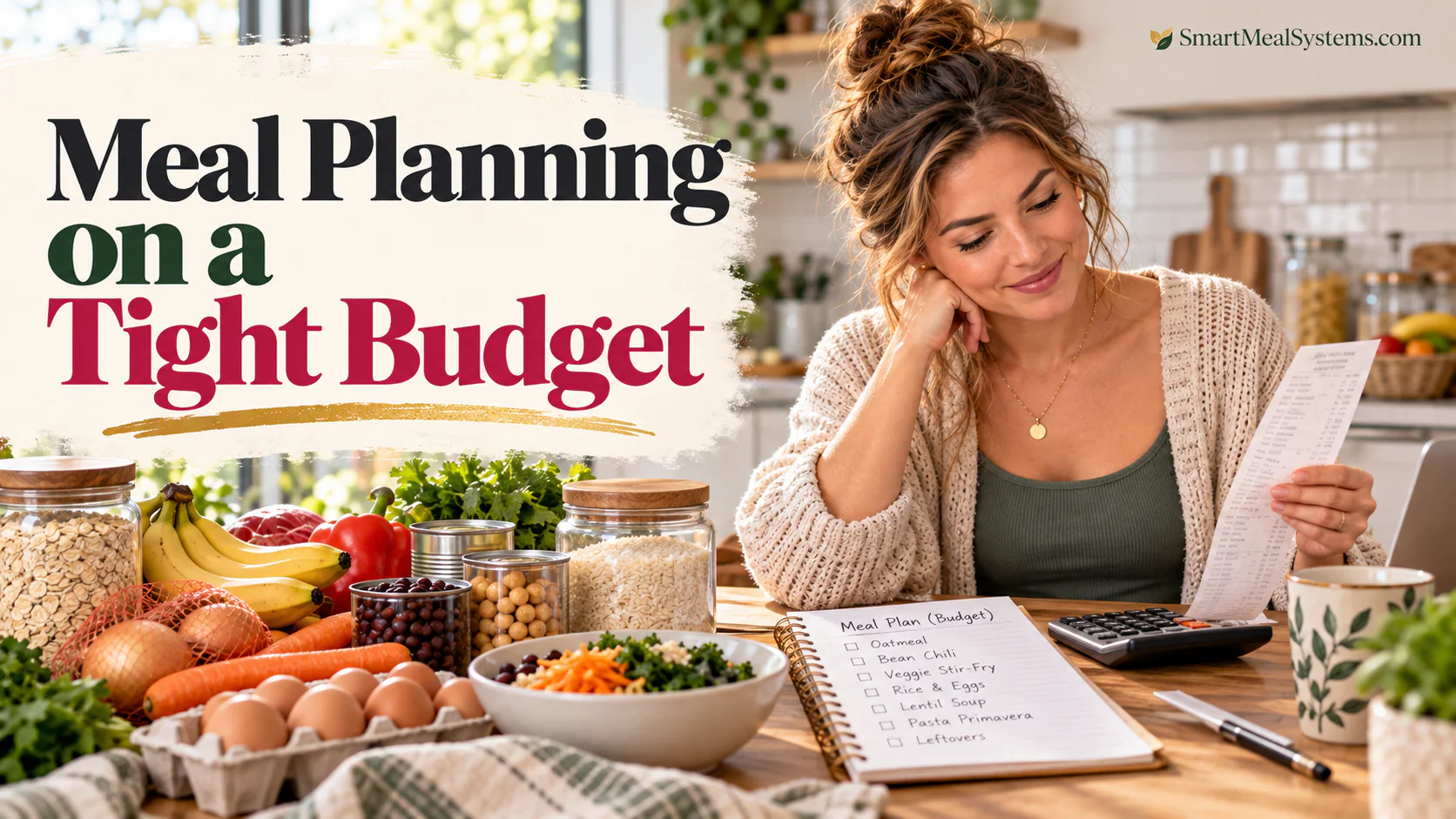
Build your plan around these, and add small amounts of other things for variety.
A budget-friendly sample week
| Day | Dinner | Notes |
|---|---|---|
| Monday | Rice and black beans with salsa | Pantry staples |
| Tuesday | Pasta with tomato sauce and frozen vegetables | Under 20 minutes |
| Wednesday | Egg fried rice | Uses Monday’s leftover rice |
| Thursday | Bean and potato soup | Stretches vegetables |
| Friday | Baked potatoes with toppings | Cheap and filling |
| Saturday | Roast chicken with vegetables | Leftovers for Sunday |
| Sunday | Chicken quesadillas | Uses leftover chicken |
The chicken is the largest single purchase, and it feeds two dinners. The rest is built from staples.
For a more detailed approach to a strict weekly number, see The $75 Weekly Grocery Budget System.
Shopping strategies that save money
- Plan around sales, not the other way around. How to Meal Plan Around What’s on Sale explains how.
- Compare unit prices (price per ounce or per pound), not the shelf price.
- Buy the bigger bag of staples if you will use it before it spoils.
- Shop at stores with the lowest prices on your staples, even if that means two stops.
- Buy meat in family packs and freeze it in portions.
- Check the discount or markdown section for items you can freeze or cook soon.
- Avoid shopping hungry.
- Don’t add items “just in case.”
Cooking strategies that save money
- Stretch meat. Add beans, lentils, or grains to ground meat dishes.
- Make double batches of soups and stews and freeze the extra.
- Use scraps. Vegetable trimmings and bones make good broth.
- Cook from scratch where it counts, such as sauces, grains, and soups.
- Repurpose leftovers into new meals.
How to Batch Cook: The Complete Guide helps with the freezer part of the plan.
A simple tracking method
Use one number: what you spent at the store this week. Write it down, compare it with your target, and note one thing that went over or under. The goal is not detailed accounting. It is to catch a pattern before it becomes a problem. For a more structured approach, see How to Build a Grocery Budget From Scratch.
Common mistakes on a tight budget
Buying only the cheapest items, with no plan. Cheap food that does not become a meal is wasted.
Skipping protein. You’ll be hungry sooner and eat more later.
Buying large quantities you can’t store. A bargain that spoils is not a bargain.
Going to multiple stores without a list. Extra trips cost gas and encourage impulse buys.
Treating one bad week as failure. Adjust and continue.
Your starting checklist
- Do a fridge check and plan the first meals around what is in danger of going bad.
- Cut convenience items first.
- Build dinners around beans, rice, pasta, eggs, potatoes, and frozen vegetables.
- Stretch the meat you buy.
- Plan every dinner before you shop.
- Track one number a week.
Make this easier
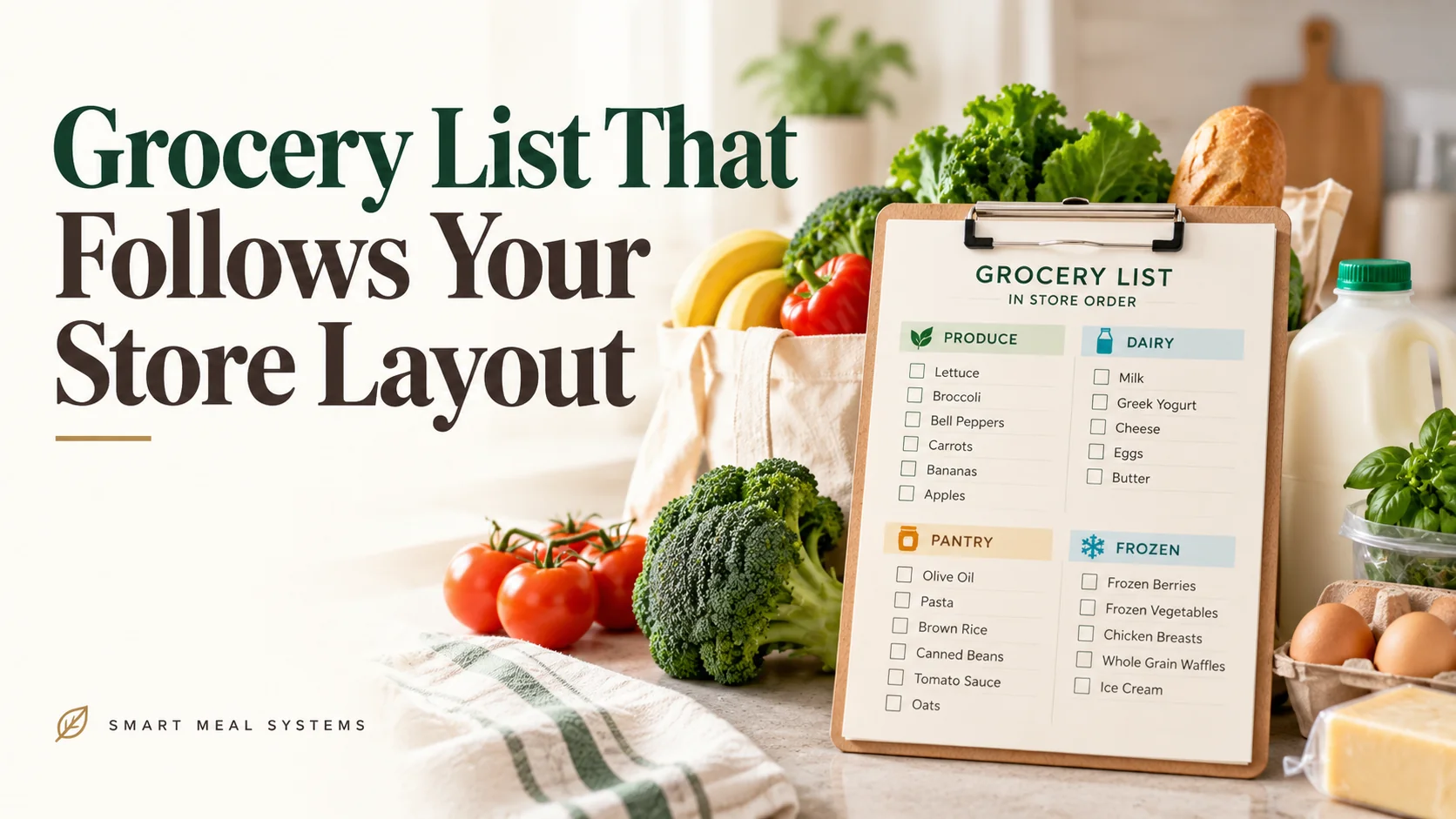
Build a repeating, low-cost week with the free Dinner Rotation Builder, then generate a shopping list with the Grocery List Generator so you buy only what the plan needs.
A tight budget changes how you shop and cook. It does not have to leave you with boring or inadequate meals. With a plan and a few good staples, you can eat well on less.
Turn the idea into a system.
Keep Reading