Pantries become overcrowded one reasonable purchase at a time.
A sale on pasta. A new sauce that looked useful. Two cans of beans “for later.” A bulk pack of rice. A specialty ingredient for one recipe.
None of those purchases is a problem by itself. The problem begins when food comes in faster than meals take it out.
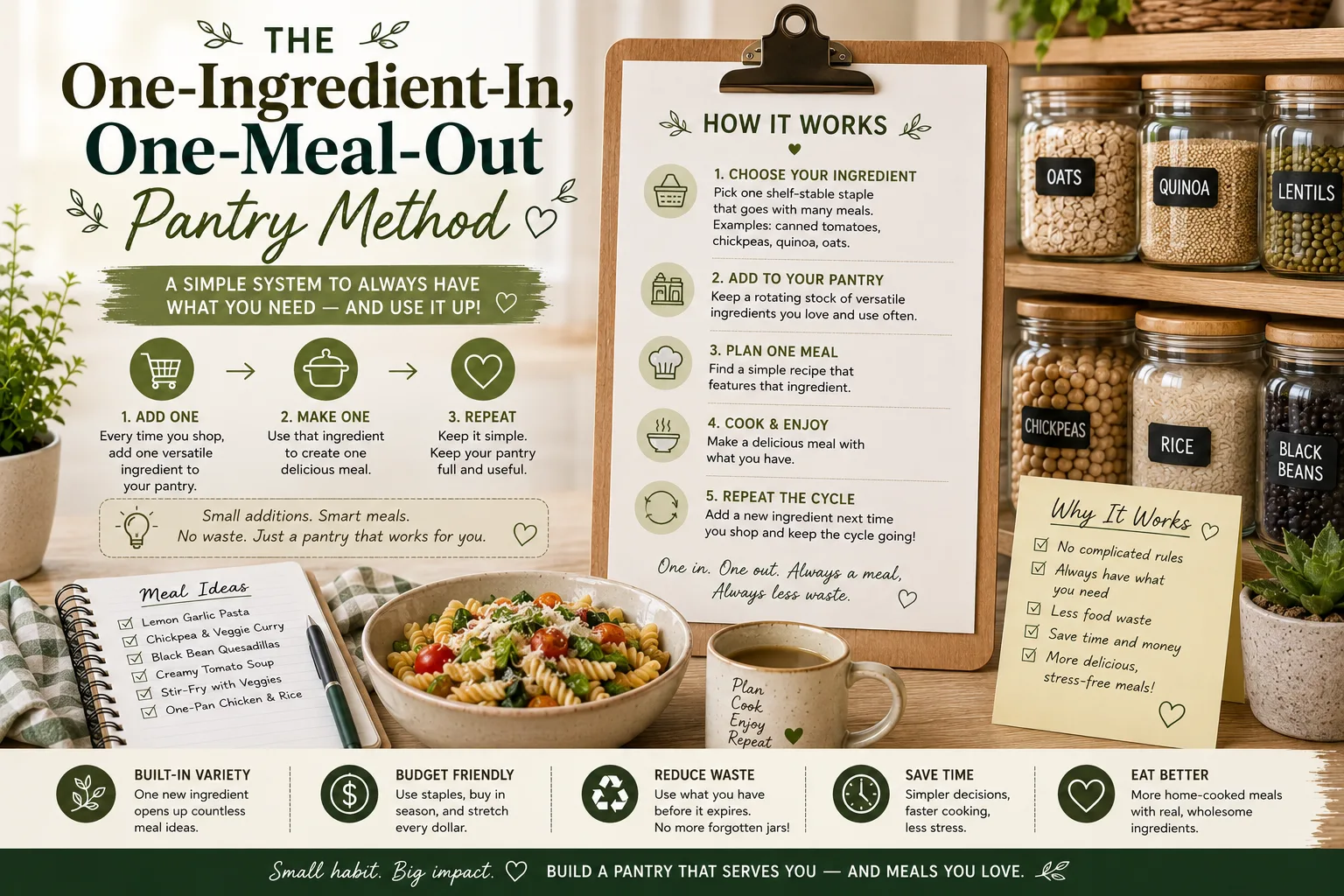
The One-Ingredient-In, One-Meal-Out method creates a simple rotation rule:
When you intentionally add a pantry ingredient beyond your normal weekly needs, connect it to a specific upcoming meal that will move pantry food back out.
It is not a strict one-for-one inventory count. It is a decision filter that keeps buying and eating connected.
What “one ingredient in” means
This method is not about milk, bananas, or other normal weekly groceries.
Use it for pantry additions such as:
- sale stock-ups;
- bulk purchases;
- new sauces or condiments;
- specialty grains;
- extra canned foods;
- baking ingredients;
- duplicate staples;
- interesting ingredients bought without a plan.
Before the item goes into long-term pantry limbo, give it a job.
What “one meal out” means
The meal does not have to use the exact new ingredient immediately.
It needs to reduce pantry inventory in a meaningful way.
Example:
You buy two extra cans of chickpeas because they are on sale.
Instead of simply adding them to an already full shelf, schedule a pantry-based meal this week:
Thursday: chickpea curry using existing coconut milk and rice.
One purchase came in. One meal moved several stored ingredients out.
The pantry stays active.
Why this works better than occasional clean-outs
Most people treat pantry overflow as a future organization project.
They keep buying normally until shelves become crowded, then declare a pantry challenge and spend two weeks trying to use everything.
The One-In, One-Meal-Out method spreads that work across normal weeks.
Instead of:
Overbuy → store → forget → overwhelm → clean out
you create:
Buy intentionally → assign meal → use inventory → replenish intentionally
Rotation becomes routine.
Step 1: define your “normal stock”
You need a rough sense of what you routinely keep.
For example:
- 2–3 pasta packages;
- 2 cans tomatoes;
- 4 cans beans;
- 1 backup rice bag;
- 1 jar pasta sauce;
- 1 broth carton;
- 1 peanut butter backup.
These numbers are not universal. A household eating pasta three times a week needs different stock from one eating it twice a month.
Normal stock is simply the amount that reliably moves through your kitchen.
The method becomes useful when you buy beyond that level.
Step 2: identify “incoming extras”
Before putting groceries away, notice purchases that increase inventory rather than replace what you used.
Examples:
- three jars of sauce bought on promotion;
- a second bag of quinoa;
- six cans of beans from a warehouse pack;
- a new curry sauce;
- bulk oats when another container is half full.
Choose one of those items and connect it to a meal within the next one or two weeks.
Step 3: choose a meal that pulls multiple ingredients out
The most effective pantry meals use more than one stored item.
New purchase: canned beans
Plan: tacos using existing tortillas + salsa + rice.
New purchase: pasta
Plan: pasta using existing tomatoes + olives + breadcrumbs.
New purchase: coconut milk
Plan: curry using existing lentils + rice + spices.
New purchase: oats
Plan: baked oatmeal using existing nuts + frozen berries.
The incoming ingredient becomes a trigger to review what it can help move.
Step 4: write the meal before shelving the item
This is the tiny behavior that makes the system work.
When you unpack an “extra,” write a meal into your planner or phone immediately.
You can also keep a small pantry note:
IN → OUT
- Extra chickpeas → chickpea curry Thursday
- Pasta sale → pantry pasta Monday
- Coconut milk → lentil curry next week
- Oats → baked oatmeal Sunday
The item is no longer “food for someday.” It has a scheduled use.
Step 5: do not replace every outgoing ingredient
Suppose pantry pasta night finishes your last jar of olives.
Do you need to add olives to the grocery list?
Only if they are a genuine staple.
The method works best when outgoing low-priority foods are allowed to disappear.
Otherwise every pantry meal creates an equal refill and total inventory never decreases.
Use the method with sales
Sales are where this rule becomes especially valuable.
Before buying multiples, ask:
- Is this a food we already use?
- How much do we currently have?
- Can I name a meal that will use it within the next two weeks?
- Do I have storage space?
If you cannot answer the third question, consider buying less.
A discount only saves money when the food replaces something you would have bought and eaten anyway.
Use it with warehouse-size packages
Bulk packages create a different problem: one purchase can represent many future meals.
Instead of forcing a literal one-meal response, create a rotation plan.
Example: 8 cans black beans.
Assign:
- Week 1: taco bowls;
- Week 2: black bean soup;
- Week 3: quesadillas;
- Week 4: rice and bean bowls.
You now know the bulk purchase has a realistic exit path.
If you cannot imagine using the quantity within a sensible timeframe, the larger package may not be a bargain for your household.
A sample pantry rotation
Starting pantry
- 3 pasta boxes;
- 5 cans beans;
- 2 cans tomatoes;
- rice;
- tortillas;
- broth;
- 2 jars sauce.
Grocery opportunity
Pasta sauce is discounted.
Old behavior: buy three jars and add them to the shelf.
New behavior: buy one or two, then schedule:
Monday: pasta + existing pasta box + new sauce
Friday: pantry minestrone + existing beans + tomatoes + broth
The sale purchase came in, but two meals moved several pantry foods out.
The red-zone shelf
If your pantry is already overloaded, designate one shelf or basket as the red zone.
Put foods there that should leave before you buy more in their category.
Examples:
- four pasta shapes;
- duplicate rice bags;
- five open snack packages;
- sauces nearing their dates;
- specialty ingredients you want to finish.
When a new pantry extra comes in, the One-In, One-Meal-Out meal should pull from the red zone whenever possible.
Categories where the rule is most useful
You probably do not need this system for every ingredient.
Use it where overstock happens:
- canned goods;
- grains;
- pasta;
- sauces;
- snacks;
- baking supplies;
- bulk breakfast foods;
- specialty ingredients.
If your spice cabinet is overflowing, adapt the rule: every new spice should connect to a meal using an older spice blend or seasoning you already own.
The weekly two-minute review
Before grocery shopping, ask:
What came into the pantry last week?
Did the planned meal happen?
What category is getting crowded?
Which ingredient should leave next?
If a planned meal did not happen, carry it forward before adding more stock.
This is a flow system, not a restriction system
You are still allowed to try new foods, buy good sales, keep emergency supplies, and maintain a well-stocked pantry.
The goal is simply to notice that storage has two directions.
Food comes in through shopping. It needs a reliable path out through meals.
When those two movements stay connected, your pantry can remain stocked without becoming a collection of forgotten purchases.
The next time you bring home an extra pantry ingredient, do not just ask where it fits on the shelf.
Ask the more useful question:
What meal will help move this—and something else we already own—back out?
That single question turns pantry management from periodic decluttering into an everyday meal-planning system.
Turn the idea into a system.
Keep Reading