If dinner at your house involves a negotiation, a separate plate of plain pasta, or the phrase “I don’t like it, it’s touching,” you are not alone. Picky eating is one of the most common sources of mealtime stress for parents, and it can turn dinner into a daily battle.
This post describes a simple approach: cook one dinner, offer it in a way that lets each person customize, and keep the pressure low. It does not require cooking three meals or giving in to every demand.
Note: this is general meal-planning advice, not medical advice. If you are concerned about a child’s growth, nutrition, or extreme food refusal, talk with your pediatrician or a feeding specialist.
Why the usual approach fails
Parents commonly fall into one of two patterns:
- Short-order cook: you make a different meal for each person. It takes more time and teaches that dinner is negotiable.
- Battle of wills: you insist everyone eat everything. Mealtime becomes a fight.
Both are exhausting. The middle path is to control what is offered and how, and let the eater control what and how much they eat from it.
The core idea: a base plus choices
Instead of a single fixed plate, serve a meal made of separate components that people assemble themselves.
Formula: one base + one or two safe options + one new or less-liked food.
For example:
- Base: rice and chicken
- Safe options: plain cucumber slices, bread
- Optional extras: sauce, cheese, a vegetable
Every person has something on the table they will eat. Nobody is forced to eat the rest. Over time, exposure builds familiarity.
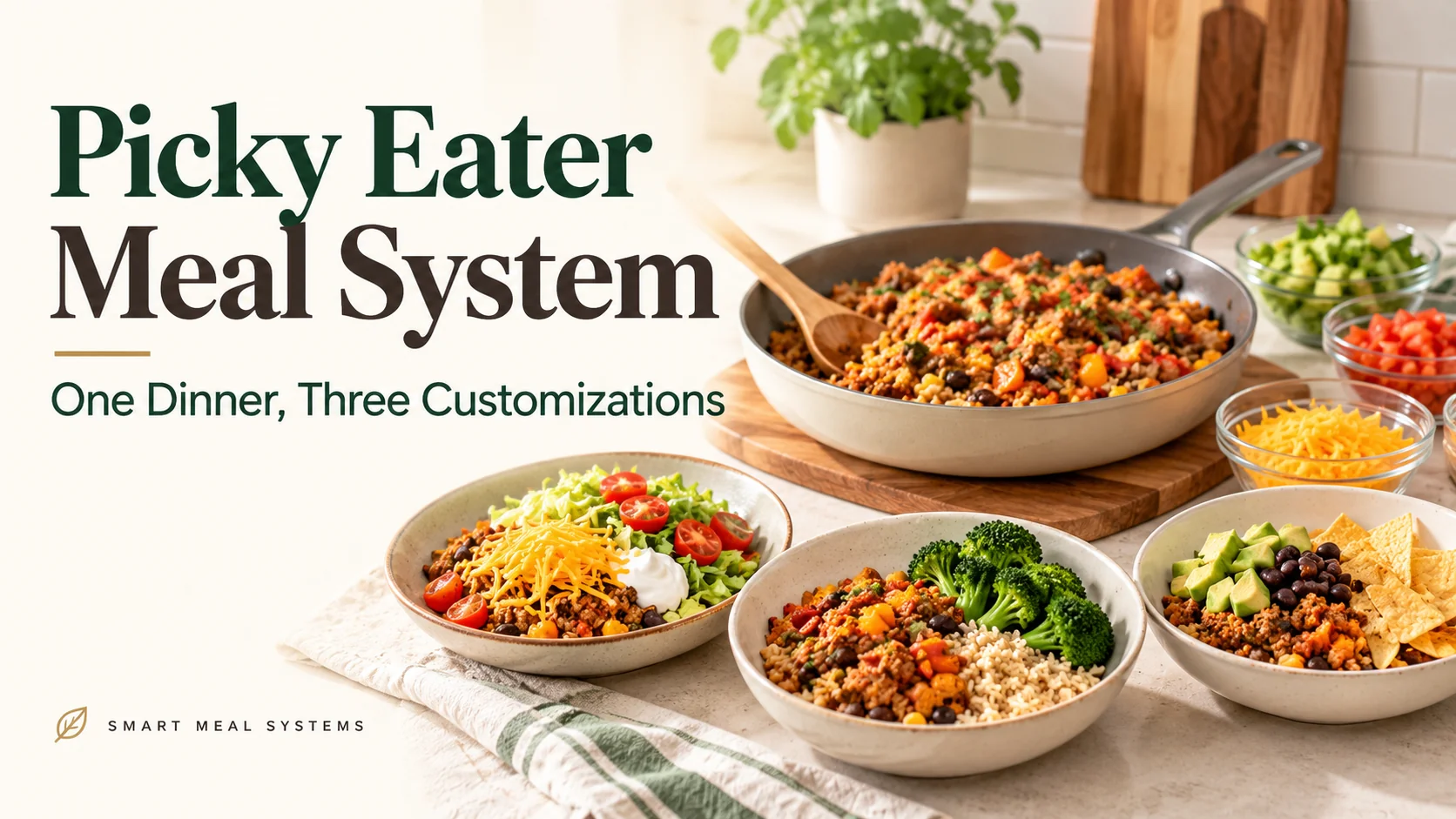
Three ways to customize one dinner
1. Deconstructed
Serve the parts of a dish separately.
- Tacos: meat, tortillas, cheese, lettuce, and salsa in separate bowls.
- Pasta: noodles, sauce, and toppings on the side.
- Stir-fry: rice, protein, and vegetables apart.
- Burgers: patty, bun, and toppings separate.
2. Build-your-own
Put out ingredients and let each person assemble a plate or bowl.
- Burrito or grain bowls
- Pizza with individual toppings
- Sandwich or wrap bar
- Baked potato bar
People who feel in control are more likely to try something.
3. Base plus sauce or spice
Cook a mild, plain base and add flavor at the table.
- Plain chicken and rice, with hot sauce, soy sauce, or cheese available
- Pasta with butter, red sauce, or pesto options
- Roasted vegetables served with dips
Parents get a simple dish, and each eater adds what they like.
The “safe food” rule
Always include at least one food on the table that each person will reliably eat. This could be bread, rice, fruit, plain pasta, cheese, or raw vegetables.
This is not a reward or a bribe. It’s a way to reduce anxiety so the child feels safe at the table and might try something else. If they eat only the safe food tonight, that’s allowed. They’ll have another chance tomorrow.
Keep the pressure low
Research on picky eating generally points toward calm, repeated exposure rather than force. Some ideas that many families find helpful:
- Serve small portions of new foods alongside familiar ones.
- Don’t require a “no thank you bite.” Allow tasting without pressure.
- Offer a food many times. It can take many exposures before a child accepts it.
- Don’t use dessert as a reward. It can make the main meal seem like a chore.
- Eat together when possible, and let children see you enjoy a variety of foods.
- Avoid commenting on what or how much a child eats.
Mealtimes should feel as neutral as possible.
Involve the picky eater
People are more willing to eat what they helped choose and prepare.
- Let them pick one dinner a week from your approved list.
- Have them wash vegetables, stir, or sprinkle toppings.
- Take them to the store and let them choose a vegetable.
- Give them a role such as setting the table.
Even small tasks build ownership.
Build a “safe list” for planning
Make a list of meals that most of your household will eat. Use it as the base of your plan and add a new element occasionally.
How to make it:
- List 8 to 10 meals everyone eats.
- Note what each person eats from it.
- Add one extra side to each meal, such as a different vegetable.
- Rotate the list each week.
This list is also the foundation of a rotation. See The 2-Week Rotating Dinner Menu and 10 Default Dinners You Can Repeat Forever.
A sample week
| Day | Dinner | Customization |
|---|---|---|
| Monday | Taco bar | Build-your-own, with beans and cheese |
| Tuesday | Pasta with sauce on the side | Plain or sauced; salad optional |
| Wednesday | Sheet-pan chicken, potatoes, and carrots | Parts served separately |
| Thursday | Breakfast for dinner: eggs, toast, fruit | Everyone has a safe option |
| Friday | Pizza night | Individual toppings |
| Saturday | Rice bowls | Choose protein, vegetable, and sauce |
| Sunday | Soup and bread | Dip bread; optional toppings |
Every night includes a familiar food, one chance to try something, and no separate dinner.
What to do when someone still refuses
Some nights, a child will eat nothing. Some tips:
- Stay calm. One meal won’t hurt them.
- Don’t cook a replacement. Offer the same foods later at the next meal or planned snack.
- Keep a boring option (like a banana or plain bread) available as the only alternative, to avoid fights.
- Check the timing. Hunger may be affected by snacks and drinks before dinner.
- Consider developmental stages. Many children go through picky phases that pass.
Handling picky adults
Some adults are picky too. The same approach works: deconstructed meals, build-your-own options, and a sauce or topping to customize. Agree on a few shared meals and let each person add their own extras.
For couples, Meal Planning for Two has more on differing tastes.
Common mistakes
Cooking to order. It adds work and sets an expectation.
Hiding vegetables as the only strategy. It can help occasionally, but it doesn’t build familiarity.
Giving up on a food after one try. Keep offering.
Making dinner a performance. Keep it casual.
Skipping the plan. A plan helps you avoid defaulting to nuggets at 6 p.m.
Your first week
- Choose three meals from your safe list.
- Turn at least two into build-your-own or deconstructed versions.
- Include one safe food on the table every night.
- Add one small new food, with no pressure.
- Let each child choose one dinner.
Make this easier
Build a repeating menu of meals your family already eats with the free Dinner Rotation Builder.
For the larger picture, see How to Stop Deciding What’s for Dinner. The goal is not a perfect eater. It’s a calmer table, with one meal everyone can work with.
Turn the idea into a system.
Keep Reading