Throwing out food is one of the most frustrating parts of buying groceries. The wilted greens, the half-used container of yogurt, the leftovers nobody got to. It is money you watched go into the trash.
You do not need a tracking app or a complicated system to fix this. You need a ten-minute habit once a week, right before you plan meals and shop. This post describes it step by step.
Why food gets wasted
Understanding the cause makes the fix easier. Most household waste comes from a few predictable situations:
- Buying without checking. You buy something you already have.
- Buying for an imaginary week. You shop for ambitious meals you never cook.
- Forgetting. Food at the back of the fridge or freezer disappears from view.
- Cooking too much of something and not planning to use the extra.
- Misreading dates. Food gets tossed that was still fine, or kept past its time.
- Buying in large sizes that can’t be finished before spoiling.
A fridge check addresses most of these, because it puts what you actually have in front of you at the moment you decide what to buy.
The routine
Do this once a week, right before you plan meals. It takes about ten minutes.
Step 1: Pull everything forward (3 minutes)
Open the fridge and look at each shelf. Move anything close to its end date to the front, at eye level. Take out items hidden behind others.
Do the same in the freezer and pantry, but quickly. You are looking for anything that needs to be used soon.
Step 2: Sort into three groups (2 minutes)
As you look, mentally (or on paper) sort what you see:
- Use now: things that will spoil in the next two or three days. Wilting greens, leftovers, ripe fruit, opened dairy, cut vegetables.
- Use this week: things with a few days left. Most produce, fresh meat, eggs.
- Can wait: shelf-stable, frozen, or long-lasting items.
Step 3: Throw away what is truly gone (1 minute)
Be honest about anything that is moldy or off, and toss it. Then wipe down any shelf that needs it. A clean fridge makes the next check easier.
Step 4: Build the meals around the “use now” group (3 minutes)
This is where the routine saves money. Plan the first dinners of the week around what is about to expire.
| What you found | Dinner idea |
|---|---|
| Wilting spinach and a few eggs | Omelet or frittata |
| Leftover rice and frozen vegetables | Fried rice |
| Ripe tomatoes and old bread | Panzanella or bruschetta |
| A little of several vegetables | Soup or sheet-pan dinner |
| Leftover chicken | Quesadillas, tacos, or chicken salad |
| Overripe bananas | Muffins or freeze for smoothies |
Dinner doesn’t have to be fancy. It only has to use the food.
Step 5: Write the grocery list from what is missing
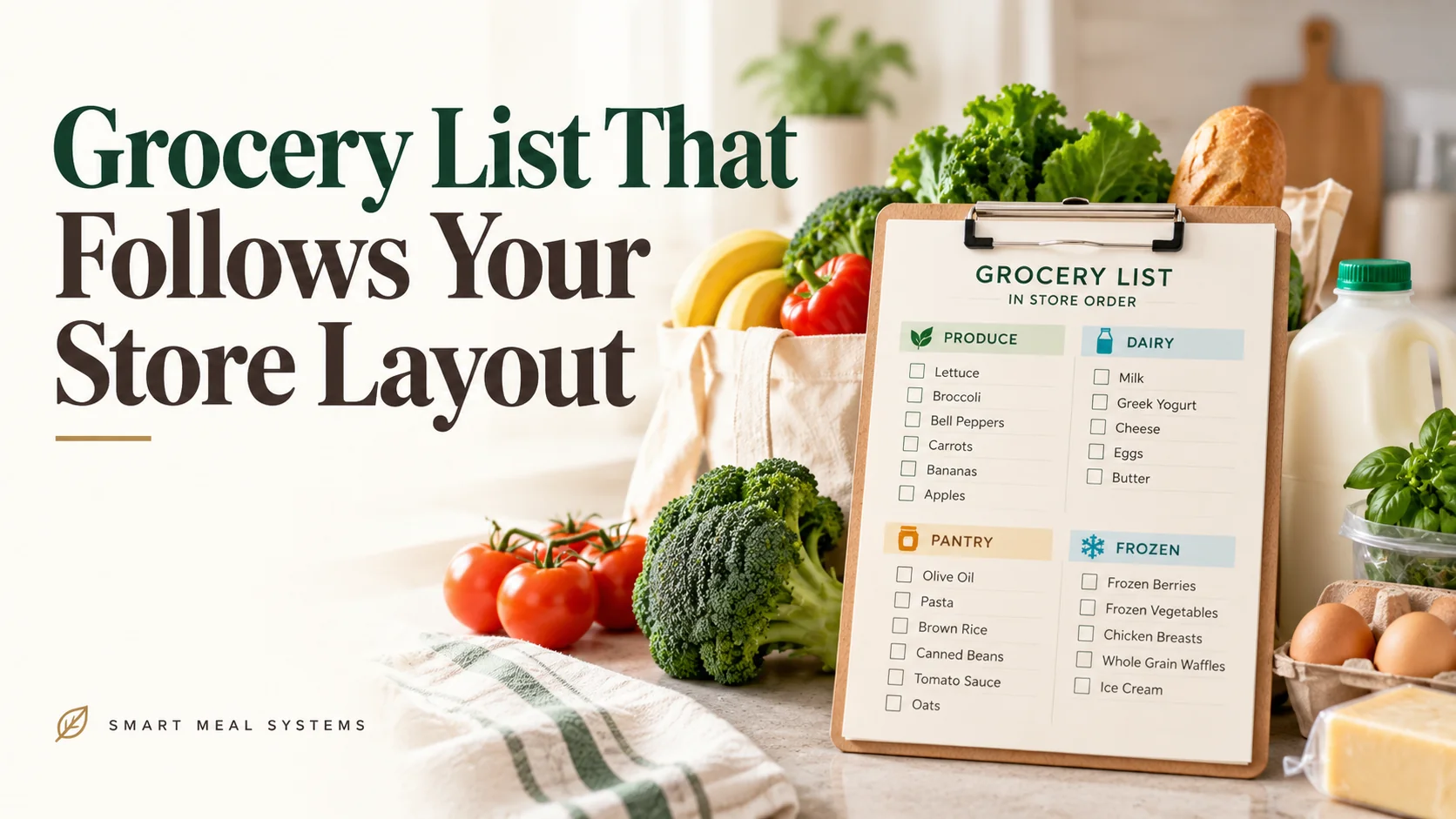
Only after the check do you write the list. Add what you need to complete the planned meals, and skip what you already have. If you want a deeper look at this step, read How to Plan Your Grocery List Around What’s Already in Your Kitchen.
Storage tips that stretch food further
Some simple storage habits make food last longer.
- Greens: wash, dry well, and store with a paper towel in a container.
- Herbs: stand them in a jar of water in the fridge, or freeze them chopped in oil.
- Berries: keep them dry and unwashed until you eat them.
- Bananas: separate them, and freeze overripe ones.
- Bread: freeze half the loaf and take out slices as needed.
- Cooked leftovers: put them in clear containers at the front of the shelf, labeled with the date.
- Cheese: wrap tightly and store in the fridge.
- Potatoes and onions: keep them in a cool, dark place, apart from each other.
If you are unsure how long something keeps, check a reliable food-safety source for the specific item, and use your senses.
Make leftovers visible
Leftovers are the most commonly wasted item, because they are easy to forget. A few habits help:
- Use clear containers so you can see what is inside.
- Put a piece of tape with the date on each one.
- Designate one shelf or one corner as the “eat first” zone.
- Plan a leftover night each week, so there is a slot for them.
If you often end up with too many, The Too-Many-Leftovers Problem covers that problem in more detail.
Use the freezer as a pause button
The freezer is the best tool for preventing waste. When you notice something will not get eaten in time, freeze it.
Good freezer candidates include:
- bread and tortillas
- extra cooked rice and grains
- ripe fruit for smoothies and baking
- shredded cheese
- sauces, soup, and chili in portions
- meat bought on sale, split into meal-size portions
- chopped vegetable scraps for broth
Keep a record of what is in there. The Free Printable Freezer Inventory Sheet makes this easy, and it prevents the freezer from becoming a place where food goes to be forgotten.
Set up your kitchen to support the habit
Small changes make the routine easier to repeat.
- Keep a “use first” box or shelf in the fridge for items near their date.
- Store similar things together so you can see at a glance what you have.
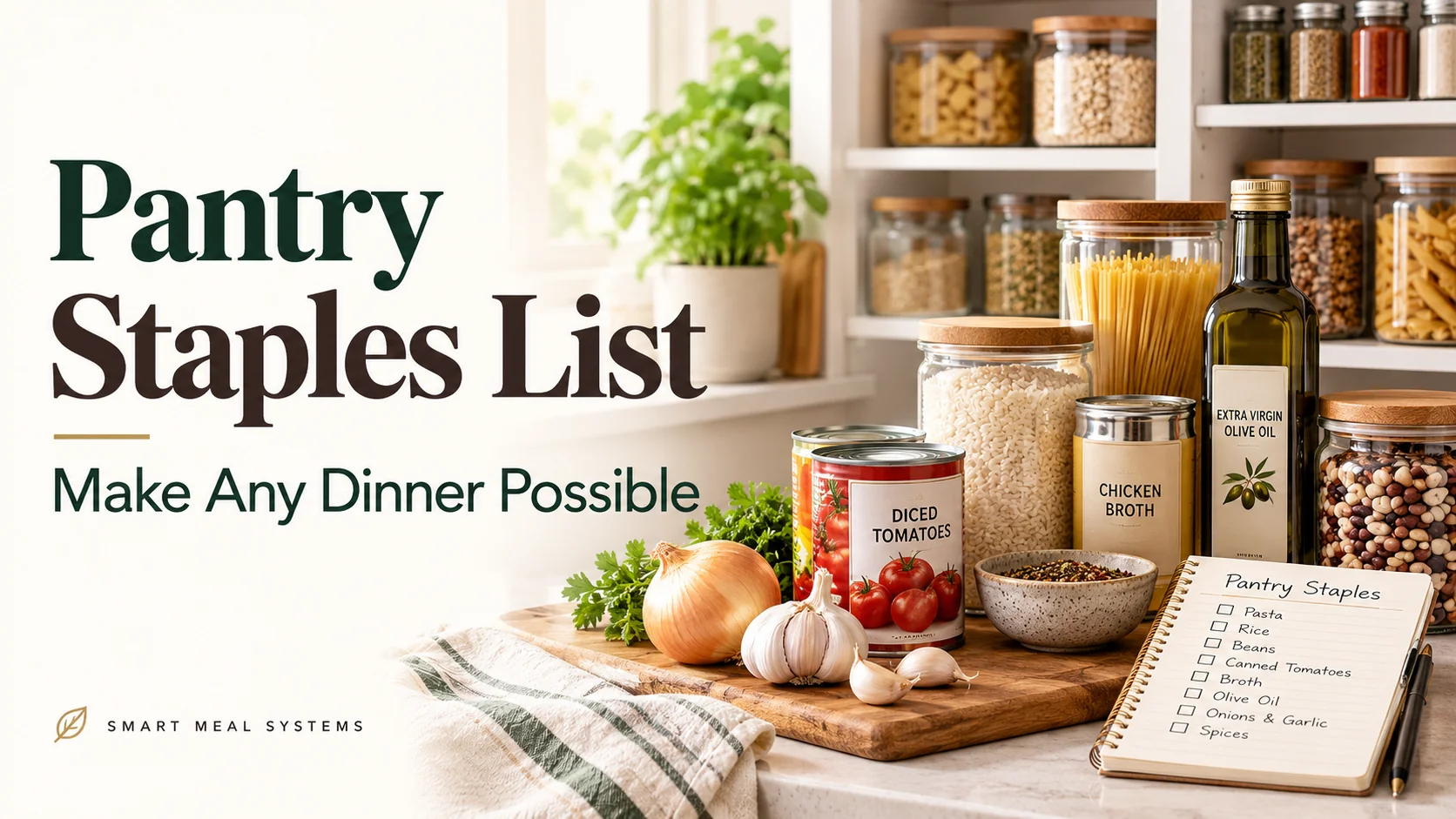
- Keep a running pantry list on the fridge or in your phone.
- Don’t overstock the fridge. Air circulation and visibility both matter.
- Shop with a plan, not hungry, and not for a week of imaginary meals.
What to measure
You do not need detailed tracking. For a month, just note once a week:
- What did I throw out?
- Why? (Forgot it, bought too much, cooked too much.)
After a month a pattern will probably show up. Maybe it is always lettuce, or always leftovers, or always the same kind of produce. Then you can change that one thing. The approach in How to Cut Food Waste Without Tracking a Single Thing works the same way.
Common mistakes
Doing the check after shopping. The check is most useful before, when it can change what you buy.
Making it too elaborate. Ten minutes is the goal. If it takes much longer you will stop.
Feeling guilty about waste. Some waste is unavoidable. The point is to reduce it, not to reach zero.
Skipping the freezer and pantry. Waste hides there too.
Buying “just in case.” Extra food that is not planned for tends to be the food that spoils.
Your 10-minute checklist
- Pull older items forward in the fridge, freezer, and pantry.
- Sort into use now, use this week, can wait.
- Throw away what is gone and wipe the shelf.
- Plan the first dinners around the “use now” group.
- Write the grocery list from what is missing.
- Freeze anything that will not be used in time.
Make this easier
After your check, plan the week with the free Dinner Rotation Builder, then turn it into a shopping list with the Grocery List Generator.
Less waste leads directly to a smaller grocery bill. If you want to set a number for it, see How to Build a Grocery Budget From Scratch.
Turn the idea into a system.
Keep Reading