January is one of the best times to plan meals backward.
Instead of choosing recipes and then shopping for them, start with the food already in your kitchen and ask: what meals are almost complete?
That question turns a crowded pantry into a useful meal plan.
The pantry-first rule
Do not try to “use everything up.”
That usually creates weird meals and too much mental effort.
Use this rule instead:
Pantry-First Meal Rule
A meal qualifies when at least 60% of its core ingredients are already in your kitchen.
You are allowed to buy the missing 40%.
This keeps the plan realistic.
If you already have pasta, tomato sauce, frozen spinach, and parmesan but need ground turkey, that is still a pantry-first meal.
Step 1: do a 10-minute scan, not a full inventory
Set a timer.
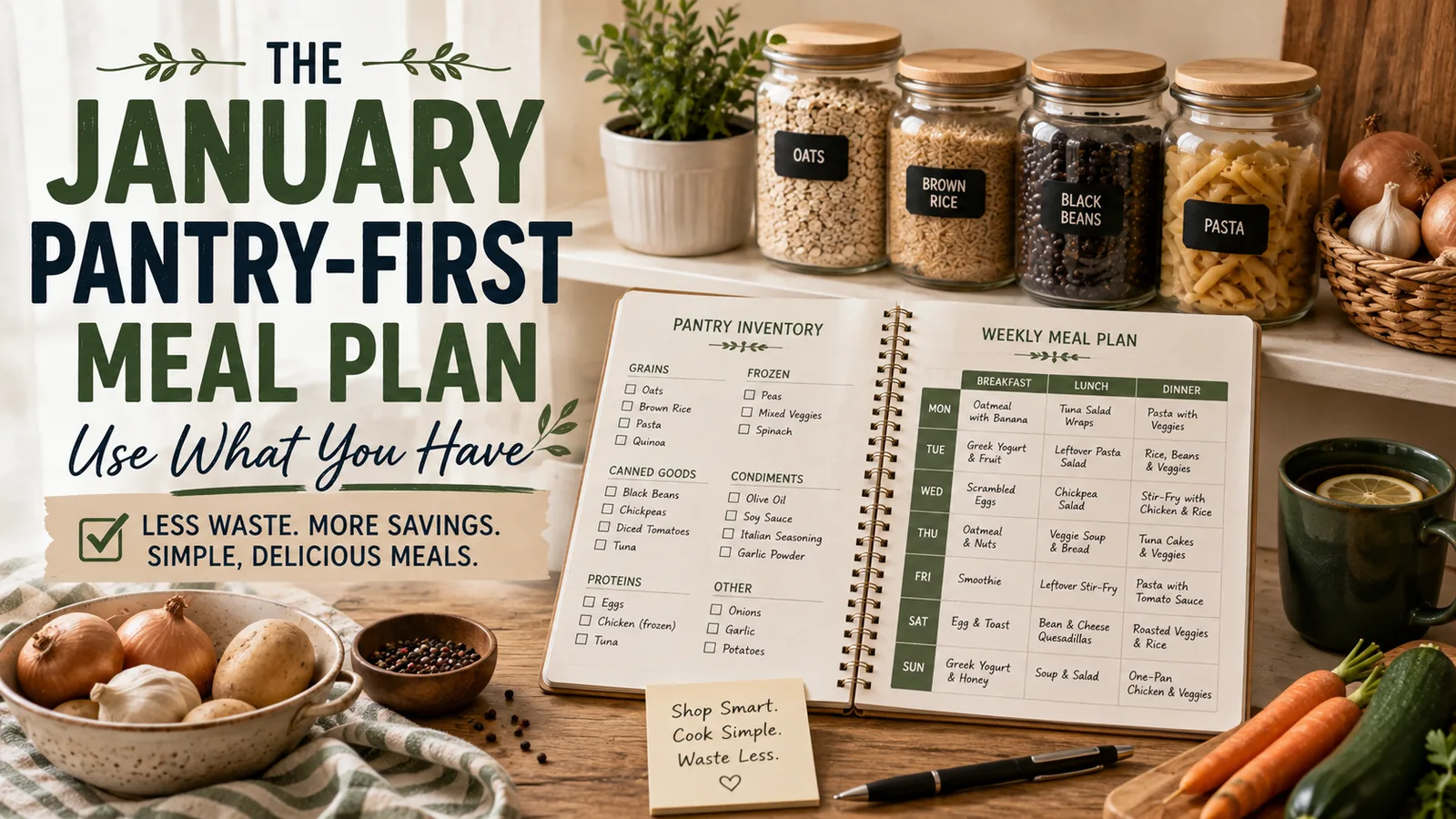
Write down useful items in six categories:
Protein
Chicken, ground meat, beans, lentils, eggs, tuna, frozen meatballs.
Starches
Rice, pasta, potatoes, tortillas, bread, oats.
Vegetables
Fresh produce that needs using, frozen vegetables, canned tomatoes.
Sauces
Tomato sauce, salsa, pesto, curry sauce, broth, soy sauce.
Dairy
Cheese, yogurt, milk, cream.
”Use first”
Anything close to expiring or already opened.
You are looking for combinations, not counting every can.
Step 2: build meal formulas
Meal formulas are easier than recipe hunting.
Use these:
Bowl
Protein + grain + vegetable + sauce
Pasta
Pasta + sauce + vegetable + optional protein
Soup
Broth + protein/beans + vegetables + starch
Tacos/wraps
Tortilla + protein + vegetable + sauce
Sheet pan
Protein + vegetables + starch + seasoning
Breakfast-for-dinner
Eggs + bread/potatoes + fruit/vegetable
Now match what you own to a formula.
Example:
- rice + black beans + frozen corn + salsa = bowls;
- pasta + tomato sauce + spinach = pasta dinner;
- broth + lentils + carrots = soup;
- tortillas + leftover chicken + cheese = quesadillas.
Step 3: score meals by how much they use
Give each possible meal a simple score:
- 3 points: uses a “use first” ingredient;
- 2 points: uses a freezer protein;
- 1 point: uses a pantry staple you have too much of;
- -1 point: requires a specialty ingredient.
Choose the highest-scoring meals first.
Example
| Meal | Use-first | Freezer protein | Pantry excess | Specialty | Score |
|---|---|---|---|---|---|
| Chicken rice bowls | 0 | 2 | 1 | 0 | 3 |
| Lentil soup | 3 | 0 | 1 | 0 | 4 |
| New curry recipe | 0 | 2 | 0 | -1 | 1 |
The lentil soup wins because it solves more kitchen inventory problems with less new shopping.
Step 4: plan four pantry-first dinners
Do not force all seven dinners to be clean-out meals.
Aim for four.
A practical week:
| Day | Dinner | What it uses |
|---|---|---|
| Monday | Lentil soup + toast | lentils, broth, carrots, bread |
| Tuesday | Chicken rice bowls | frozen chicken, rice, corn |
| Wednesday | Pasta + spinach | pasta, sauce, frozen spinach |
| Thursday | Quesadillas | tortillas, beans, cheese |
| Friday | Flex | leftovers / out |
| Saturday | Fresh meal | normal planned dinner |
| Sunday | Batch meal | replenishes freezer |
This gives you momentum without making the whole week feel restrictive.
Step 5: buy bridge ingredients
A bridge ingredient turns several almost-meals into complete meals.
Examples:
- one rotisserie chicken;
- shredded cheese;
- onions;
- eggs;
- tortillas;
- milk;
- salad greens;
- one flexible vegetable.
If $15-$25 of bridge ingredients unlocks four dinners, that is often better than buying four completely separate recipe lists.
The “use first” shelf
Create one visible fridge zone for food that should be eaten soon.
Put there:
- opened cheese;
- cooked grains;
- half-used vegetables;
- leftovers;
- herbs;
- yogurt nearing date;
- opened sauces that need attention.
Then check that shelf before deciding lunch or dinner.
This is more effective than relying on memory.
How to handle holiday leftovers
January kitchens often contain random holiday foods that do not fit normal meals.
Group them by function.
Sweets/snacks
Freeze what freezes well. Stop treating it as meal inventory.
Cheese and charcuterie
Use in omelets, sandwiches, pasta, snack plates.
Bread
Freeze slices or turn into toast, breadcrumbs, strata.
Cooked meat
Use in soup, tacos, bowls, sandwiches.
Sauces/dips
Assign one specific use or discard when no realistic use exists.
The goal is not to rescue every teaspoon. It is to prevent useful food from getting buried.
Pantry-first does not mean “no groceries”
A common mistake is trying to spend almost nothing.
That can lead to poor meals, no fresh produce, and then a rebound grocery trip.
A better target is to reduce new meal ingredients, not eliminate shopping.
For example:
Normal weekly spend: $160
Pantry-first week: $110
Difference: $50 saved without making the week miserable.
Better goalBuy less new food, not zero food
The 30-minute pantry-first planning session
Minutes 0-10
Scan protein, starches, vegetables, sauces, dairy, use-first food.
Minutes 10-20
Build 6-8 possible meal formulas.
Minutes 20-25
Choose four pantry-first dinners.
Minutes 25-30
Write bridge ingredients and normal breakfast/lunch needs.
That is enough.
Troubleshooting
”I have ingredients but nothing goes together”
Use meal formulas. Stop looking for exact recipes.
Rice + eggs + frozen vegetables can become fried rice. Pasta + beans + tomato sauce can become a simple pantry pasta.
”My freezer is full of mystery containers”
Do one freezer dinner every week until it becomes manageable.
Do not attempt a full freezer clean-out in three days.
”My family hates leftover-based dinners”
Repurpose components instead of serving the exact same plate.
Roast chicken becomes tacos. Rice becomes fried rice. Chili becomes baked potato topping.
”I still overspend”
Write the pantry-first meals before opening store apps or weekly ads.
A sale can easily talk you out of using what you already own.
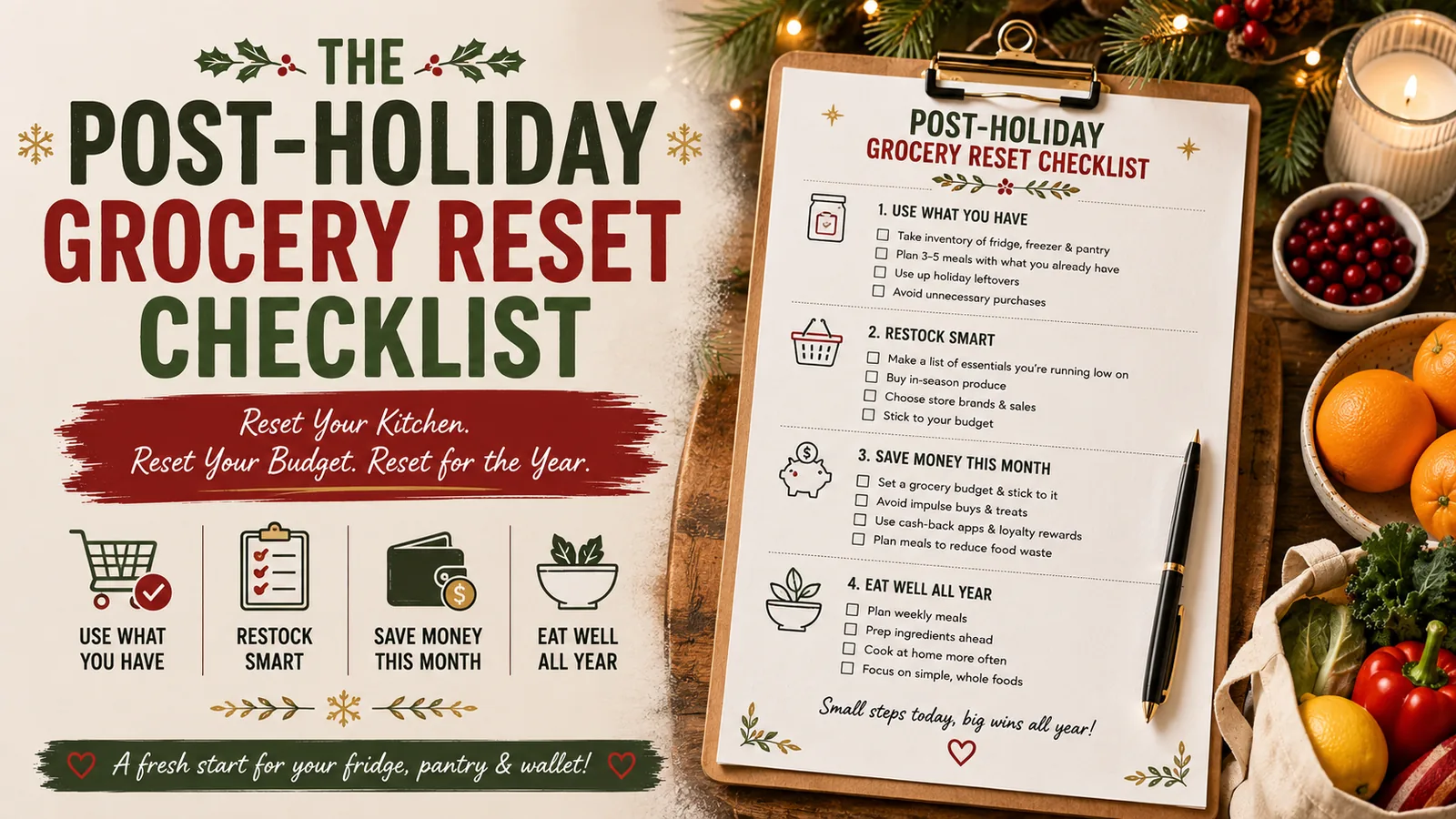
Your pantry-first checklist
- Scan six useful food categories
- Mark anything that needs using first
- Build meals from formulas
- Choose four pantry-first dinners
- Use bridge ingredients to complete several meals
- Create one visible use-first fridge zone
- Plan one freezer meal each week if inventory is crowded
- Allow normal fresh-food shopping
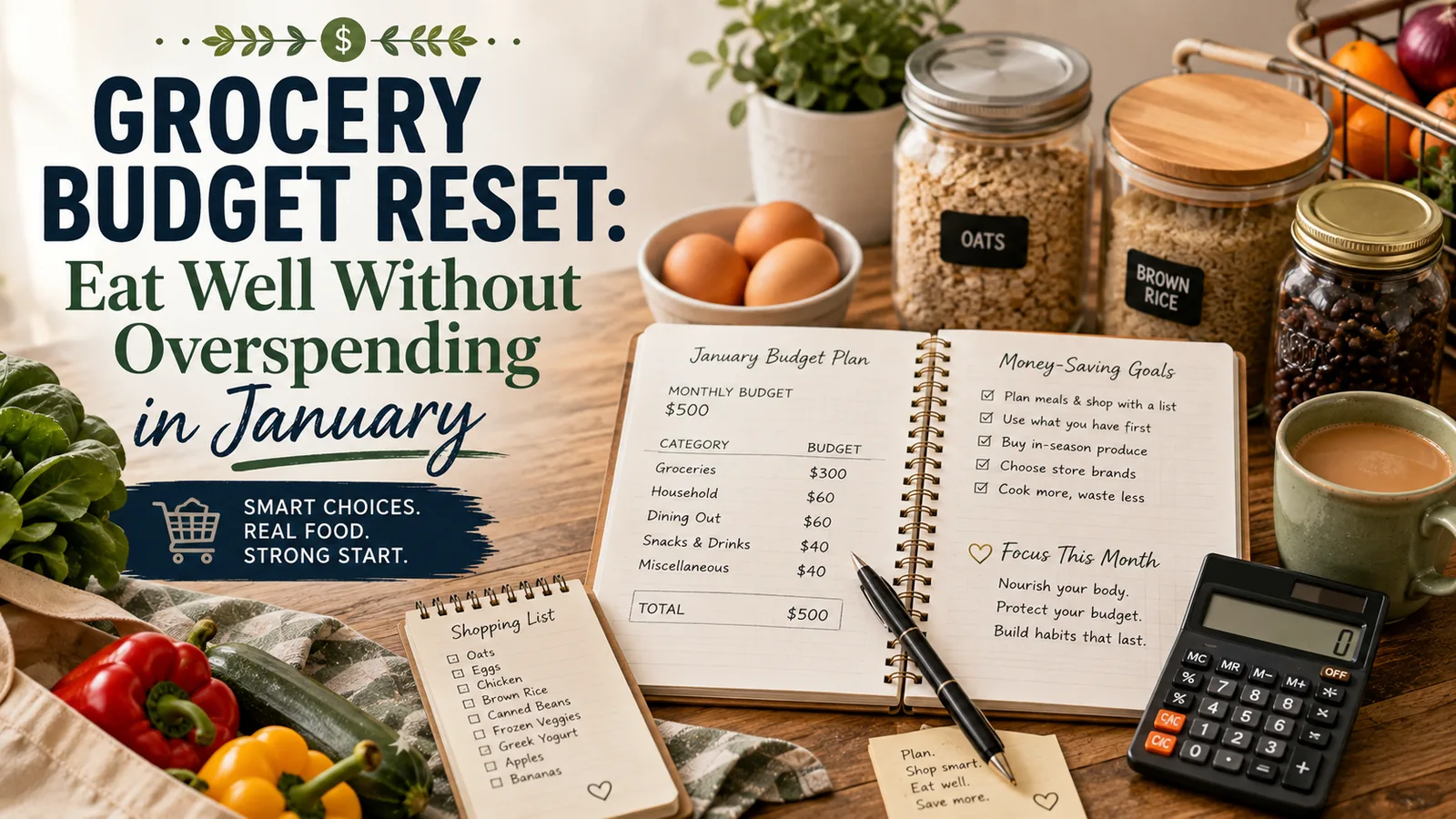
Pair this with the January grocery budget reset when you want the pantry clean-out to reduce spending rather than simply move food around.
The real win is visibility
A pantry-first week is not about proving how long you can avoid the grocery store.
It is about seeing the food you already paid for and giving it a job before buying more.
That is a system you can reuse any month the kitchen starts feeling full, expensive, or chaotic.
Turn the idea into a system.
Keep Reading