A pantry can look perfectly tidy and still make dinner harder.
That happens when food is organized for appearance instead of decision-making. Flour is in a beautiful jar, canned beans are lined up by color, and snacks have matching baskets—but when you need to answer “What can I make tonight?” you still have to search every shelf.
A useful pantry should do three jobs quickly:
- Show you what you already have.
- Help you see possible meals.
- Make it obvious what needs replacing.
The easiest way to get there is to organize by functional food categories rather than by package shape or whatever happens to fit in a container.
The pantry-by-category system
Use these core zones as your starting point:
| Category | What belongs here |
|---|---|
| Meal Bases | Pasta, rice, noodles, couscous, tortillas, boxed grains |
| Proteins | Beans, lentils, tuna, canned chicken, nut butters |
| Meal Builders | Tomatoes, broth, coconut milk, canned vegetables, sauces |
| Flavor | Oils, vinegars, spices, condiments, seasoning packets |
| Breakfast | Oats, cereal, pancake mix, breakfast add-ins |
| Baking | Flour, sugar, baking powder, chocolate chips, extracts |
| Snacks | Crackers, popcorn, bars, nuts, dried fruit |
| Backstock | Unopened duplicates and bulk purchases |
You can rename categories to fit your household. The important part is that each category answers a question you regularly ask while cooking.
Step 1: empty one zone, not the entire pantry
You do not need to cover your kitchen in groceries to reorganize successfully.
Start with one shelf or cabinet. Remove everything from that small area and sort it on the counter.
Create four temporary groups:
- keep in pantry;
- move elsewhere;
- use soon;
- discard if expired, spoiled, or unusable.
This smaller approach matters because pantry projects often fail halfway through. A two-hour total-pantry makeover sounds satisfying, but a 15-minute shelf reset is much easier to finish.
Step 2: sort by cooking function
Now ignore packaging.
Ask what role each food plays in a meal.
A box of spaghetti belongs with meal bases. Canned chickpeas belong with proteins. Marinara belongs with meal builders. Taco seasoning belongs with flavor.
This creates useful visual combinations. When pasta, rice, tortillas, beans, tomatoes, broth, and sauces are easy to scan, you can mentally assemble dinner without digging.
That is the real goal: reduce the number of decisions between opening the pantry and choosing a meal.
Step 3: create a dedicated “use first” area
One of the most valuable pantry categories is not a food type at all.
Create a small basket, bin, or clearly visible shelf labeled:
USE FIRST
Put items there when they are:
- already open;
- approaching their best-by date;
- leftover from a recipe;
- something you keep forgetting to use;
- a single serving or odd quantity that can disappear into the pantry.
Check this zone before writing your meal plan.
A half-box of pasta, open jar of sauce, can of beans, and nearly finished bag of rice are not clutter anymore. They are the beginning of next week’s meals.
Step 4: separate working stock from backstock
Buying two jars of pasta sauce on sale can be useful. Seeing six jars mixed into your everyday shelf can make inventory confusing.
Keep one working item in the main category and put unopened duplicates in a backstock zone.
For example:
- one peanut butter in Proteins;
- two spare jars in Backstock;
- one open bag of rice in Meal Bases;
- one unopened bag in Backstock.
When the working item runs out, move one forward. When backstock reaches zero, add it to the grocery list.
This prevents the classic problem of buying another bottle because you could not see the three already hiding behind something else.
Step 5: give high-frequency foods the easiest locations
Not every category deserves equal shelf space.
Put foods you use every week between waist and eye level whenever possible. Occasional baking supplies, party ingredients, or specialty items can live higher or lower.
For a family that eats pasta twice a week, Meal Bases should not be on the hardest shelf to reach. If children independently grab snacks, their approved snack area should be accessible without disturbing everything else.
Organization should follow behavior—not Pinterest aesthetics.
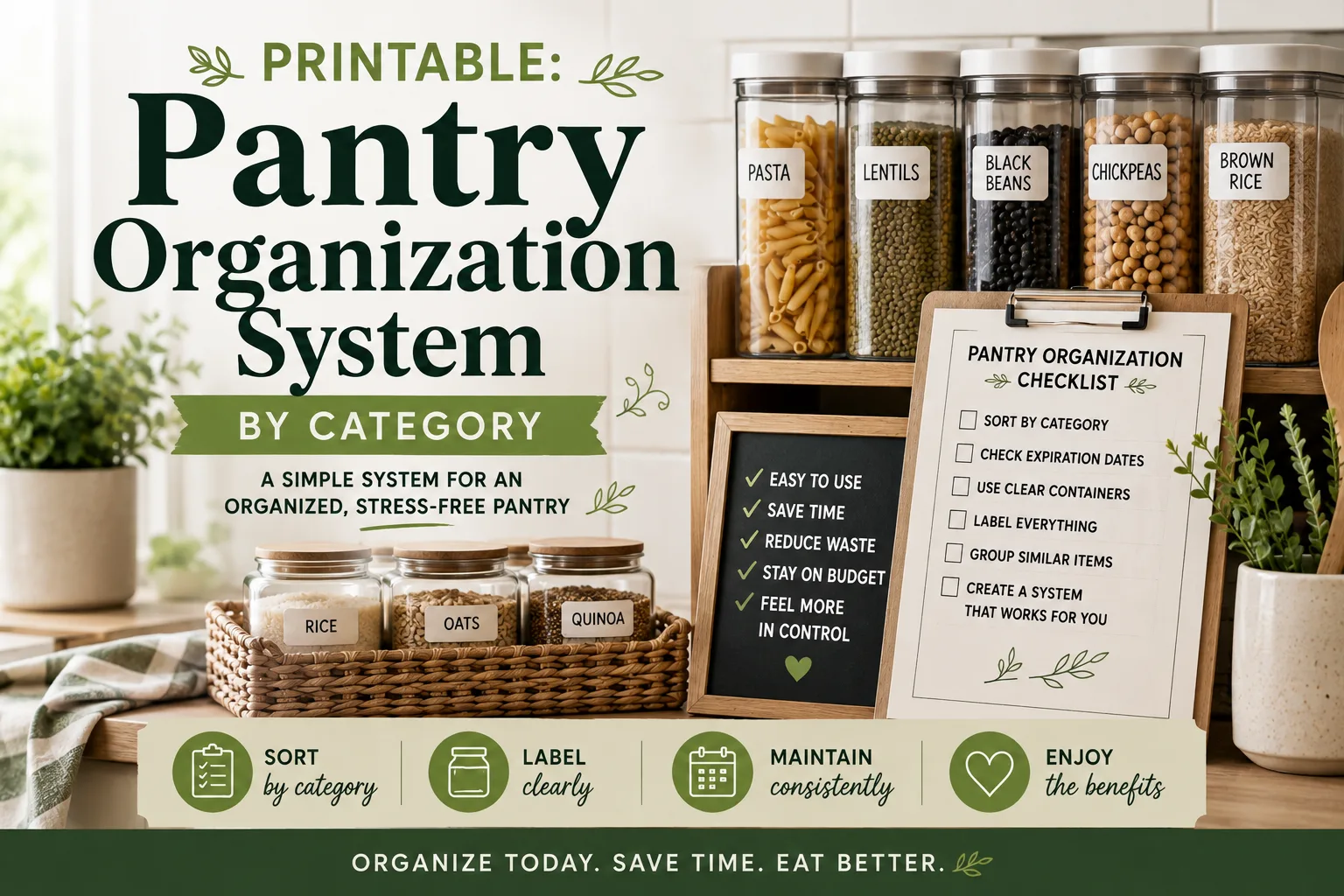
Your printable pantry category map
Use this as a simple printable checklist when setting up your pantry:
MEAL BASES
- Pasta and noodles
- Rice and grains
- Tortillas and wraps
- Boxed meal bases
PROTEINS
- Beans and lentils
- Canned fish or meat
- Nut and seed butters
- Shelf-stable protein options
MEAL BUILDERS
- Tomatoes and tomato sauce
- Broth and stock
- Canned vegetables
- Coconut milk
- Cooking sauces
FLAVOR
- Oils and vinegars
- Herbs and spices
- Condiments
- Seasoning mixes
BREAKFAST
- Oats and cereal
- Breakfast mixes
- Toppings and add-ins
BAKING
- Flour and sugar
- Leaveners
- Chocolate and baking add-ins
- Extracts and decorations
SNACKS
- Crackers and chips
- Popcorn
- Nuts and dried fruit
- Bars and packaged snacks
INVENTORY CONTROL
- Use First zone
- Backstock zone
The five-minute weekly pantry reset
A system only works if it is easy to maintain.
Once a week—ideally before meal planning—spend five minutes doing this:
- Return misplaced foods to their categories.
- Move aging ingredients into Use First.
- Pull replacements from Backstock.
- Note categories running low.
- Choose one or two pantry ingredients to build meals around.
Do not count every can. You are looking for useful signals, not conducting a warehouse audit.
Use categories to build meals faster
Once the pantry is organized, try planning meals with a simple formula:
1 base + 1 protein + 1 meal builder + flavor = dinner direction
Examples:
- pasta + chickpeas + tomatoes + Italian herbs;
- rice + black beans + salsa + taco seasoning;
- noodles + canned chicken + broth + soy-based sauce;
- couscous + lentils + roasted peppers + vinaigrette.
Fresh and frozen ingredients can complete the meal, but the pantry gives you the structure.
What you do not need to buy
You do not need matching containers, custom labels, shelf risers, or a full set of clear bins before this system works.
Use what you already own first: shoe-box-sized baskets, reused containers, masking-tape labels, or simply designated shelf sections.
After living with the system for a few weeks, you will know whether a particular bin or organizer would actually solve a problem.
Buying organizers before understanding the problem often creates prettier clutter.
The rule that keeps the pantry organized
Every pantry item needs a category, but the categories do not need to be perfect.
If you hesitate about where something belongs, ask: Where would I look for this while planning or cooking? Put it there.
A functional pantry is not a display. It is part of your meal-planning system.
When the categories match the way you cook, inventory becomes easier, grocery lists get shorter, forgotten food gets used, and “What do we have?” becomes a question you can answer in seconds.
Turn the idea into a system.
Keep Reading