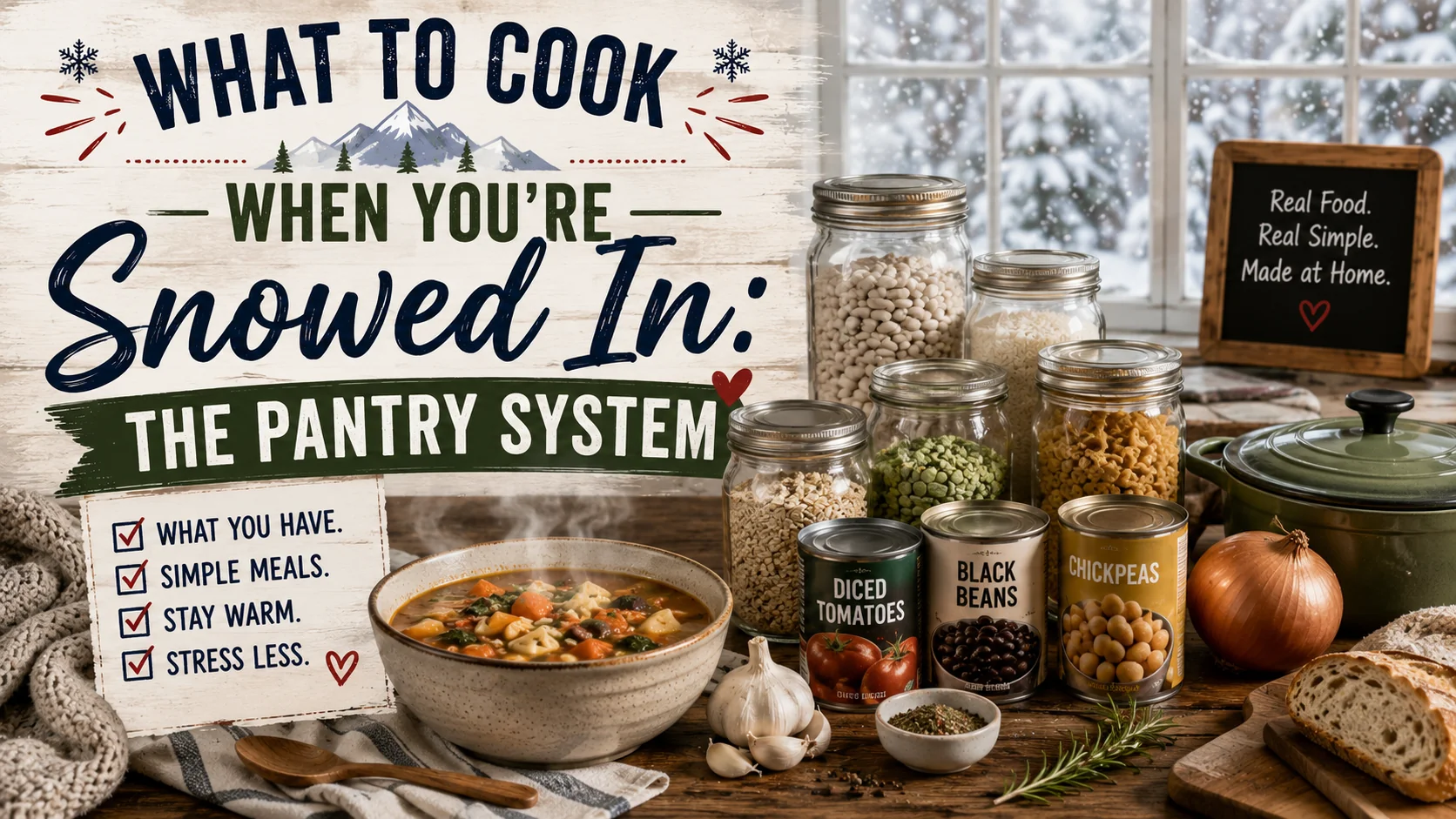
A snow day is a terrible time to discover that your pantry contains plenty of food but nothing that seems to become dinner.
The solution is not stockpiling random cans. It is building a small pantry meal system: a set of ingredients that combine into several familiar meals without requiring fresh groceries.
This is useful far beyond bad weather. The same system works during a busy week, an unexpected sick day, or the evening before your normal grocery trip.
The goal is simple: if you cannot shop for two or three days, you should still be able to make meals that feel like meals.
Think in meal formulas, not emergency foods
Buying “emergency food” without a plan often creates a shelf full of disconnected ingredients.
Instead, choose five meal formulas:
- pasta
- soup or chili
- rice or grain bowls
- tacos/quesadillas
- breakfast-for-dinner
Then stock the ingredients that make those formulas possible.
The Snow-Day Pantry Rule
Every shelf-stable item you buy for backup should belong to at least one meal you would willingly eat on a normal Tuesday.
Formula 1: pantry pasta
The base is obvious: dried pasta.
Then add one sauce direction and one vegetable or protein.
Useful combinations include:
- pasta + marinara + canned or frozen vegetables
- pasta + canned tomatoes + white beans + Italian seasoning
- pasta + olive oil + garlic + Parmesan + peas
- pasta + tuna + peas + a simple creamy sauce
Keep two shapes of pasta if your family likes variety, but you do not need a restaurant-size collection.
A jar of sauce and a pound of pasta already create a reliable dinner. Everything else improves it.
Formula 2: soup or chili
Canned tomatoes, beans, broth, corn, lentils, and seasonings can become a substantial pot of food with very little fresh produce.
For a basic bean chili, combine beans, tomatoes, corn if you like it, broth as needed, and chili seasonings. Add frozen ground meat if available, but the meal does not depend on it.
For a simple soup, start with broth and add beans or lentils, canned tomatoes, frozen vegetables, pasta or rice, and seasonings.
Serve with crackers, toast from frozen bread, or tortillas.
The formula matters more than a precise recipe when the purpose is resilience.
Formula 3: rice bowls
Rice plus beans is one of the most useful pantry foundations because toppings can change the meal completely.
Try:
- rice + black beans + corn + salsa
- rice + chickpeas + frozen spinach + curry sauce or spices
- rice + canned salmon or tuna + cucumber if available + soy sauce
- rice + frozen chicken + mixed vegetables + bottled stir-fry sauce
The freezer is part of the pantry system. Frozen vegetables and proteins dramatically increase what you can make without leaving home.
Formula 4: tacos and quesadillas
Tortillas freeze well, shredded cheese freezes well, and canned beans last for months.
That makes quesadillas one of the strongest backup meals you can build.
Fill them with beans and cheese, leftover meat, corn, or frozen peppers. Serve with salsa.
If you have taco shells instead, use beans, canned chicken, frozen cooked meat, or lentils as the filling.
Again, you are not trying to recreate a restaurant meal. You are building a warm dinner from ingredients with a long planning window.
Formula 5: breakfast for dinner
Eggs require refrigeration, but they generally keep long enough to be useful in a short snow event. You can also keep pancake mix, oats, shelf-stable milk, cereal, nut butter, and frozen bread as backups.
Possible dinners include:
- pancakes + fruit
- oatmeal + nut butter + frozen berries
- eggs + toast
- breakfast tacos
- French toast if you have eggs and bread
A pantry system does not need every meal to look like traditional dinner.
The core shelf-stable list
Start small and adapt it to what your household eats.
A practical base might include:
Carbohydrates
- pasta
- rice
- oats
- tortillas or crackers
- pancake mix
Proteins
- canned beans
- lentils
- tuna or canned chicken if you use them
- nut or seed butter
Meal builders
- canned tomatoes
- pasta sauce
- broth or bouillon
- salsa
- canned corn
- coconut milk
Flavor
- olive oil
- soy sauce
- vinegar
- garlic powder
- Italian seasoning
- chili powder/cumin
- curry powder or paste
Do not buy this entire list because it looks sensible. Choose the items that map to your five meals.
The freezer extension
A small freezer layer makes the pantry much more useful.
Consider keeping:
- one loaf of bread
- tortillas
- shredded cheese
- frozen vegetables
- frozen fruit
- one easy protein
- one fully cooked meal or soup
The freezer meal is your lowest-effort option. If the power is reliable but you simply cannot get to the store, having one dinner that only needs reheating is valuable.
If severe weather creates a power outage, follow official local food-safety guidance for refrigerated and frozen food rather than guessing based on appearance or smell.
Build a three-day snow menu
You do not need to plan for weeks of isolation to make the system useful.
Here is a simple three-day example:
| Day | Dinner | Main backup ingredients |
|---|---|---|
| 1 | Bean chili + crackers | Beans, tomatoes, corn, spices |
| 2 | Pasta marinara + green beans | Pasta, sauce, frozen veg |
| 3 | Black bean quesadillas + salsa | Tortillas, beans, cheese, salsa |
Breakfast can use oats, cereal, toast, eggs, or pancakes. Lunch can use leftovers, soup, sandwiches, or rice bowls.
The ingredients overlap, which keeps the backup supply manageable.
Use the “one open, one backup” rule
For the staples your household uses constantly, keep one active package and one backup.
When you open the backup, add the item to your grocery list.
This works especially well for pasta, rice, canned tomatoes, beans, broth, oats, and shelf-stable milk.
It prevents both extremes: discovering you have none when you need it and accumulating twelve cans because you keep forgetting what is already there.
Rotate instead of hoarding
A useful pantry is a moving system, not a museum of emergency supplies.
Once a month, make one pantry-first dinner. Use older items and replace only what belongs in your core system.
Check dates, freezer labels, and quantities. Move older products to the front.
This routine ensures the backup food is familiar and regularly used.
If nobody in your house likes canned lentils, a snowstorm will not magically make them appealing. Replace them with a protein you actually eat.
Keep a visible “meals we can make” list
Inventory alone does not solve decision fatigue.
Tape a small list inside the pantry door or keep it in your meal-planning notes:
- marinara pasta
- bean chili
- rice and bean bowls
- quesadillas
- breakfast for dinner
- freezer soup
When weather changes plans, look at the list instead of staring at the shelves.
That tiny step turns stored ingredients into actual meals.
Before a forecasted storm
If you have time to shop normally, do not panic-buy. Use the system as a checklist.
First confirm that you have your core meal ingredients. Then add normal perishables you will actually use: milk, eggs, fruit, vegetables, or bread.
Finally, think about non-food needs appropriate to your household and local conditions.
The meal-planning principle remains the same: fill gaps in a known system instead of buying random abundance.
Being snowed in does not require an elaborate emergency menu. Five flexible formulas, a modest freezer layer, and a rotation habit can cover several days with surprisingly little food clutter.
Build the system before you need it, and a winter forecast becomes a scheduling change—not a dinner crisis.
Make this easier
Tick what is already in your kitchen with the free Pantry Dinner Builder to see which dinners you can make right now, and the one item that would unlock more.
Turn the idea into a system.
Keep Reading