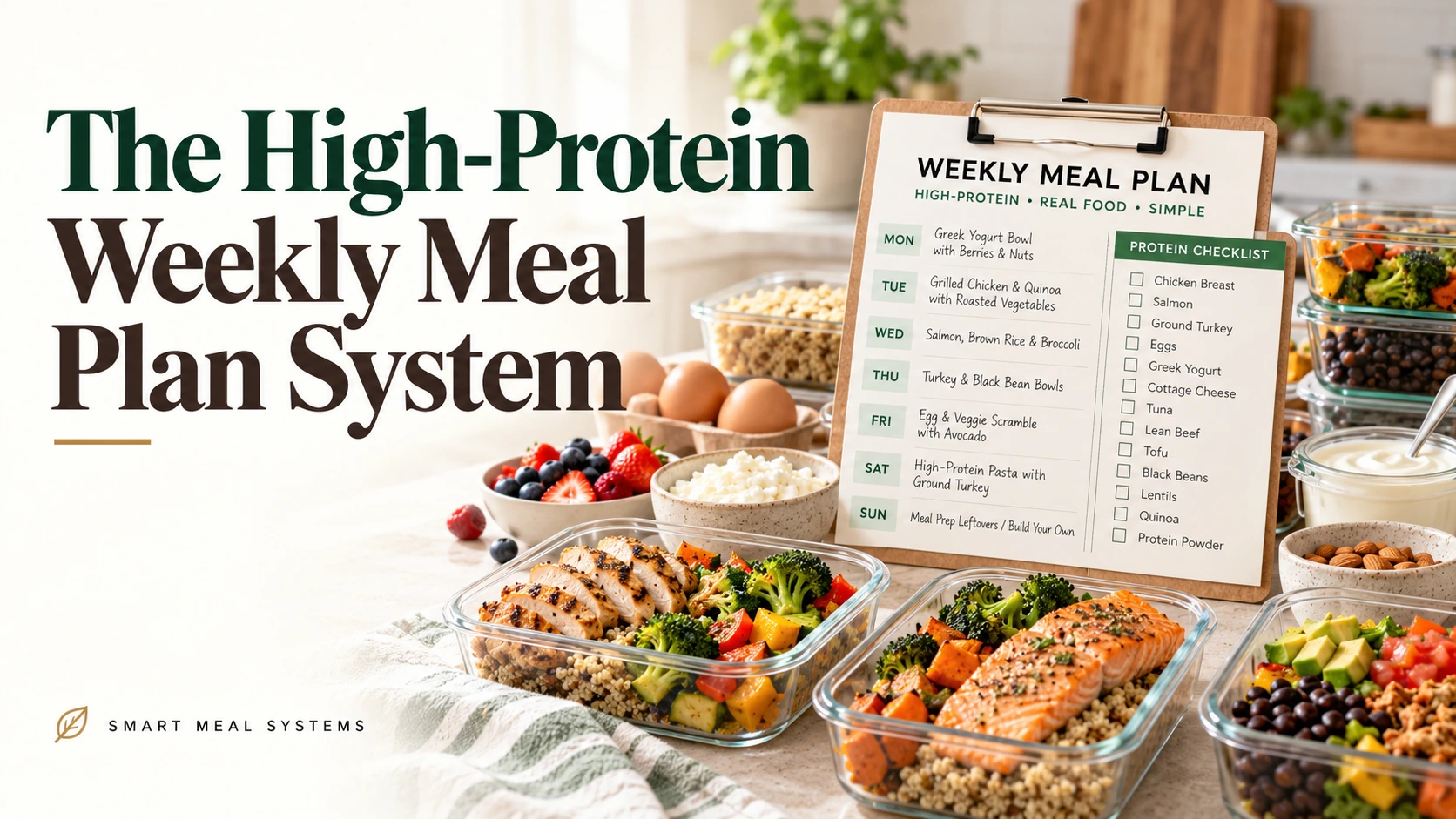
Eating more protein is a common goal, whether you’re building muscle, managing your appetite, or simply trying to feel fuller between meals. The challenge is practical: how do you get enough protein into your week without eating plain chicken breast and eggs every day?
The answer is a system. Instead of tracking every gram, you build protein into the structure of your week, then rely on repeatable meals.
Note: this is a meal-planning guide, not nutrition or medical advice. How much protein is right for you depends on your age, health, activity, and goals. If you have a medical condition or specific targets, talk to a doctor or registered dietitian.
The idea: protein anchors
Rather than counting, make protein the first thing you plan for each meal. Choose a protein anchor, then build the rest of the plate around it.
Dinner formula: protein anchor + vegetable + a filling carbohydrate or fat.
This formula is easy to repeat, and it makes it clear when a meal is missing its anchor.
Good protein anchors
Mix animal and plant options based on your preferences and budget.
| Type | Examples |
|---|---|
| Poultry | Chicken breast or thighs, turkey, ground turkey |
| Beef and pork | Ground beef, pork loin, lean cuts |
| Fish and seafood | Salmon, canned tuna, shrimp, canned salmon |
| Eggs and dairy | Eggs, Greek yogurt, cottage cheese, cheese |
| Plant-based | Beans, lentils, chickpeas, tofu, tempeh, edamame |
| Convenience | Rotisserie chicken, deli turkey, protein-rich frozen meals |
Pick three or four you like and keep them stocked.
Step 1: Plan protein at every meal
Start with where your protein currently comes from. Many people eat most of it at dinner, with little at breakfast.
Spread it through the day:
- Breakfast: eggs, Greek yogurt, cottage cheese, protein-rich oatmeal, or a breakfast burrito
- Lunch: a leftover protein over greens or grains, a sandwich with deli meat, or a bean-based bowl
- Dinner: your main anchor
- Snacks: hard-boiled eggs, jerky, cheese, nuts, yogurt, roasted chickpeas
Planning breakfast is often the easiest improvement.
Step 2: Batch cook your proteins
The biggest barrier to a high-protein diet is time. Batch cooking removes it.
Once a week, cook two or three proteins:
- A tray of baked chicken thighs or breasts
- A pot of ground turkey or beef with seasoning
- A batch of hard-boiled eggs
- A pot of lentils or beans
Store them in portions and mix with different sides and sauces during the week. The 3-3-3 Batch Cooking Method and How to Batch Cook: The Complete Guide cover the process.
Tip: cook protein plain or lightly seasoned and add sauces later so the same chicken can become tacos, a rice bowl, or a salad.
Step 3: Rotate flavors, not just foods
Boredom is the biggest enemy of any food plan. The trick is to change flavors and formats around the same proteins.
| Base protein | Variation 1 | Variation 2 | Variation 3 |
|---|---|---|---|
| Shredded chicken | Buffalo wrap | Burrito bowl | Chicken salad |
| Ground turkey | Taco skillet | Meatballs | Stuffed peppers |
| Eggs | Veggie scramble | Egg muffins | Fried rice |
| Lentils | Soup | Curry | Lentil tacos |
| Salmon | Sheet-pan dinner | Salmon patties | Rice bowl |
The shopping stays simple, and every meal feels different.
Step 4: Keep protein-rich backups
Plan for the days you don’t feel like cooking:
- Rotisserie chicken
- Frozen shrimp or fish fillets
- Canned tuna or salmon
- Eggs
- Greek yogurt and cottage cheese
- Pre-cooked frozen chicken or meatballs
- Canned beans
These are your fallback meals. What to Cook When You’re Too Tired to Decide shows how to set up a fallback.
A sample high-protein week
| Day | Breakfast | Lunch | Dinner |
|---|---|---|---|
| Monday | Veggie omelet | Chicken rice bowl | Turkey taco skillet |
| Tuesday | Greek yogurt and fruit | Leftover taco skillet | Sheet-pan salmon and potatoes |
| Wednesday | Egg muffins | Tuna sandwich | Chicken stir-fry |
| Thursday | Cottage cheese and fruit | Leftover stir-fry | Lentil soup and bread |
| Friday | Veggie scramble | Chicken salad wrap | Burgers or turkey burgers |
| Saturday | Protein oatmeal | Leftovers | Shrimp pasta |
| Sunday | Breakfast burrito | Soup | Roast chicken and vegetables |
Notice that most dinners are repeated as lunches. This is what keeps the plan sustainable.
Budget tips for high-protein eating
Protein can be one of the most expensive parts of a grocery budget. Some ways to lower it:
- Buy family packs and freeze in portions.
- Mix cheaper and pricier proteins. Use eggs, beans, and lentils alongside meat.
- Choose cheaper cuts, like chicken thighs or whole chickens.
- Use canned fish for quick meals.
- Buy dairy in larger containers like tubs of cottage cheese or yogurt.
- Plan around sales. See How to Meal Plan Around What’s on Sale.
Meal Planning on a Tight Budget has more strategies.
Don’t forget the rest of the plate
A high-protein plan still works best with variety. Include vegetables, whole grains or other carbohydrates, and fats you enjoy. Fiber and fluids matter too, especially if you increase protein. Again, if you have health concerns, ask a professional.
Make it work for different needs
Busy schedules. Rely on batch-cooked proteins, rotisserie chicken, and eggs.
Cooking for a family. Serve the protein anchor to everyone, and let each person add the sides they like.
Vegetarian or mostly plant-based. Build the plan around beans, lentils, tofu, eggs, and dairy. See The Vegetarian-Leaning Week.
Eating on the go. Pack hard-boiled eggs, jerky, cheese, yogurt, and nuts.
Common mistakes
Eating protein only at dinner. Spread it through the day.
Relying on one food. Rotate sources and flavors.
Skipping the prep. Without batch cooking, the plan relies on willpower.
Ignoring cost. Mix expensive and cheap sources.
Focusing on protein alone. Keep the whole meal balanced.
Your first week
- Choose three protein anchors.
- Batch cook two of them on the weekend.
- Plan a protein-rich breakfast.
- Keep two fallback meals stocked.
- Write the grocery list from the plan.
Make this easier
Build a repeating week around your protein anchors with the free Dinner Rotation Builder, and turn it into a shopping list with the Grocery List Generator.
High-protein planning doesn’t need to be complicated. Pick your anchors, cook them in batches, and change the flavors. The structure does the work.
Turn the idea into a system.
Keep Reading