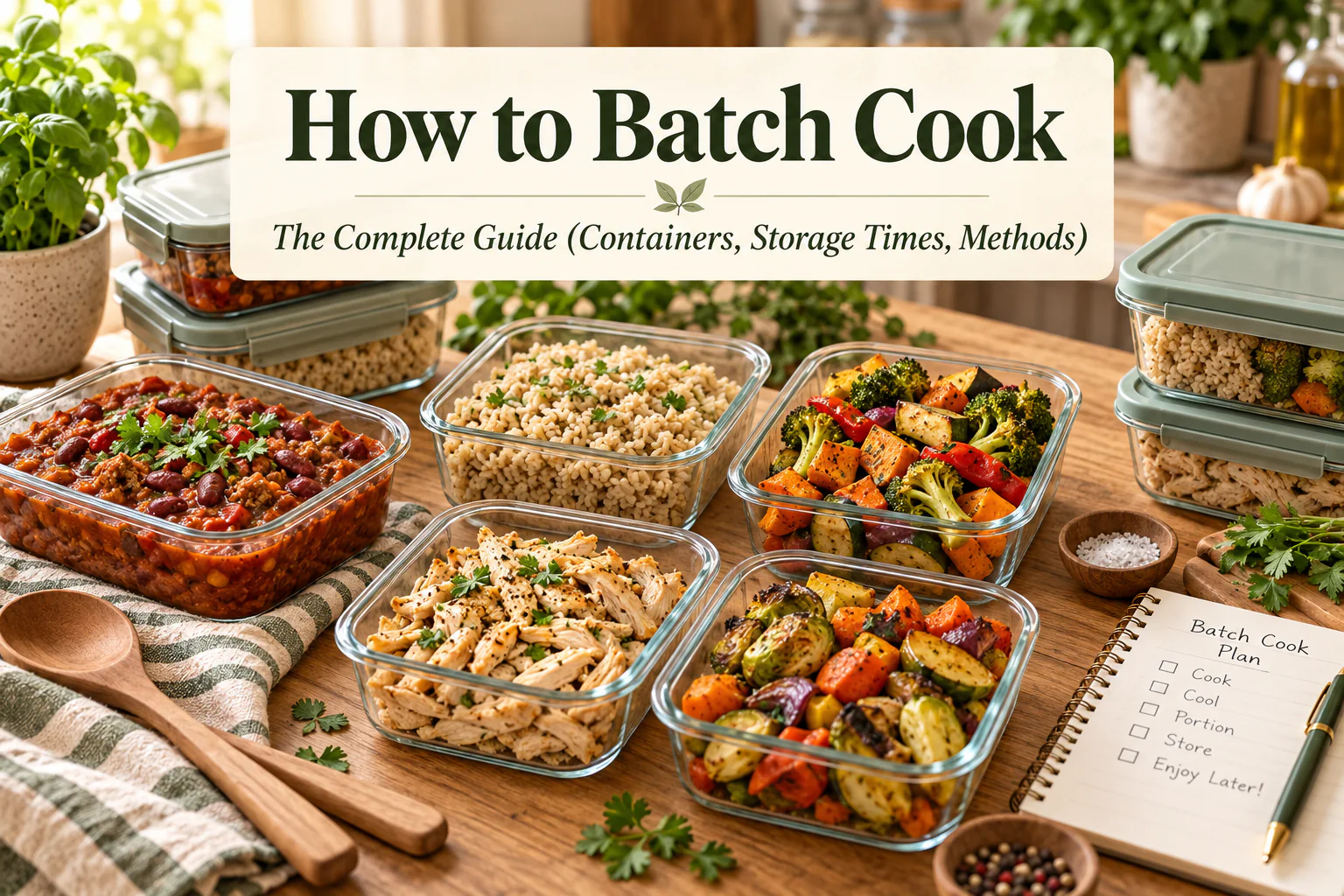
Batch cooking means cooking more food than one meal needs so you can eat it again later. Done well, it turns one hour of cooking into several dinners and removes the daily “what do I make?” scramble.
This guide covers the three main ways to do it, what works best in bulk, how to store it safely, and how to avoid the classic mistake of ending up with a freezer full of food nobody wants.
Three ways to batch cook
You do not have to pick a single style. Most people end up mixing them.
1. Cook once, eat twice
Make a double portion of tonight’s dinner and save half for another night. This is the easiest entry point because it adds only a few minutes to a meal you were cooking anyway. Chili, pasta sauce, curry, soup, and casseroles all work.
2. Prep components
Instead of cooking whole meals, cook building blocks: a pot of rice, a tray of roasted vegetables, a batch of shredded chicken, a jar of sauce. During the week, combine them into bowls, tacos, wraps, or salads. This keeps meals from feeling repetitive.
3. A full prep session
Set aside one block of time (often Sunday) to cook several meals for the week or to fill the freezer. The 3-3-3 Batch Cooking Method gives a simple structure for this: three proteins, three sides, three sauces.
Start small
If you have never batch cooked, begin with one recipe doubled. Do that for two weeks. Then add one prepped component. A full prep day is the last step, not the first.
What batch cooks well
Good candidates share one trait: they taste fine, or better, when reheated.
- soups, stews, and chili
- pasta sauces and meatballs
- curries and braises
- shredded chicken or pork
- cooked grains and beans
- burritos and breakfast sandwiches
- marinated raw proteins ready to cook (see the Make-Ahead Marinade System)
What does not
- crisp fried foods, which turn soggy
- delicate greens dressed ahead of time
- most cream-based sauces, which can separate when frozen
- pasta cooked all the way through and frozen in sauce, which can go mushy (undercook it slightly if you plan to freeze)
Choosing what to batch cook for your household
Before you cook, decide what you are solving for. Different goals call for different batches.
You want fewer weeknight decisions. Cook components (grains, proteins, sauces) that can become several meals.
You want to save money. Batch the cheapest, most filling foods: beans, lentils, rice, soups, and stews. Buying a larger pack of meat and portioning it is also cheaper per serving.
You want zero effort on busy nights. Fill the freezer with complete, reheat-and-eat meals such as casseroles, burritos, and soups.
You want healthier lunches. Prep grains, roasted vegetables, and a protein, then assemble bowls through the week.
You have a small household. Cook the full recipe and freeze most of it in single portions. Cooking for one or two does not mean cooking daily.
Portioning: the detail that makes batch cooking work
How you portion decides whether you actually eat the food.
- Portion by meal, not by batch. A giant tub of chili forces you to thaw all of it. Freeze it in the amounts you will eat at one sitting.
- Leave headspace. Liquids expand when frozen, so leave about an inch at the top of rigid containers.
- Freeze flat. Soups, sauces, and shredded meat in freezer bags lie flat, freeze quickly, and thaw faster.
- Label everything. Name, date, and any reheating note (“add water”), for example.
- Keep a few containers fresh and freeze the rest. That way you get variety during the week without wasting food.
A sample batch plan for a week
Here is one 2-hour Sunday session that covers most weeknights for four people.
Cook:
- A large pot of turkey or bean chili (two dinners, plus freezer portions)
- A tray of roasted vegetables
- A pot of rice
- A pan of shredded chicken (slow cooker or stovetop)
- One batch of sauce, such as a peanut sauce or a simple tomato sauce
Then assemble through the week:
| Day | Meal | From |
|---|---|---|
| Monday | Chili over rice | Chili, rice |
| Tuesday | Chicken burrito bowls | Chicken, rice, roasted vegetables |
| Wednesday | Pasta with tomato sauce and vegetables | Sauce, roasted vegetables |
| Thursday | Chicken with peanut sauce and rice | Chicken, rice, sauce |
| Friday | Leftover chili baked potatoes | Chili |
The same five prepared items produce five different dinners. That is the benefit of components over single meals.
Common batch cooking mistakes
Cooking too many recipes at once. Two or three is enough. More makes the session long and the kitchen chaotic.
Freezing food you will not like reheated. Test one portion before you commit to a double batch.
Not cooling food quickly. Large hot pots stay in the unsafe temperature range for a long time. Divide into shallow containers.
Forgetting what is in the freezer. Keep an inventory and eat the oldest items first.
Making everything the same flavor. Cook plain bases and add sauces or seasonings at reheating time.
Treating it as all or nothing. Doubling one dinner counts. So does cooking one pot of rice.
Containers and equipment
You do not need much.
Containers: a mix of glass (good for reheating, stays clean) and plastic or silicone bags (good for freezing flat and saving space). Choose a few sizes: single-serving, two-serving, and family-size.
Freezer bags: freeze soups and sauces flat, then stack them like files.
Labels: masking tape and a marker. Write the name and the date you cooked it. This is the step people skip and regret.
Sheet pans and a big pot: the two pieces that do most of the work.
Cooling and storing safely
Food safety agencies generally advise cooling cooked food promptly and getting it into the fridge or freezer within about two hours of cooking. Divide large batches into shallow containers so they cool faster. Do not leave a full pot of soup on the stove overnight.
How long it keeps
These are general guidelines for cooked food. When in doubt, follow your local food safety guidance and trust your senses.
| Food | Fridge | Freezer |
|---|---|---|
| Soups and stews | 3 to 4 days | 2 to 3 months |
| Cooked chicken or other meat | 3 to 4 days | 2 to 3 months |
| Cooked rice and grains | 3 to 4 days (cool fast) | 1 to 2 months |
| Pasta sauce | 3 to 4 days | 3 months |
| Casseroles | 3 to 4 days | 2 to 3 months |
| Burritos and wraps | 3 to 4 days | 2 to 3 months |
If you will not eat something within four days, freeze it on day one rather than hoping.
Reheating without ruining it
Thaw in the fridge overnight when you can. Reheat soups and sauces on the stove, and add a splash of water or broth if they have thickened. Crisp things back up in the oven or air fryer, not the microwave. Reheat food until it is steaming hot throughout.
Keep track of what you froze
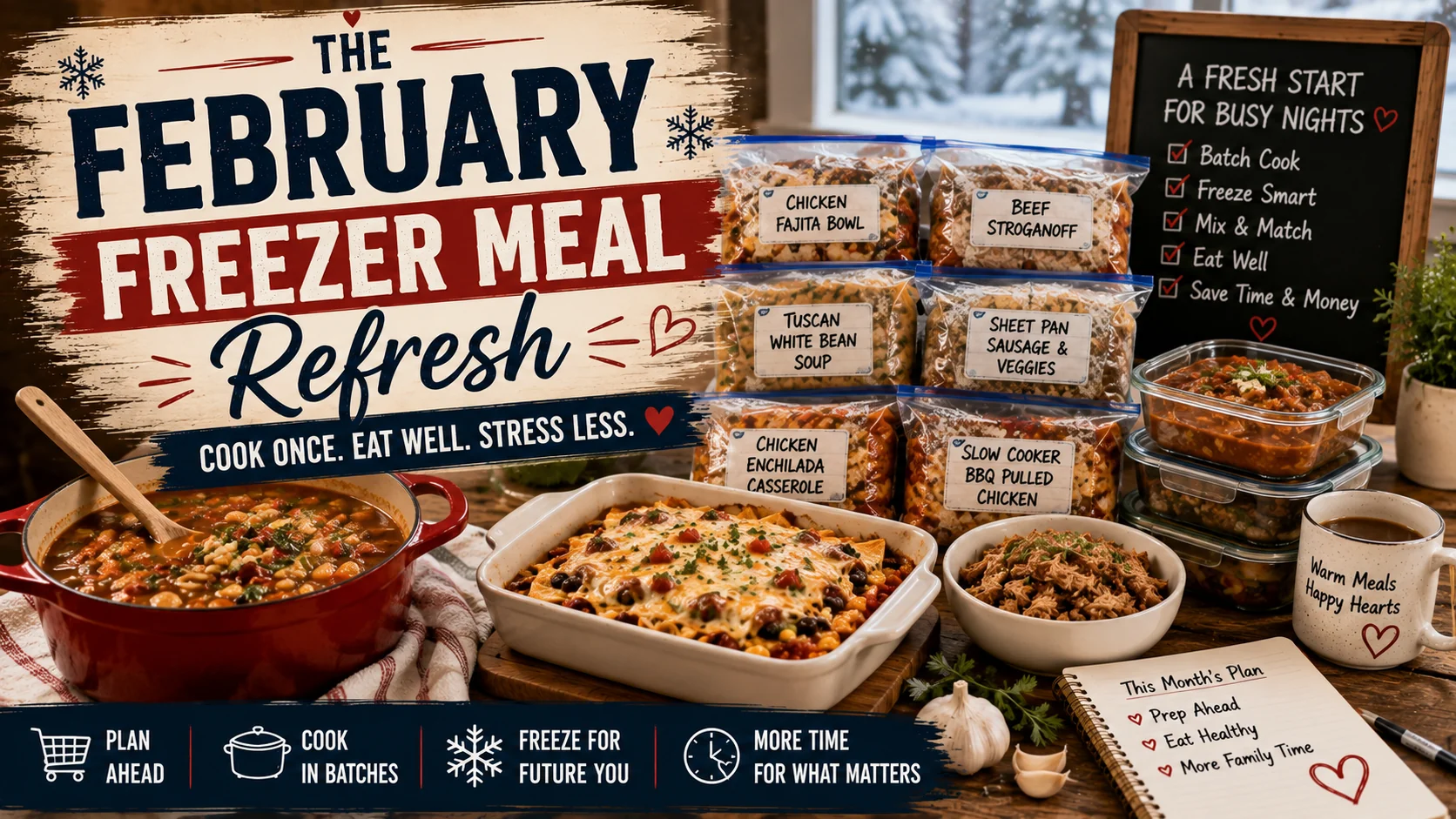
A freezer full of unlabeled containers becomes a waste problem. Use a simple inventory so you know what you have: the Free Printable Freezer Inventory Sheet works for this, and the 3-Column Freezer Rotation System helps you eat the oldest items first.
A simple first batch session
If you want a concrete starting point, try this 90-minute session:
- Put a tray of vegetables in the oven to roast.
- Start a pot of rice or grains.
- Brown a pound of ground meat or cook a pot of beans.
- Make one sauce.
- Cool everything fast, portion it, label it, and store it.
You now have the pieces for three or four different dinners.
Avoid batch cooking burnout
The most common reason people quit is food boredom. Prevent it by:
- batch cooking components, not just full meals
- changing the sauce so one base tastes different
- making only two or three recipes at a time, not ten
- freezing a few portions of each recipe and keeping the rest fresh
Frequently asked questions
How much should I make? Scale to what your household will eat in about three to four days of fridge meals, and freeze anything beyond that.
Can I freeze cooked rice? Yes. Cool it quickly, portion it, and freeze it flat. Reheat until steaming hot.
Do I need a deep freezer? No. A standard freezer holds more than people expect once food is portioned flat and stacked.
Is batch cooking only for meal-prep containers? No. It also means freezing sauces, marinated meat, soups, and cooked grains. The container-and-fridge version is just one style.
How do I keep reheated food from tasting dull? Refresh it: add fresh herbs, lemon juice, a splash of broth, or a new sauce right before serving.
Make this easier
Not sure how much to prep? Plan the week first. Build your dinners with the Dinner Rotation Builder, then batch cook the parts that repeat. When the food is cooked, the free Freezer Meal Planner makes the labels and tells you when to thaw each meal.
Where to go next
For hot weather, see How to Batch Cook Without Turning On Your Oven. For a one-afternoon freezer fill, try Summer Freezer Meals: Batch 10 Dinners in One Afternoon.
Turn the idea into a system.
Keep Reading