Most meal planning systems fall apart because the instructions live somewhere you cannot see them. You read a guide, feel organized, and by Wednesday you cannot remember the steps.
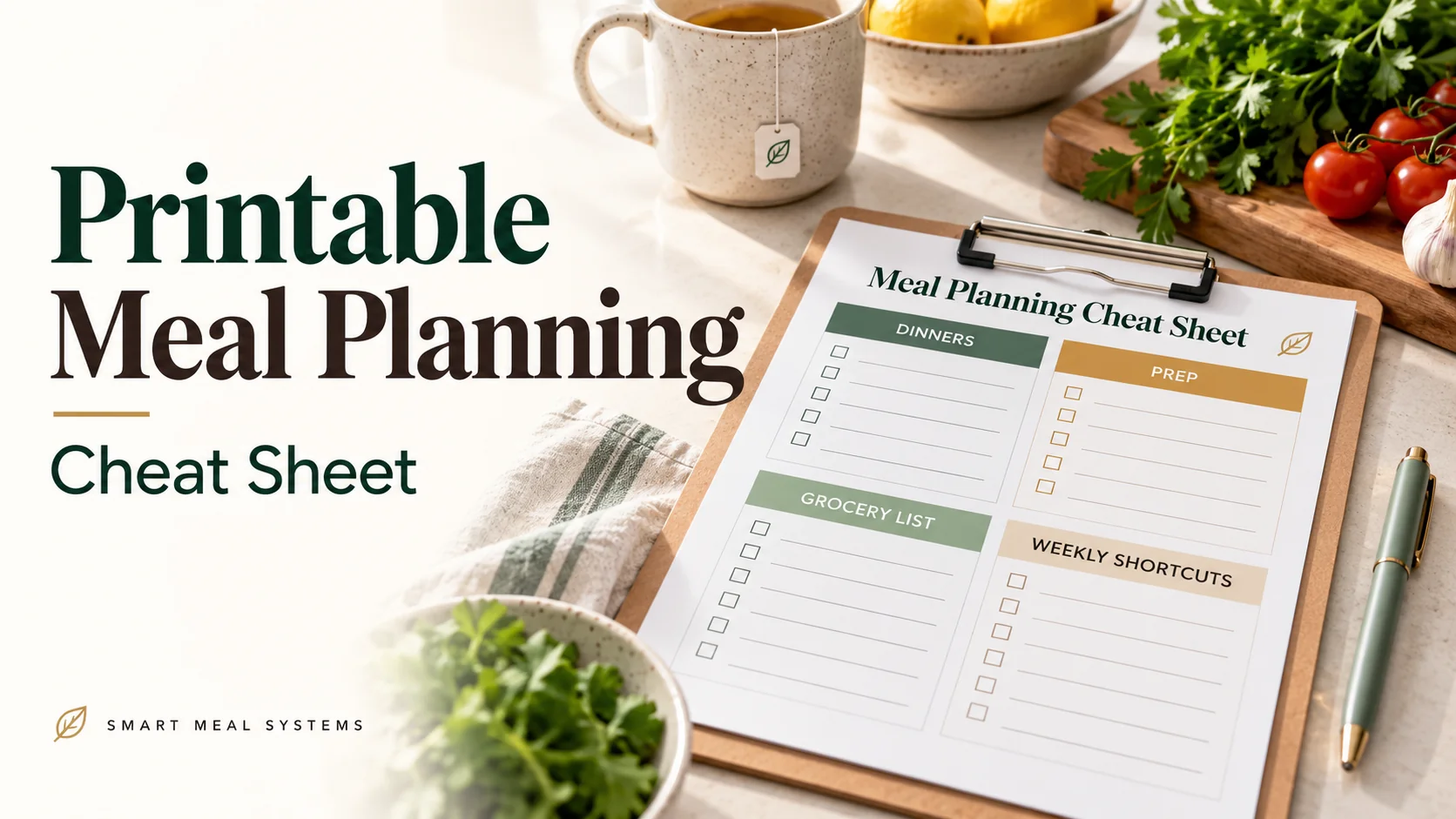
This printable puts the whole routine on one page, sized for the fridge door. It has the six-step weekly routine, a list of fallback meals, a place to write your own rule for the week, and a short reference for how long common foods keep.
Get the printable
Open the Meal Planning Cheat Sheet →
One page. Use the Print / Save as PDF button on the page.
What’s on the sheet
- The six-step weekly routine: look at the week, check what you have, pick the dinners, write the list, prep a little, and keep the swap rule
- Fallback meals: five low-effort dinners to keep ingredients for
- This week’s rule: a space to write one thing you want to remember
- How long food keeps: a small table of general fridge and freezer times
The six steps, explained
1. Look at the week
Mark busy, medium and free nights. Plan only the dinners you will actually cook.
2. Check what you have
Fridge, freezer and pantry. Anything near its date goes into this week’s meals. A written version of this check is the Pantry and Freezer Inventory.
3. Pick the dinners
Put the easiest meal on the hardest night and limit yourself to one new recipe.
4. Write the list
Write from the plan, minus what you already have, grouped by store section. The Weekly Grocery List by Store Section is the printable for this step.
5. Prep a little
Fifteen to thirty minutes is enough: chop, cook a grain or protein, thaw tomorrow’s meal. The Sunday Reset Routine shows how the first five steps fit into 90 minutes.
6. Keep the swap rule
When the plan changes, move an easy meal forward or swap within the same type of meal. You adjust the plan, not abandon it.
Why fallback meals belong on the sheet
The nights that break a plan are almost always the tired ones. If you have to think of an emergency dinner at 6 p.m., you will order takeout. If the list is already on the fridge, with ingredients on hand, you will not. What to Cook When You’re Too Tired to Decide explains how to build your own list.
Edit the printed fallbacks to match what your household actually eats. Cross out what does not fit and write in your own.
The storage reference
The small table on the sheet gives general fridge and freezer times for common batch-cooked foods, plus three habits worth remembering: freeze on day one if you will not eat something within about four days, reheat until steaming hot, and when in doubt, throw it out. These are general guidelines, not a substitute for an official food-safety source. For the full chart, see How Long Do Batch-Cooked Meals Last?.
How to use it
- Print it and put it on the fridge or inside a cabinet door.
- Write your weekly rule on Sunday. Examples: “Two freezer meals this week,” “No new recipes,” “Use the spinach first.”
- Edit the fallback list in pencil as your tastes change.
- Share it. If a partner or older kid can see the steps, they can run the routine too.
New to meal planning?
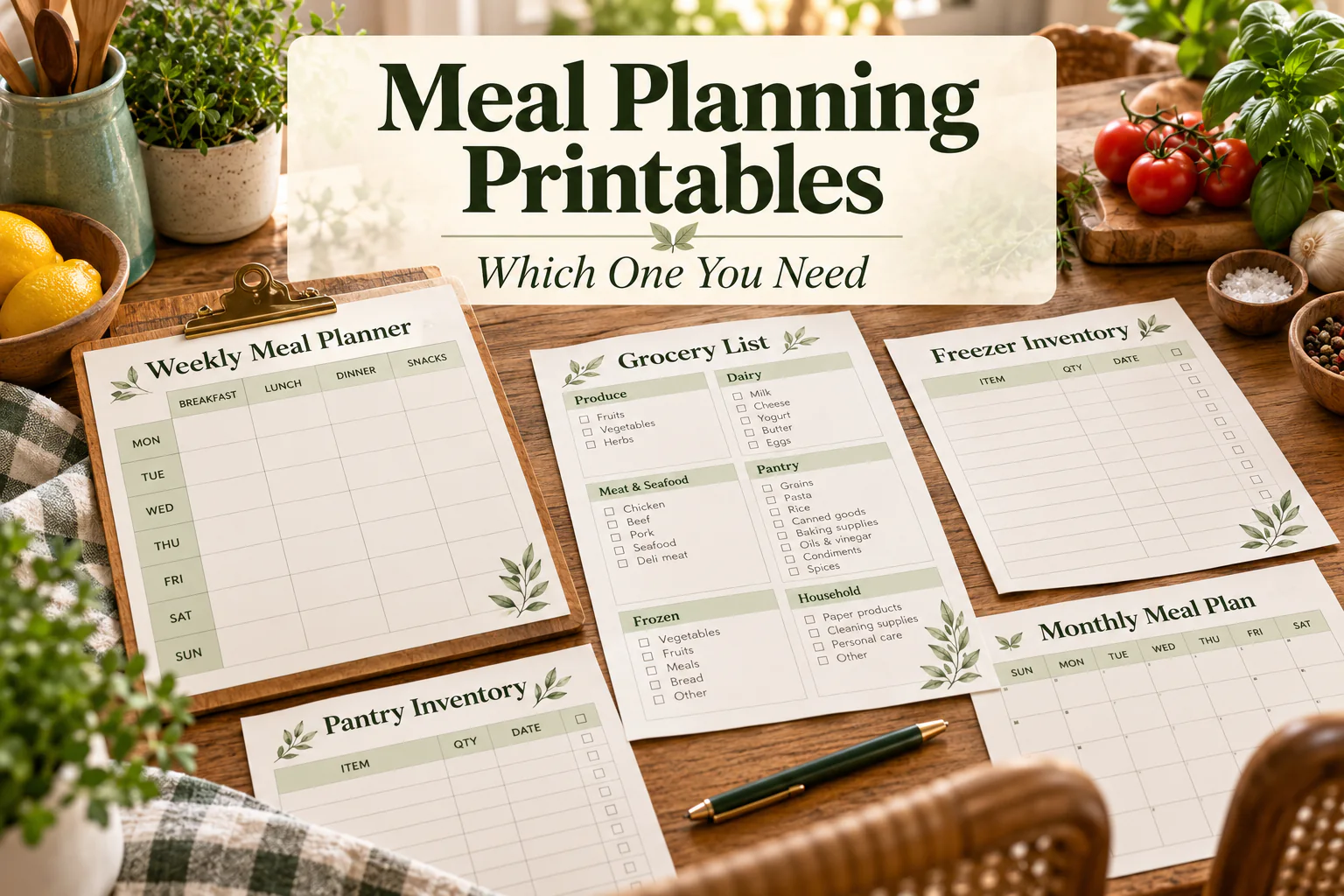
This sheet is a summary, not the whole lesson. Start with How to Meal Plan for the Week: The Complete Beginner’s Guide, and use the sheet as the reminder afterwards. If you want help choosing which other printables are worth having, see The Complete Guide to Meal Planning Printables.
Make this easier
Skip the blank page. The free Dinner Rotation Builder will build the week for you, and the cheat sheet keeps the routine in view.
Turn the idea into a system.
Keep Reading