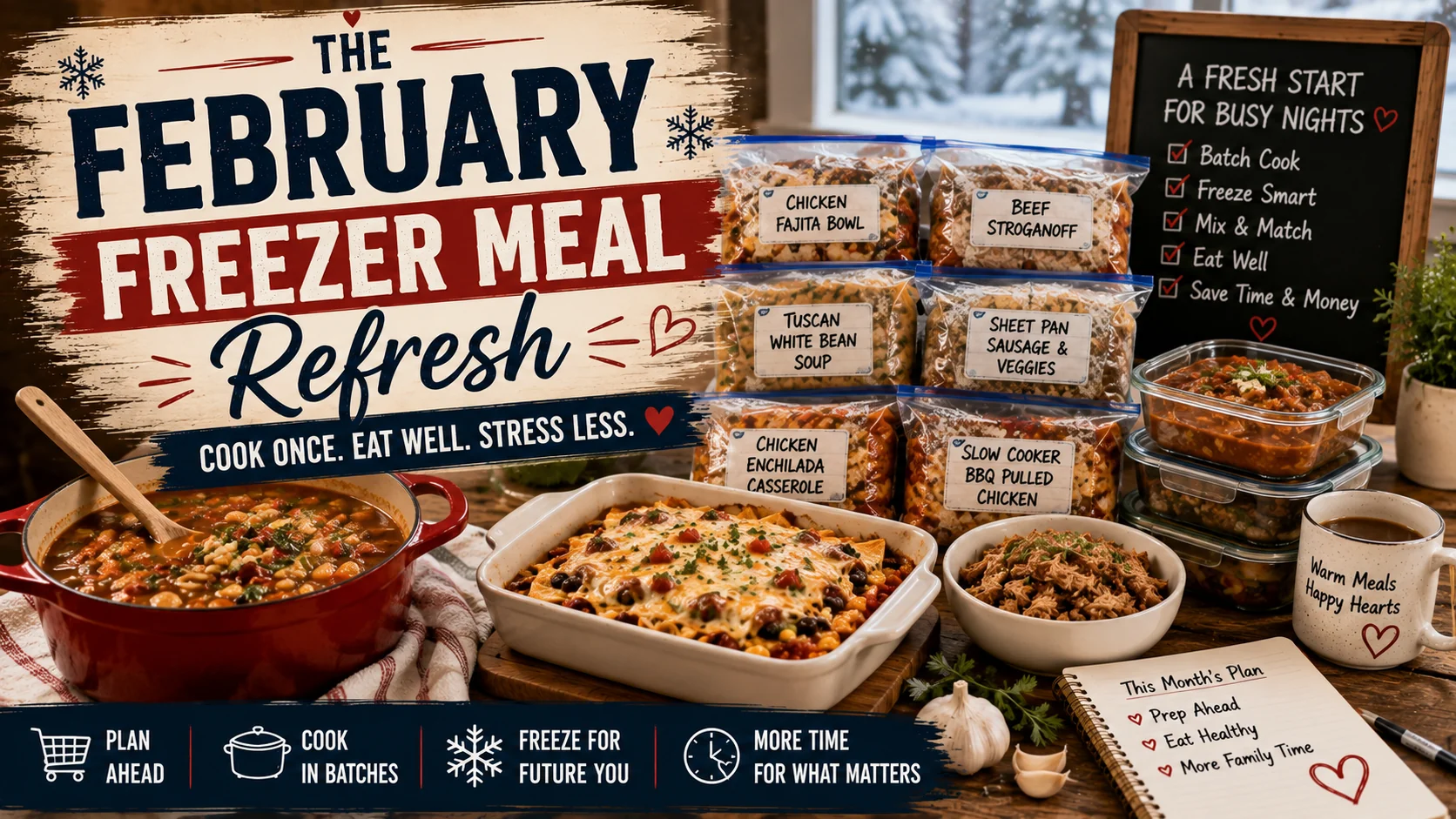
By February, the freezer often contains evidence of several good intentions: half a bag of dinner rolls, two containers of soup, frozen chicken bought on sale, vegetables hiding behind ice cream, and one mystery container nobody wants to claim.
The problem is rarely that there is no food.
The problem is that frozen food has stopped functioning as part of the meal system.
A February freezer meal refresh is not a deep-cleaning project. It is a 30–45 minute reset that answers four questions:
- What do we have?
- What should we use first?
- Which frozen items can become complete dinners?
- What is actually worth replacing?
Do that once and the freezer becomes useful again.
Step 1: inventory by category, not by perfect spreadsheet
You do not need to weigh every bag of peas.
Open the freezer and make a quick list under five headings:
- complete meals
- proteins
- vegetables/fruit
- breads and bases
- miscellaneous
A sample inventory might look like this:
Complete meals: chili x2, lasagna x1, chicken soup x2
Proteins: chicken thighs, ground beef, meatballs
Vegetables: broccoli, peas, mixed vegetables
Bases: bread, tortillas, cooked rice
Miscellaneous: shredded cheese, berries, pesto cubes
Now you can see meals instead of packages.
Freezer Rule
If you cannot tell what something is or when you froze it, the system needs better labeling—not more containers.
Follow appropriate food-safety guidance when deciding whether older, damaged, thawed, or questionable food should be used. A freezer reset is not a reason to guess about safety.
Step 2: create a use-first zone
Choose one basket, shelf, or front section for foods you want to use over the next two weeks.
Move there:
- older leftovers
- open packages
- single portions
- foods with damaged packaging that are still safe but need attention
- ingredients you keep forgetting
Do not hide them behind newly purchased food.
The use-first zone solves a visibility problem. Instead of remembering the entire freezer inventory at 5 p.m., you look at one small area.
Step 3: turn ingredients into dinner combinations
A bag of frozen chicken is not a meal plan. Neither is broccoli.
Look for combinations.
For example:
- meatballs + bread + cheese = meatball subs
- chicken + broccoli + rice = rice bowls
- frozen chili + tortillas + cheese = chili quesadillas or chili bowls
- soup + frozen rolls = easy dinner
- ground beef + frozen vegetables + potatoes = skillet or cottage-pie-style meal
- pesto + chicken + frozen peas + pasta = pasta dinner
Write down five dinners you can make using freezer ingredients plus normal pantry staples.
That list is the actual value of the inventory.
Step 4: schedule two freezer-first nights per week
For the next two weeks, give frozen food a job.
Example:
| Day | Freezer-first dinner |
|---|---|
| Tuesday | Chili + cornbread |
| Friday | Meatball subs + salad |
| Tuesday | Chicken rice bowls |
| Friday | Soup + grilled cheese |
Four freezer meals can clear significant space without forcing you into an unpleasant “eat everything frozen” challenge.
The rest of the week can stay normal.
Step 5: stop freezing leftovers without a destination
Freezing food saves waste only if it eventually comes back out.
When you freeze leftovers, label them with:
- name
- date
- servings
- optional reheating note
Then add the meal to your freezer list.
Better yet, decide its future role immediately:
“2 servings chili — lunch next week.”
“Shredded chicken — tacos.”
“Rice — fried rice night.”
The freezer becomes a queue, not a storage graveyard.
Refresh your freezer meals deliberately
After using older food, replace only the backup meals that genuinely make life easier.
Aim for two or three categories:
1. A complete emergency dinner
Something that needs only reheating or minimal assembly: soup, chili, casserole portions, meatballs, or another household favorite.
2. A fast protein
Cooked shredded chicken, meatballs, burger patties, or another protein that can become several meals.
3. A convenience base
Bread, tortillas, cooked rice, frozen vegetables, or another ingredient that shortens dinner prep.
You do not need 20 freezer meals. You need a small buffer that you actually rotate.
Batch cook for the freezer without creating a second job
The easiest freezer cooking happens alongside normal cooking.
If you are making chili, make a larger pot and freeze two portions.
If you cook meatballs, double the batch.
If rice is already cooking, make extra and freeze cooled portions appropriately.
If you roast chicken, freeze some cooked meat for a future soup or quesadilla night.
This “one for now, one for later” approach is easier to maintain than dedicating an entire weekend to freezer meal production.
Use smaller portions strategically
Not every frozen meal needs to feed the entire household.
Single portions are useful for:
- work-from-home lunches
- nights when family members eat at different times
- using the last serving of a large batch
- pairing two different leftovers for a “freezer buffet”
Label single servings clearly and keep them together so they do not disappear behind bulk packages.
Keep a freezer list where you plan meals
The inventory only works if you see it when making the weekly plan.
Use whatever system you already maintain: a note on your phone, a magnetic whiteboard, a paper list, or a section in your meal planner.
Keep it simple:
Meals: chili 2, soup 1, lasagna 1
Proteins: chicken 2 lb, meatballs 1 bag
Use first: cooked rice, rolls, open broccoli
Cross items off as they leave. Add meaningful items as they enter.
You do not need perfect real-time accounting for every frozen strawberry.
The “freezer is full” test
A full freezer is not necessarily a well-stocked freezer.
Ask:
- Can I name three dinners in here?
- Can I reach the food I need?
- Are the oldest items visible?
- Do I know what the containers contain?
- Is there enough room to freeze a useful batch meal?
If the answer is no, adding more sale items is not stocking up. It is reducing visibility.
Use what you have before rebuilding the buffer.
Build a February mini-plan from the refresh
After the inventory, choose:
- four freezer-first dinners
- two ingredients to use in lunches
- one item to discard if it is no longer safe or usable according to appropriate guidance
- one backup meal to replenish after space opens
That is enough for a meaningful reset.
You do not need to empty, defrost, reorganize, and refill the entire appliance in one day unless the appliance itself requires maintenance.
Prevent the same problem in March
Adopt three tiny rules:
- Label everything you freeze.
- Schedule one freezer meal every week or two.
- Check the use-first zone before shopping.
Those habits keep food moving.
The freezer is most valuable when it behaves like a time-shifting tool: you cook when you have capacity and eat the food when you do not.
February is a good moment to restore that function. Inventory quickly, move older food forward, turn ingredients into specific dinners, and replenish only the backups that earn their space.
The goal is not a beautiful freezer. It is opening the door on a hard week and finding dinner waiting for you.
Turn the idea into a system.
Keep Reading