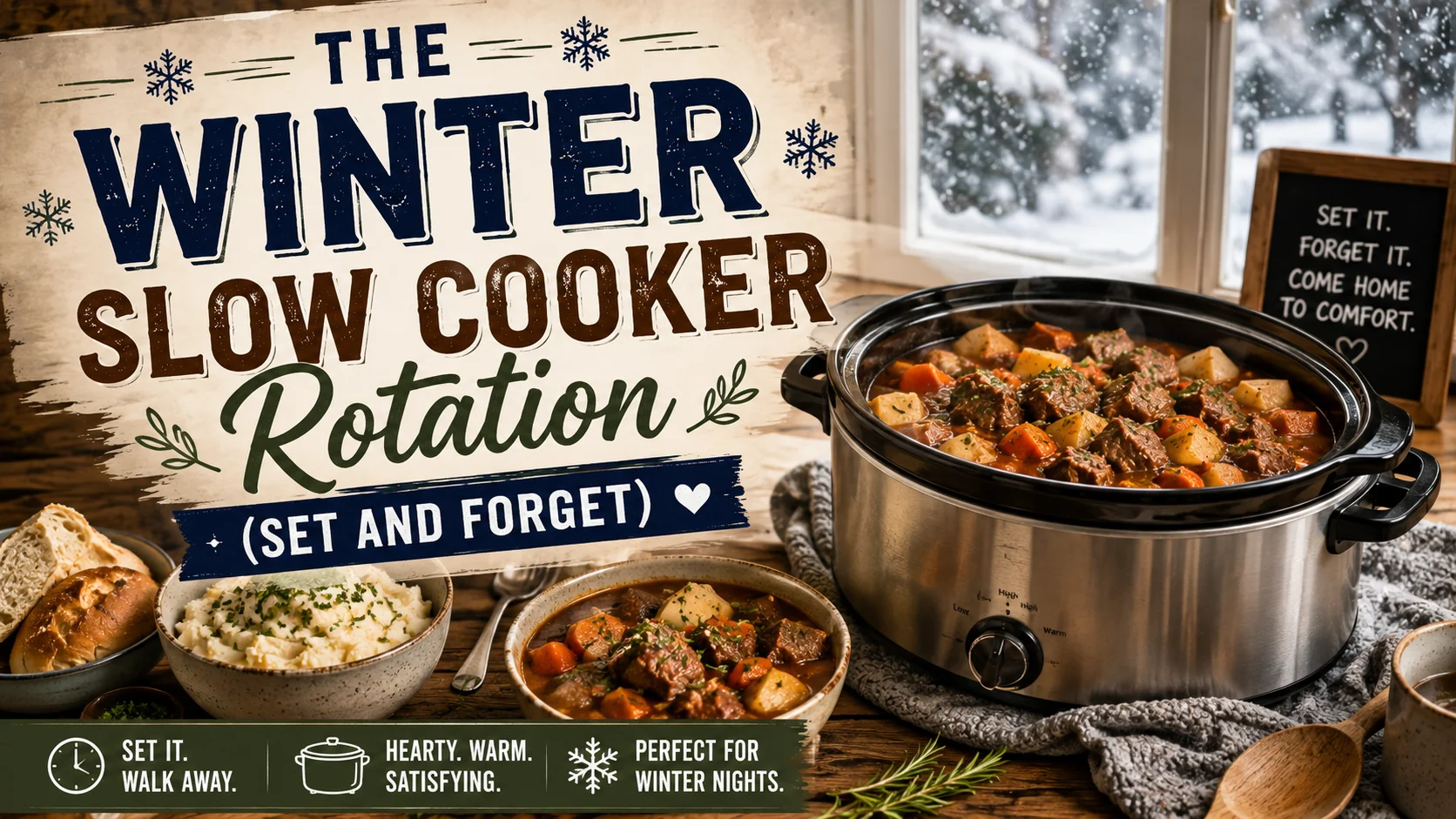
The slow cooker is supposed to make dinner easier. Yet it can become another appliance you only use when you happen to find the right recipe at the right time.
A winter slow cooker rotation fixes that problem.
Instead of collecting dozens of recipes, choose a small set of meal categories that repeat through the coldest weeks. The flavors can change, but the planning structure stays the same.
The result is less searching, fewer forgotten ingredients, and a reliable answer for the nights when everyone wants something warm but nobody wants to cook at 6 p.m.
The four-part winter rotation
Build your rotation around four categories:
- Soup or chili
- Shredded protein
- Stew or curry
- Saucy comfort meal
Use one category each week, then repeat the cycle.
That means you only need four dependable slow-cooker meals to create a month-long system.
The Rotation Rule
Do not add a fifth recipe until the first four are meals your household would willingly eat again.
Week 1: soup or chili
This is the easiest place to start because soups are forgiving and often freezer-friendly.
Options include beef chili, white chicken chili, lentil soup, chicken tortilla soup, minestrone, potato soup, or a simple bean soup.
Choose one that uses ingredients you normally buy. A system works better when it fits your pantry than when it depends on an exciting but unfamiliar ingredient list.
Serve the soup with one automatic side: bread, cornbread, quesadillas, crackers, or a simple salad.
Now the entire dinner is decided.
Week 2: shredded protein
Shredded meat is useful because tonight’s slow-cooker dinner can become tomorrow’s completely different meal.
Try shredded chicken, pork, or beef with a simple seasoning profile. Serve it first as sandwiches, tacos, or bowls, then deliberately save a portion.
Leftovers can become:
- quesadillas
- baked potato toppings
- rice bowls
- nachos
- soup additions
- wraps
This is where slow cooking becomes a planning tool rather than just a cooking method.
You are creating future ingredients while making today’s dinner.
Week 3: stew or curry
A stew-style meal combines protein, vegetables, and sauce in one pot, which means fewer supporting dishes.
Beef stew is the obvious classic, but chicken curry, chickpea curry, lentil stew, or chicken with potatoes and vegetables can fill the same role.
Pair it with rice, bread, or nothing at all if the meal already includes potatoes or another starch.
The important rule: choose recipes that tolerate the full cooking window you actually need. If you will be away for eight hours, a recipe that is perfect after four hours is not convenient for your life.
Week 4: saucy comfort meal
The final category covers meals where the slow cooker handles a flavorful filling or sauce.
Examples include meatballs in marinara, chicken in a creamy sauce, sloppy joe filling, barbecue chicken, or a hearty pasta sauce.
Cook pasta, rice, potatoes, or rolls separately near dinner time. That five- or ten-minute finishing step is usually manageable because the main component is already done.
Choose ingredients that overlap
A good rotation reduces the number of one-use groceries.
Imagine four meals:
- beef and bean chili
- salsa chicken
- beef stew
- marinara meatballs
Across those meals, you can reuse onions, garlic, carrots, canned tomatoes, broth, beans, potatoes, cheese, bread, and basic seasonings.
You are not buying four unrelated baskets of groceries.
Before adding a slow-cooker recipe to your rotation, scan the ingredient list. If it requires six items you never use anywhere else, it may be a fun occasional recipe but a poor default.
Build a slow-cooker pantry shelf
Keep the shelf simple. The purpose is to make several meals possible without a special shopping trip.
Useful staples include:
- canned tomatoes
- canned beans
- broth or bouillon
- tomato paste
- rice
- pasta
- tortillas
- basic dried herbs and spices
- onions and garlic
- freezer proteins
You do not need all of these for every meal. You need enough overlap that missing one planned dinner does not collapse the week.
Prep the night before when mornings are rushed
“Dump and go” sounds effortless until you are chopping onions at 7:15 a.m.
If mornings are busy, move the decision and prep work to the evening.
The night before:
- chop vegetables
- measure dry seasonings
- check that the protein is thawed safely if required
- place shelf-stable ingredients together
- set out the slow cooker
- write any final morning step on a note
Follow food-safety guidance for your specific recipe and appliance; do not improvise unsafe overnight storage of assembled ingredients.
The point is to remove morning friction, not to create a new food-safety shortcut.
Use one “cook once, eat twice” meal each cycle
At least one of your four meals should intentionally produce leftovers.
If salsa chicken feeds your household for one dinner, make enough for a second use when practical. Tuesday can be chicken bowls; Thursday can be quesadillas.
That second dinner should not feel like a repeat. Change the format, toppings, and side.
This gives you one nearly free cooking night every four-week cycle.
Freeze one portion before serving
If a meal freezes well, remove a portion before everyone starts taking seconds.
Label it with:
- meal name
- date
- approximate servings
- reheating note if useful
Freezing “whatever is left” is unreliable because sometimes nothing is left. Freezing intentionally turns the slow cooker into a future-meal generator.
After several weeks, those portions create an emergency dinner library.
A sample four-week rotation
| Week | Slow-cooker meal | Easy side | Planned second use |
|---|---|---|---|
| 1 | Beef & bean chili | Cornbread | Freeze 2 servings |
| 2 | Salsa chicken | Rice + slaw | Quesadillas |
| 3 | Beef stew | Bread | Lunch leftovers |
| 4 | Marinara meatballs | Pasta + salad | Meatball subs |
Repeat the structure next month. Keep favorite meals and replace only the ones people are tired of.
Create a backup for the forgotten-slow-cooker morning
Every system needs a failure mode.
Sometimes you will remember the slow cooker at 4:45 p.m. That does not mean the week is ruined.
Pair every slow-cooker day with one emergency alternative that uses ingredients you already keep around:
- eggs and toast
- frozen dumplings and vegetables
- pasta and jarred sauce
- grilled cheese and soup
- freezer leftovers
Then move the slow-cooker meal to another day or freeze the thawed ingredient appropriately according to food-safety guidance.
A robust meal system expects imperfect days.
Let the appliance reduce decisions, not create them
The biggest advantage of a winter slow cooker rotation is not that dinner cooks unattended. It is that the same four-part framework can carry you through January, February, and beyond.
You stop asking, “What slow-cooker recipe should I make?” and start asking a much smaller question: “Which category are we on?”
Keep four winners. Stock their overlapping ingredients. Prep the night before when necessary. Freeze portions deliberately. Add an emergency backup.
That is how the slow cooker becomes a real winter system: not hundreds of saved recipes, but a handful of meals that reliably make cold weeknights easier.
Turn the idea into a system.
Keep Reading