The first grocery trip after the holidays can go wrong in two opposite directions.
You either buy almost nothing because the kitchen still looks full, or you do a giant “fresh start” shop and spend far more than expected.
Both happen because holiday food makes it hard to see what you actually have.
The post-holiday grocery reset fixes that in one short sequence: clear, count, plan, restock, then shop.
1. Clear the obvious leftovers first
Before making a grocery list, deal with food that is already cooked or already open.
Check:
- holiday leftovers;
- opened cheese and dips;
- cooked meat;
- bread and rolls;
- half-used vegetables;
- desserts;
- sauces;
- party snacks.
Sort everything into four decisions:
Eat soon
Food that should become a meal or snack in the next day or two.
Freeze
Food you still want but will not realistically eat soon.
Repurpose
Ingredients that can become another meal.
Examples:
- roast meat → sandwiches, tacos, soup;
- bread → toast, breadcrumbs, breakfast bake;
- cheese → pasta, eggs, quesadillas;
- cooked vegetables → soup, frittata, bowls.
Let go
Food nobody wants, food of questionable quality, or tiny amounts you are keeping only out of guilt.
2. Create a “use first” zone
Choose one shelf, drawer, or clear bin in the refrigerator.
Put the foods that should be used first there.
A visible zone is much more effective than trying to remember that half a container of cooked rice is behind the milk.
Include:
- opened produce;
- leftovers;
- dairy nearing its date;
- cooked grains;
- opened sauces;
- small amounts of meat or cheese.
For the first week of January, check this zone before lunch and before choosing dinner.
3. Do a fast pantry and freezer scan
You do not need a detailed inventory spreadsheet.
Write down only the foods that can help build meals.
Pantry
Look for:
- pasta;
- rice;
- beans;
- canned tomatoes;
- broth;
- tortillas;
- oats;
- baking basics;
- sauces.
Freezer
Look for:
- proteins;
- frozen vegetables;
- bread;
- prepared meals;
- leftovers;
- fruit;
- anything unlabeled that should be used soon.
Use a simple three-column list:
| Use first | Plenty | Need soon |
|---|---|---|
| cooked ham | rice | eggs |
| open spinach | pasta | milk |
| frozen chili | beans | fruit |
This is enough information to build the next grocery trip.
4. Plan three meals from what you already own
Before adding anything to the shopping list, choose at least three meals that use existing food.
For example:
Meal 1
Frozen chili + bread already at home
Meal 2
Pasta + tomato sauce + open spinach
Meal 3
Rice bowls with leftover meat + frozen vegetables
Now the grocery list starts smaller automatically.
The Three-Meal Reset Rule
Before the first big January grocery shop, plan three dinners using mostly food already in the house.
You can buy bridge ingredients, but do not start the week with seven completely new grocery lists.
If your pantry is especially crowded, use the January Pantry-First Meal Plan for a fuller version of this process.
5. Rebuild essentials, not aspirations
Once the kitchen is visible again, list the basics that genuinely need replacing.
Think in categories:
Breakfast basics
- eggs;
- oats;
- bread;
- yogurt;
- fruit.
Lunch basics
- sandwich ingredients;
- leftovers containers;
- wraps;
- soup;
- simple salad ingredients.
Dinner basics
- one or two flexible proteins;
- vegetables;
- starches;
- one rescue meal.
Household staples
Only include items you actually use regularly.
The danger in January is buying for an imagined new routine.
If nobody normally drinks green smoothies at 7 a.m., a cart full of smoothie ingredients is not a grocery reset. It is a new project.
6. Separate restock spending from normal food
The first January shop may include items that do not belong to a normal week:
- olive oil;
- rice;
- spices;
- flour;
- freezer staples;
- coffee;
- pantry basics used up during the holidays.
Track those separately.
For example:
| Spending type | Amount |
|---|---|
| Normal weekly food | $140 |
| Pantry restock | $28 |
| Flex | $10 |
| Total trip | $178 |
Without the split, you might conclude that your weekly grocery budget suddenly jumped to $178.
It did not. Part of that was inventory rebuilding.
For a full budgeting framework, use the January Grocery Budget Reset.
7. Restock one rescue meal
Holiday weeks often use up frozen pizza, soup, easy pasta, or other backup foods.
Make sure January begins with at least one rescue meal ready.
Good rescue meals are:
- fast;
- inexpensive compared with takeout;
- made mostly from pantry/freezer food;
- accepted by the household.
Examples:
- frozen dumplings + vegetables;
- eggs + toast;
- pasta + jarred sauce;
- quesadillas + beans;
- soup + grilled cheese;
- frozen meatballs + rolls.
Minimum reset1 rescue meal always available
8. Put the grocery rhythm back on the calendar
Holiday shopping is irregular. January works better when groceries return to a predictable rhythm.
Choose:
- primary planning day;
- main grocery day;
- optional mini-restock day.
Example:
Saturday: meal plan + pantry check
Sunday: main shop
Thursday: milk/produce only if needed
The exact days do not matter.
Consistency does.
A predictable grocery rhythm reduces emergency shops, which are where extra spending and duplicate purchases often happen.
9. Use a first-week shopping list by section
Once the reset decisions are made, organize the final list.
Produce
Only what supports planned meals, breakfasts, lunches, or snacks.
Protein
Buy flexible proteins that can work in more than one meal.
Dairy
Replace true basics first.
Pantry
Separate normal needs from stock-up items.
Frozen
Include vegetables and one backup meal if needed.
Extras
Give extras their own visible section instead of letting them blend into the list.
If the total is too high, this is the first section to review.
10. Finish with a 5-minute kitchen reset
After shopping, take five minutes to make the system easier to use.
- put older food in front;
- keep the use-first zone visible;
- label freezer items that are unclear;
- place rescue-meal ingredients together when possible;
- store frequently used staples where you can see them;
- add anything already running low to the next list.
The grocery reset is complete when the food you bought has a clear place and purpose.
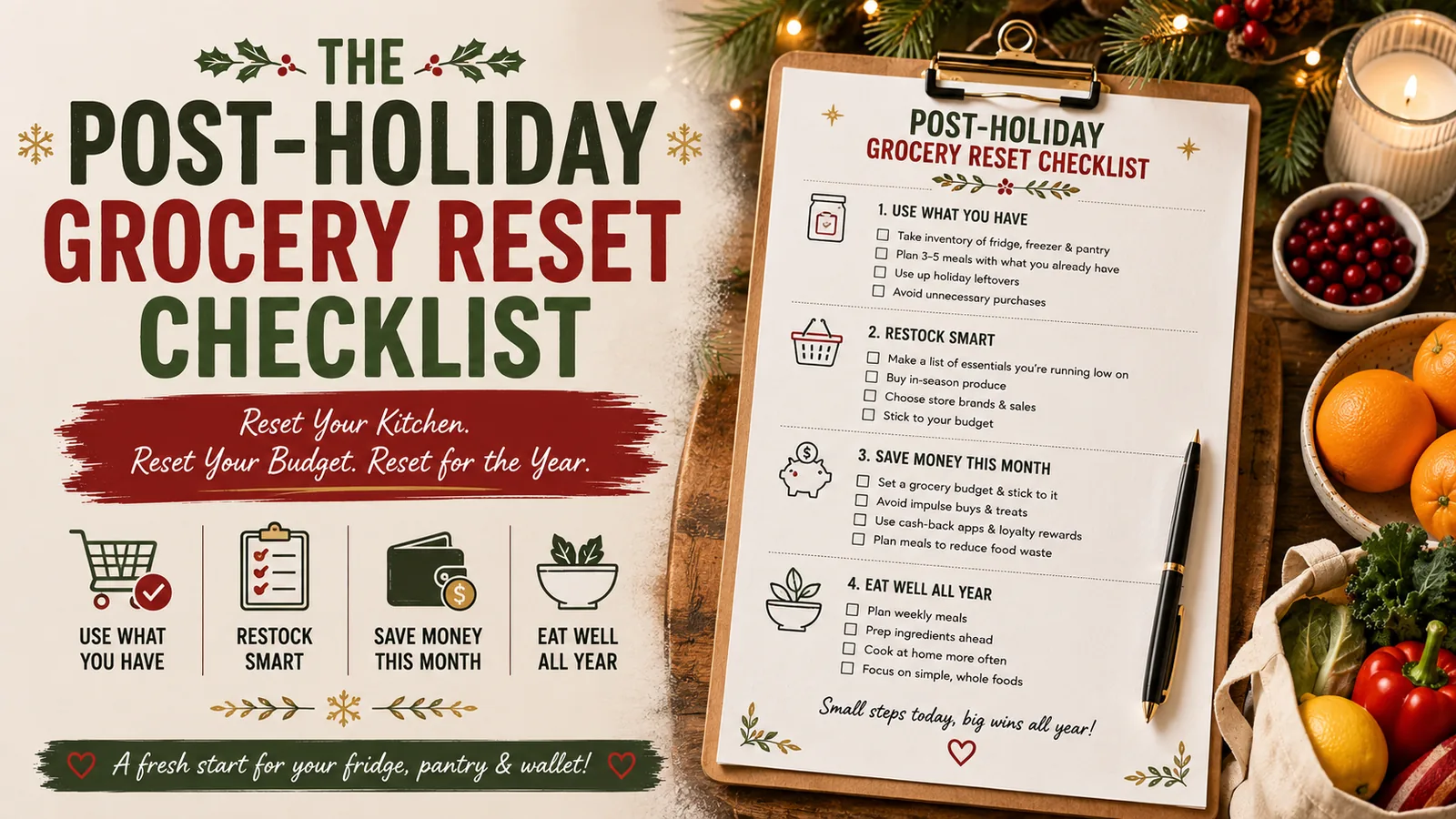
The complete post-holiday checklist
- Sort holiday leftovers into eat, freeze, repurpose, or discard
- Create one visible use-first fridge zone
- Scan pantry and freezer for meal-building ingredients
- Plan at least 3 dinners from food already at home
- List genuine breakfast, lunch, and dinner basics
- Separate pantry restock spending from normal weekly food
- Restock one rescue meal
- Set a primary grocery day
- Organize the shopping list by store section
- Put older food in front after shopping
What not to do during the reset
Avoid turning the first January grocery trip into a complete lifestyle overhaul.
You do not need to:
- replace every pantry item;
- buy a month of food;
- try seven new recipes;
- stock up because everything is “on sale”;
- throw away usable food just to make the fridge look empty;
- create a complicated inventory you will never update.
A good reset is practical, not dramatic.
The goal is to restore normal
The holidays temporarily distort your kitchen.
There is more snack food, more leftovers, more unusual ingredients, and a shopping schedule that no longer resembles a normal week.
The January reset simply restores visibility and rhythm.
You know what should be eaten first. You know what is already available. You know which basics genuinely need replacing. And your next grocery trip supports real meals instead of a vague “fresh start.”
That is enough to make the rest of January much easier.
Turn the idea into a system.
Keep Reading