January is a strange month for groceries. You may be trying to spend less after the holidays, but the pantry is full of random extras, routines are restarting, and “fresh start” shopping can turn into an expensive cart of ingredients that do not become actual meals.
The fix is not a stricter diet or a complicated spreadsheet.
It is a budget reset that separates what your household normally needs from what January makes you want to buy.
Step 1: find your real weekly baseline
Start with the amount you can realistically spend on normal groceries in an ordinary week.
Do not begin with an ideal number.
Use this quick calculation:
Weekly Grocery Baseline
Monthly grocery amount ÷ 4.3 = weekly baseline
Example:
$650 ÷ 4.3 = about $151 per week
Use 4.3 instead of 4 because most months are longer than exactly four weeks.
If you do not know your monthly amount, look at the last 6-8 weeks and estimate a normal range.
The goal is not accounting precision. You need a ceiling you can make decisions against.
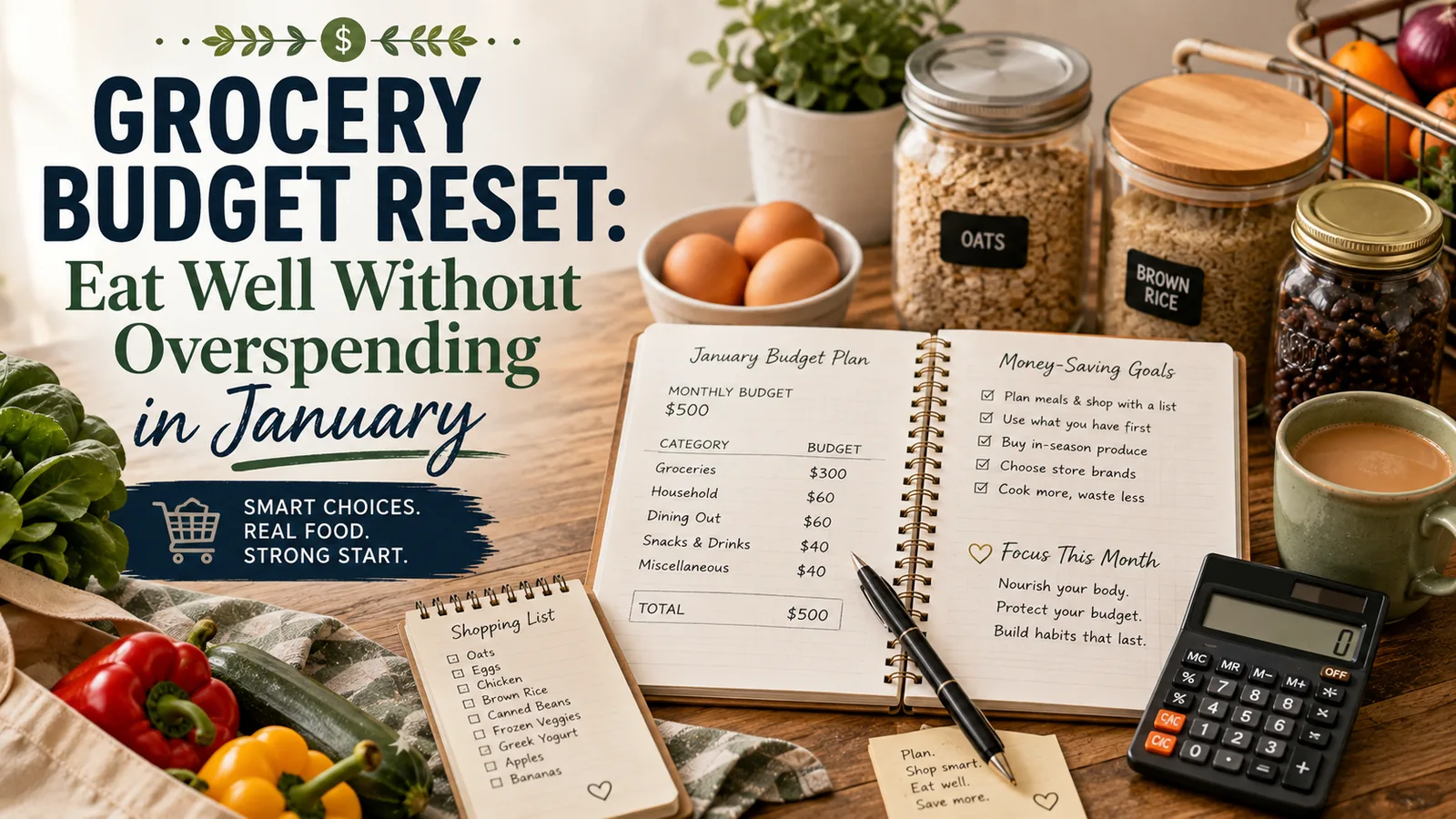
Step 2: split January spending into three buckets
January grocery spending gets confusing when everything comes from one number.
Use three buckets:
| Bucket | Covers | Example |
|---|---|---|
| Weekly food | Normal meals, breakfasts, lunches, snacks | $135 |
| Restock | Pantry/freezer basics genuinely depleted | $25 |
| Flex | Price changes, guests, one convenience purchase | $15 |
In this example, the week has a $175 maximum, but only $135 is available for normal meal ingredients.
That distinction matters. A $30 olive oil / rice / spice restock should not make you think your dinner plan “failed.”
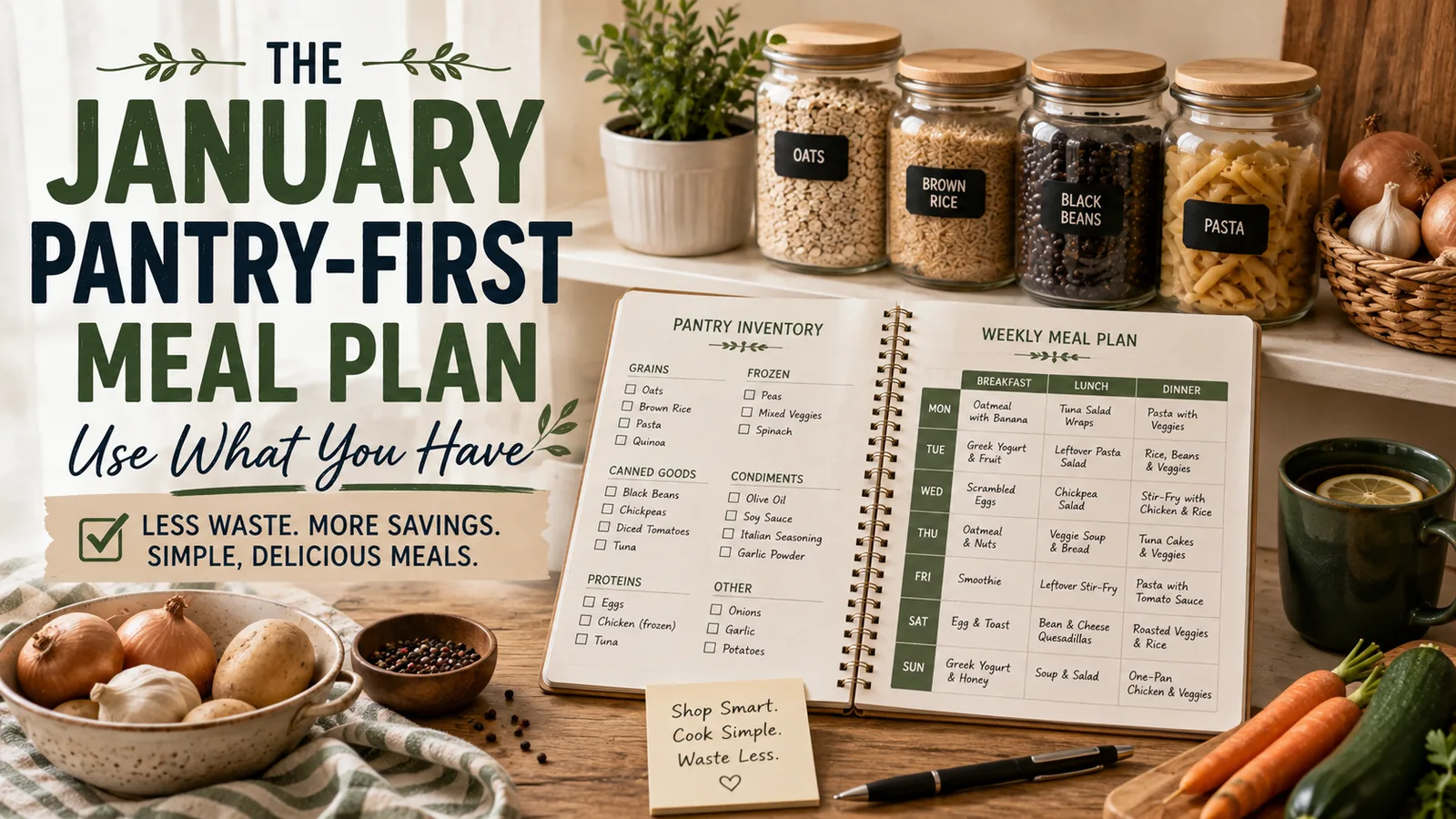
Step 3: run a pantry-first check before planning
Before choosing January meals, list what is already available in five categories:
- proteins;
- grains/starches;
- canned goods;
- frozen vegetables/fruit;
- sauces and flavor builders.
You are not making a full inventory. You are looking for meal starters.
For example:
- 2 lb ground beef
- 1 bag frozen chicken thighs
- rice
- pasta
- 3 cans black beans
- tomato sauce
- frozen broccoli
- tortillas
That is already several dinners.
Build the first half of the week around those foods before buying more.
Step 4: use the $10-per-dinner test
For a family meal, choose a working target for the incremental cost of dinner — the ingredients you actually need to buy this week.
A useful starting point is $10-$15 for many simple family dinners, depending on household size and local prices.
The test is simple:
If tonight’s dinner needs six new ingredients and costs $28 to complete, is there a meal that uses what you have and needs only $8-$12 of new food?
This does not mean every dinner must be cheap. It prevents several expensive “one-off” meals from quietly taking over the week.
Example
You already have rice, frozen broccoli, soy sauce, and eggs.
Option A:
- new salmon fillets: $22
- sesame oil: $7
- fresh scallions: $2
- total new spend: $31
Option B:
- chicken thighs: $9
- scallions: $2
- total new spend: $11
Both can become rice bowls. The second option fits the week better.
Step 5: build meals around overlapping ingredients
A grocery budget improves when ingredients have more than one job.
Use the 3-use rule for perishables:
Before buying a perishable ingredient, know three ways it can be used.
Example: spinach
- pasta;
- scrambled eggs;
- soup.
Example: tortillas
- tacos;
- breakfast wraps;
- quesadillas.
Example: rotisserie chicken
- bowls;
- soup;
- sandwiches.
Step 6: cap the number of “new” meals
Novel recipes create hidden grocery costs because they introduce ingredients that do not overlap with the rest of the week.
For January, use this ratio:
A low-friction January week4 familiar meals + 1 new meal + 1 rescue + 1 flex
That gives you variety without rebuilding the pantry for a different cuisine every night.
A $150 weekly example
Here is a sample structure for a household working with a $150 normal-food budget:
| Category | Budget |
|---|---|
| Dinners | $70 |
| Breakfasts | $20 |
| Lunches | $25 |
| Snacks/fruit | $20 |
| Milk/bread/household food basics | $15 |
| Total | $150 |
The dinner portion does not mean seven $10 dinners exactly. It means the week has a dinner ceiling.
One meal might cost $18, another $6.
Sample dinner lineup
- chicken tacos
- pasta with meat sauce
- lentil soup + grilled cheese
- sheet-pan chicken + potatoes
- fried rice using leftovers
- rescue meal
- leftovers/flex
The point is not the menu itself. The point is that several meals reuse tortillas, cheese, onions, rice, chicken, and pantry staples.
The cart rule that prevents overspending
Before checkout, divide the cart mentally into:
- planned meal ingredients;
- breakfast/lunch/snack staples;
- stock-up items;
- extras.
If the cart is over budget, cut in this order:
extras → duplicate stock-ups → expensive one-off meal ingredients → convenience upgrades
Do not start by removing basic food from planned meals.
The 5-Minute Cart Audit
Before paying, ask:
- Is every perishable attached to a meal?
- Did I buy two versions of the same convenience?
- Am I “stocking up” just because something is on sale?
- Is there a $15-$25 ingredient for only one recipe?
- Do I already own a substitute?
What counts as a smart January stock-up?
A stock-up is worth it when all three are true:
- you use the item regularly;
- the unit price is meaningfully lower;
- buying extra does not force you over the month’s cash-flow limit.
Good candidates can include:
- rice;
- oats;
- pasta;
- canned beans;
- broth;
- frozen vegetables;
- frequently used proteins when there is freezer space.
A sale does not automatically make something a budget purchase.
If it sits unused for six months, it was expensive inventory.
Set one convenience allowance on purpose
A very tight grocery plan can backfire if it removes every shortcut.
Choose one or two conveniences that genuinely prevent takeout.
Examples:
- rotisserie chicken;
- frozen pizza;
- bagged salad;
- pre-cut vegetables;
- microwave rice;
- frozen dumplings.
A $7 convenience item that prevents a $45 delivery order can be a budget tool.
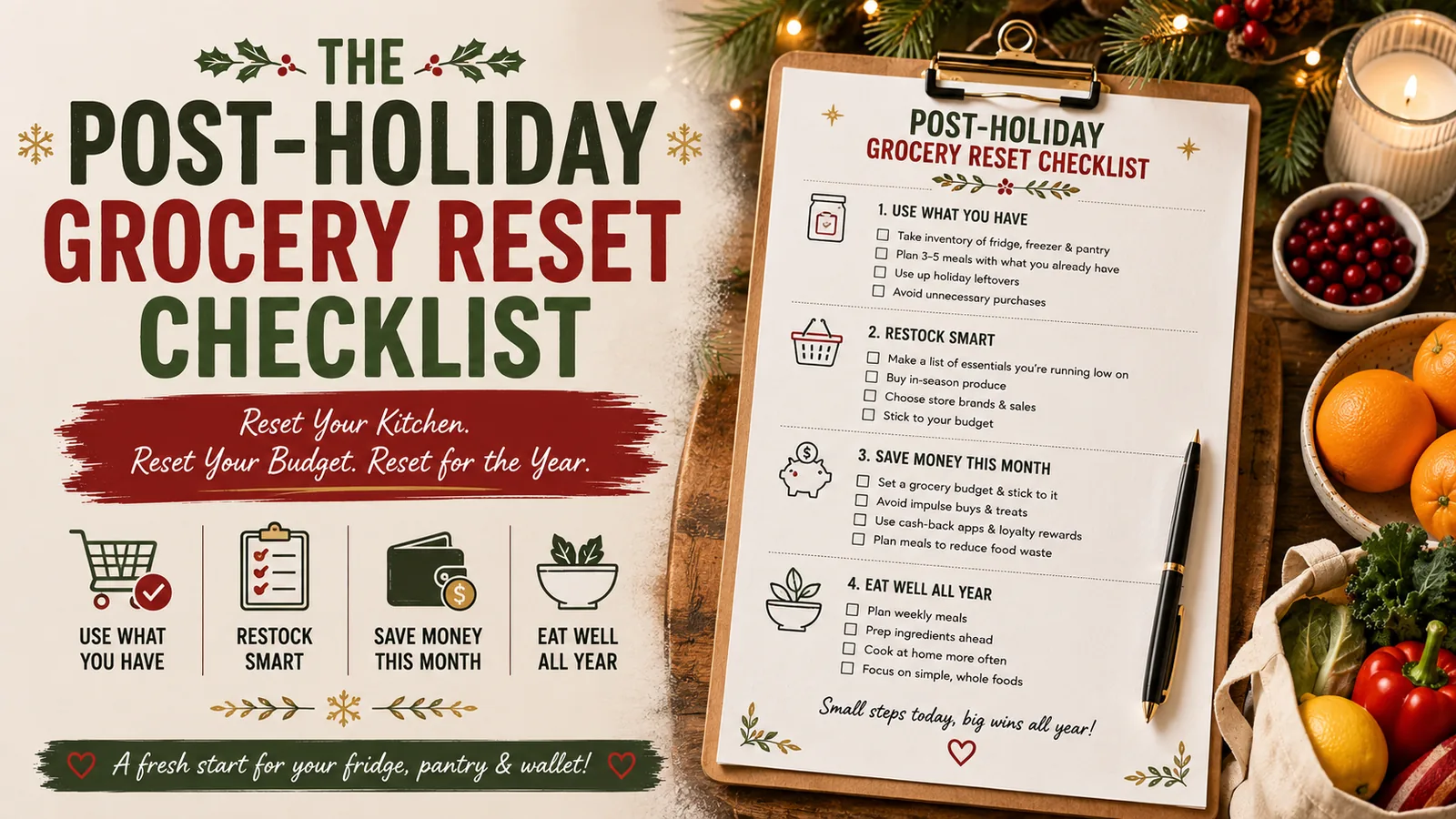
Your weekly January reset routine
Use this every week:
- Check the week's grocery ceiling
- List 5-10 useful foods already at home
- Plan 4 familiar dinners around those foods
- Add 1 new meal only if the budget allows
- Choose 1 rescue meal
- Give perishables 3 planned uses
- Write the list by meal, then by store section
- Run the 5-minute cart audit before checkout
For a broader planning framework, build your meal system from your real schedule and budget rather than copying a menu that assumes a completely different household.
The goal: a budget you can repeat in February
A January grocery reset works when it creates visibility.
You know your baseline. You know what belongs to normal food versus restocking. You know how much flexibility is available. And you have a rule for cutting the cart when spending climbs.
That is much more useful than trying to have the cheapest grocery week of the year.
The win is building a grocery rhythm that still makes sense once January motivation is gone.
Turn the idea into a system.
Keep Reading