A weekly meal planner is only useful if it helps you make decisions faster.
If it becomes another page you have to decorate, maintain, or fill perfectly, it is creating work instead of removing it.
This January template is built around one idea: plan the hard parts of the week first, then let the easy parts fall into place.
The weekly planning order that prevents chaos
Most people plan meals in the wrong order.
They start with seven empty dinner boxes and ask, “What should we eat?”
Instead, use this order:
- calendar;
- hard nights;
- meal categories;
- leftovers;
- rescue meal;
- grocery list.
That sequence makes the plan fit your life instead of asking your life to fit the plan.
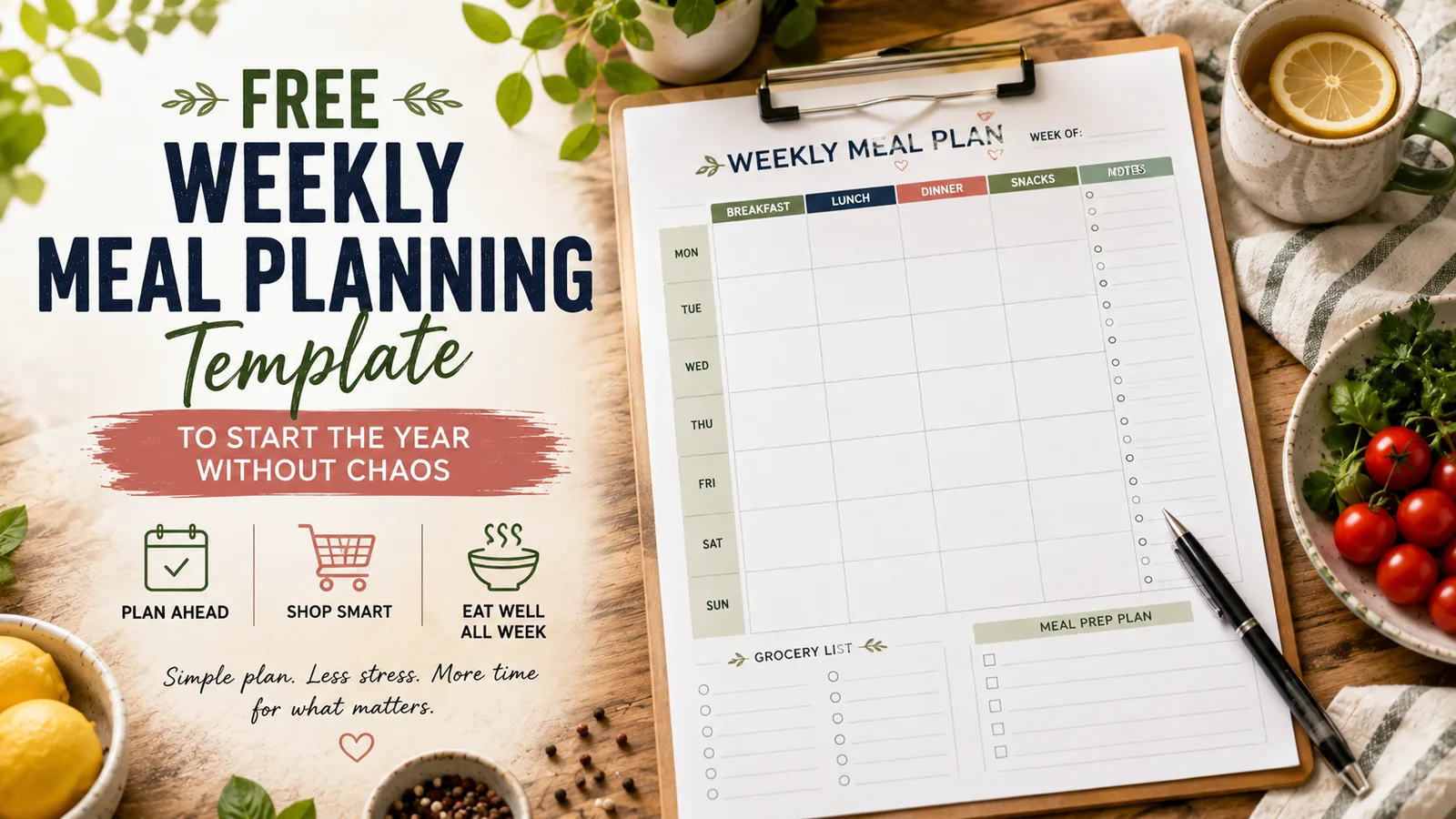
Your Weekly Meal Planning Template
Week of: __________
Hard nights: __________
Easy nights: __________
One flex night: __________
| Day | Schedule | Dinner | Prep needed? |
|---|---|---|---|
| Monday | |||
| Tuesday | |||
| Wednesday | |||
| Thursday | |||
| Friday | |||
| Saturday | |||
| Sunday |
Rescue meal: __________
Leftovers night: __________
Main grocery day: __________
You can copy this structure into a notes app, notebook, spreadsheet, or printable page. The format matters less than the order in which you fill it.
Step 1: mark the week before choosing food
Look at the calendar first.
Mark:
- late workdays;
- sports or activities;
- appointments;
- nights out;
- days you will already be cooking something;
- weekends when you have more time.
Then label each dinner night:
- H = hard
- N = normal
- E = easy
Example:
| Day | Reality | Type |
|---|---|---|
| Monday | Home late | H |
| Tuesday | Normal | N |
| Wednesday | Practice | H |
| Thursday | Normal | N |
| Friday | Tired | H |
| Saturday | Home | E |
| Sunday | Home + prep | E |
Now you know where the easy meals belong.
Step 2: assign meal categories before exact recipes
Categories are faster than recipes.
Try this set:
- Fast: 15-20 minutes
- Hands-off: slow cooker, oven, sheet pan
- Default: familiar repeat meal
- Pantry: mostly shelf/freezer ingredients
- Leftovers: planned reuse
- Flex: intentionally undecided
Place categories against the week first.
For example:
| Day | Type | Category |
|---|---|---|
| Monday | H | Hands-off |
| Tuesday | N | Default |
| Wednesday | H | Fast |
| Thursday | N | Pantry |
| Friday | H | Flex |
| Saturday | E | New/fun meal |
| Sunday | E | Batch + leftovers |
Only then choose actual dishes.
This is much faster because you are solving the right problem: what kind of meal can this night handle?
Step 3: plan leftovers as an asset
Leftovers should not be an accident.
If you know a meal makes six servings and your household eats four, write down where the other two servings go.
Examples:
- Tuesday taco filling → Wednesday lunch bowls;
- Sunday chili → Monday dinner;
- roasted chicken → Thursday wraps;
- cooked rice → Friday fried rice.
That one rule reduces food waste and makes the week easier.
Step 4: choose one rescue meal
Every weekly template should have a box for a rescue meal.
That is the meal you use when the plan collapses.
Choose one that:
- takes 15 minutes or less;
- uses shelf-stable or freezer food;
- requires almost no chopping;
- is acceptable to the household.
Examples:
- eggs + toast;
- quesadillas + beans;
- frozen ravioli + peas;
- soup + sandwiches;
- frozen meatballs + pasta;
- rotisserie chicken + microwave sides.
If you use the rescue meal this week, restock it before the next one starts.
Step 5: make the grocery list from the plan
Do not build the grocery list from memory.
Work through the meal plan line by line.
For each dinner:
- write what you need;
- cross off what is already in the house;
- combine duplicate ingredients;
- sort the final list by store section.
A simple structure:
Produce
- onions
- lettuce
- apples
- broccoli
Protein
- chicken thighs
- ground beef
- eggs
Dairy
- milk
- cheese
- yogurt
Pantry
- tortillas
- pasta
- canned beans
Frozen
- peas
- rescue meal backup
This prevents the classic problem of buying groceries that do not connect into meals.
The 20-minute January planning routine
You should be able to complete the whole template in about 20 minutes.
0-5 minutes: calendar
Mark hard and easy nights.
5-10 minutes: categories
Assign fast, hands-off, default, pantry, leftovers, flex.
10-15 minutes: actual dinners
Choose dishes from meals you already know.
15-20 minutes: groceries
Check pantry/freezer and write the list.
Planning target20 minutes once per week
If the plan consistently takes an hour, simplify the system.
Example: a filled January week
| Day | Schedule | Dinner | Prep |
|---|---|---|---|
| Monday | Late | Slow cooker chili | Load cooker AM |
| Tuesday | Normal | Chicken tacos | None |
| Wednesday | Practice | Quesadillas + fruit | None |
| Thursday | Normal | Pasta + broccoli | Chop broccoli |
| Friday | Flexible | Leftovers / takeout | None |
| Saturday | Home | Sheet-pan dinner | 10 min prep |
| Sunday | Home | Soup + sandwiches | Make extra soup |
Rescue: frozen dumplings
Leftovers: chili lunches + Sunday soup
Grocery day: Sunday morning
This plan works because the hardest nights have the least demanding food.
Three versions of the template
Different weeks need different levels of detail.
Minimal version
Use only:
- day;
- dinner;
- grocery list.
Best for weeks when your routine is stable.
Standard version
Use:
- day;
- schedule;
- dinner;
- prep;
- rescue meal;
- leftovers;
- grocery list.
Best for most households.
Chaos-week version
Add:
- who is home;
- latest dinner time;
- backup option;
- food that must be used first.
Use this during travel weeks, school events, illness, or heavy work periods.
What not to put on the template
Do not turn the weekly page into a life dashboard.
Avoid adding:
- calorie tracking unless you actively need it;
- every snack;
- detailed recipes;
- every pantry item;
- aspirational prep tasks;
- seven brand-new dinners.
A meal planner should tell you what is happening, not become another thing that has to be managed.
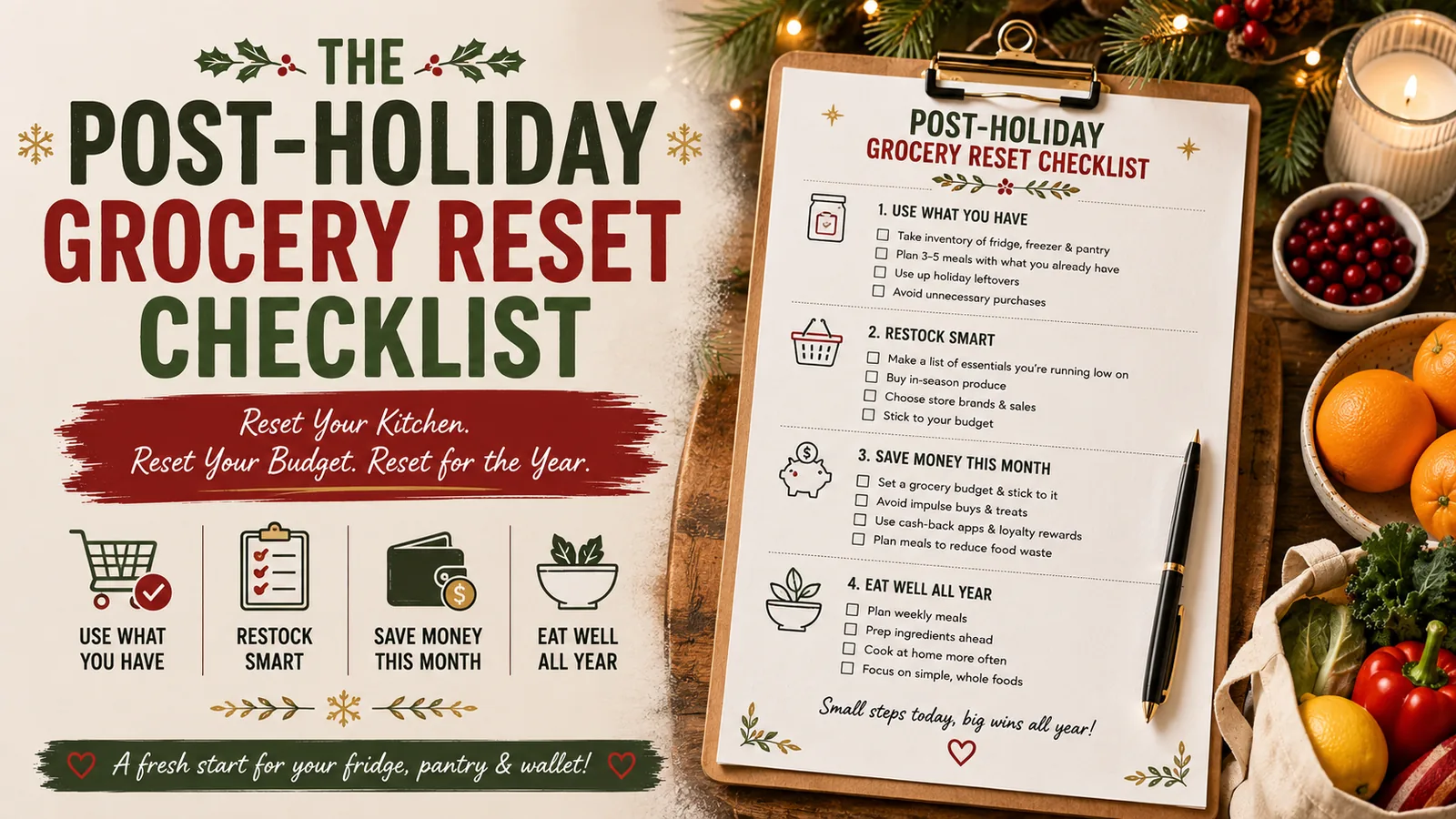
The January reset checklist
- Mark hard nights first
- Choose meal categories before recipes
- Plan at least one leftovers destination
- Keep one rescue meal stocked
- Leave one flex slot
- Build the grocery list directly from meals
- Check pantry and freezer before buying
- Keep total planning time under 20 minutes
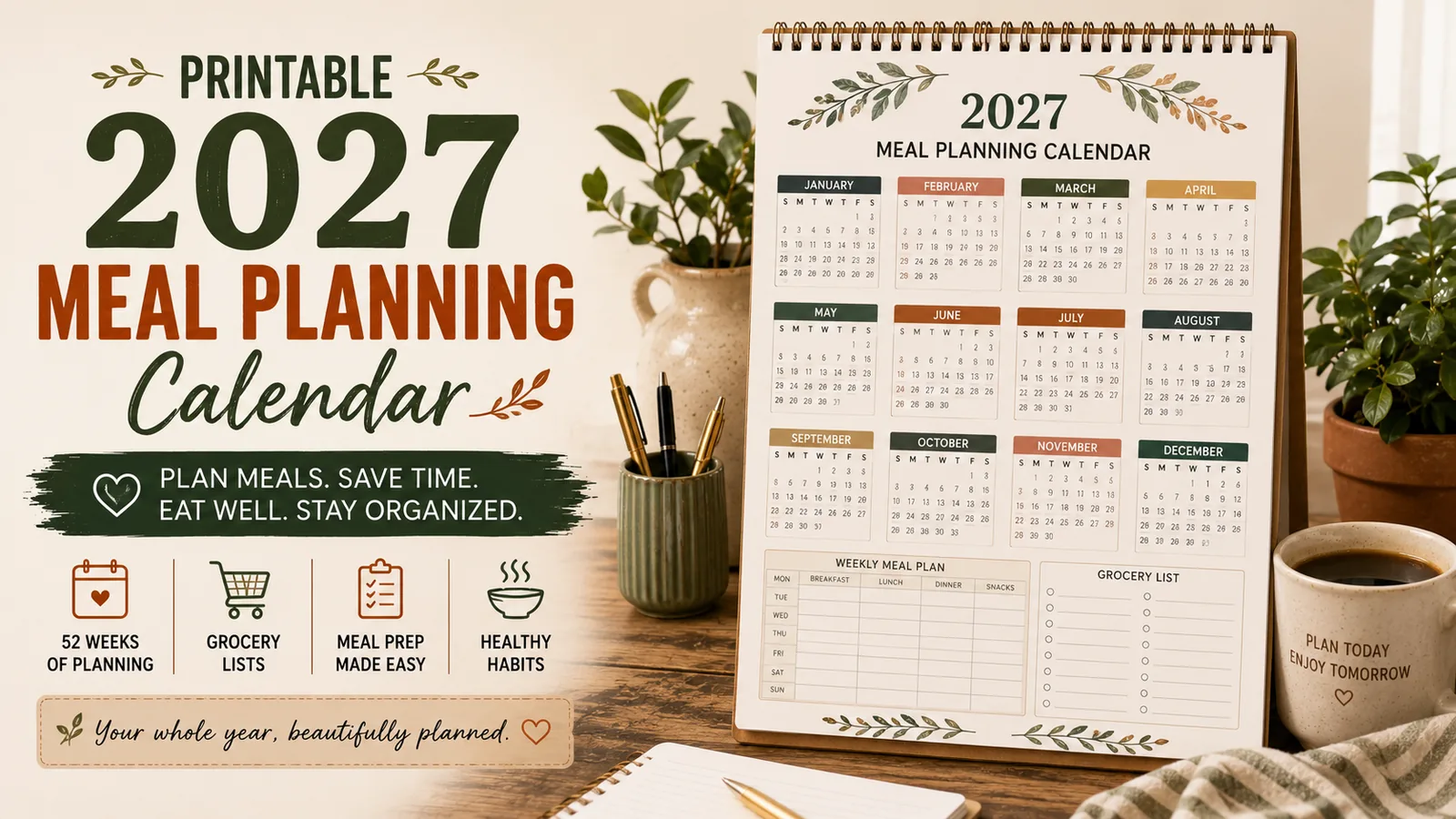
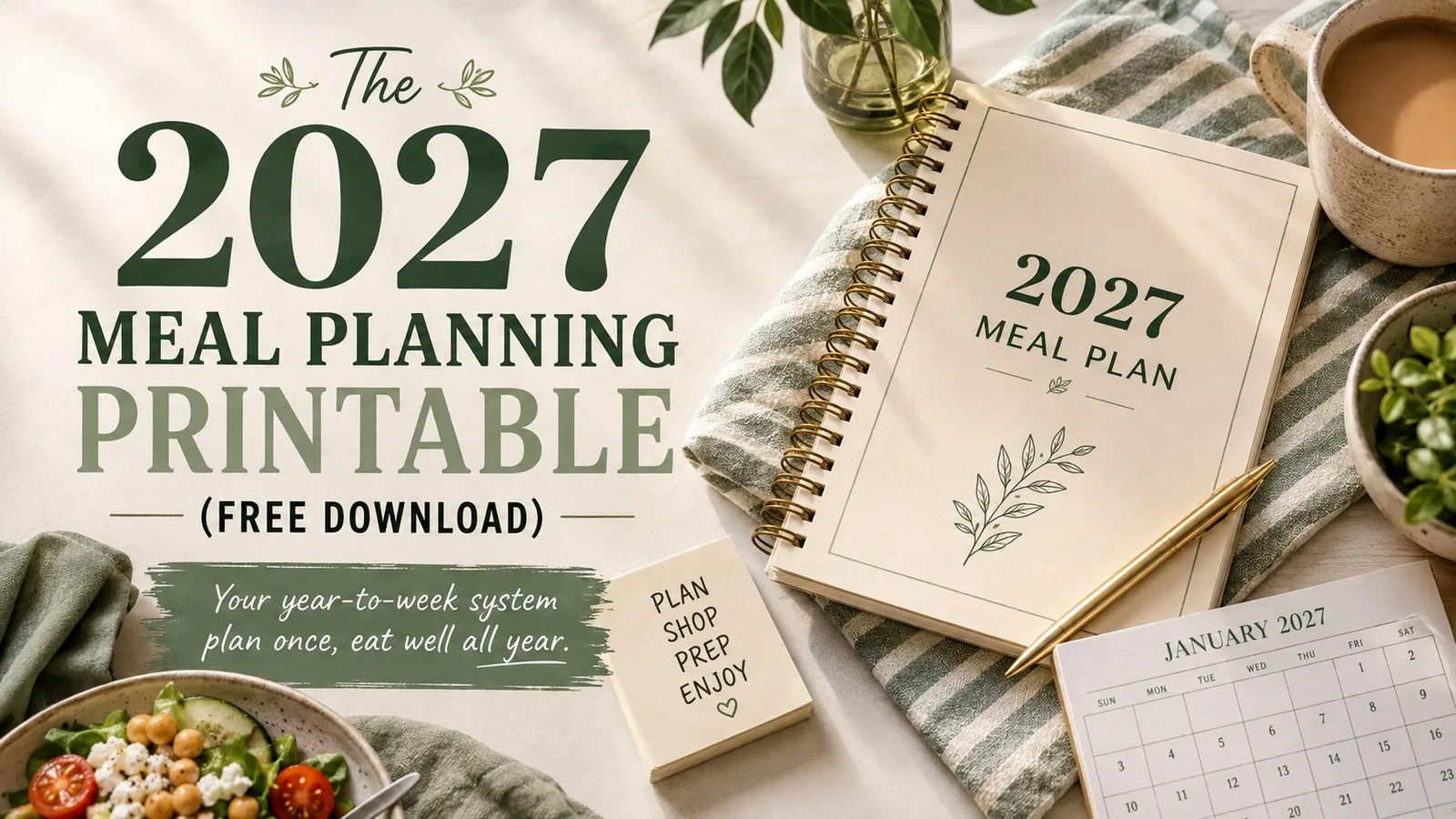
If you want a larger year-to-week structure, use the 2027 Meal Planning Printable for annual patterns and this weekly template for the decisions that actually need to happen now.
A good template disappears into the routine
The best planning page is not the one you admire in January.
It is the one you are still using in March because it takes almost no effort to complete.
Keep the sections that remove decisions. Delete anything you repeatedly leave blank.
The template should become lighter as your meal system gets stronger.
Turn the idea into a system.
Keep Reading