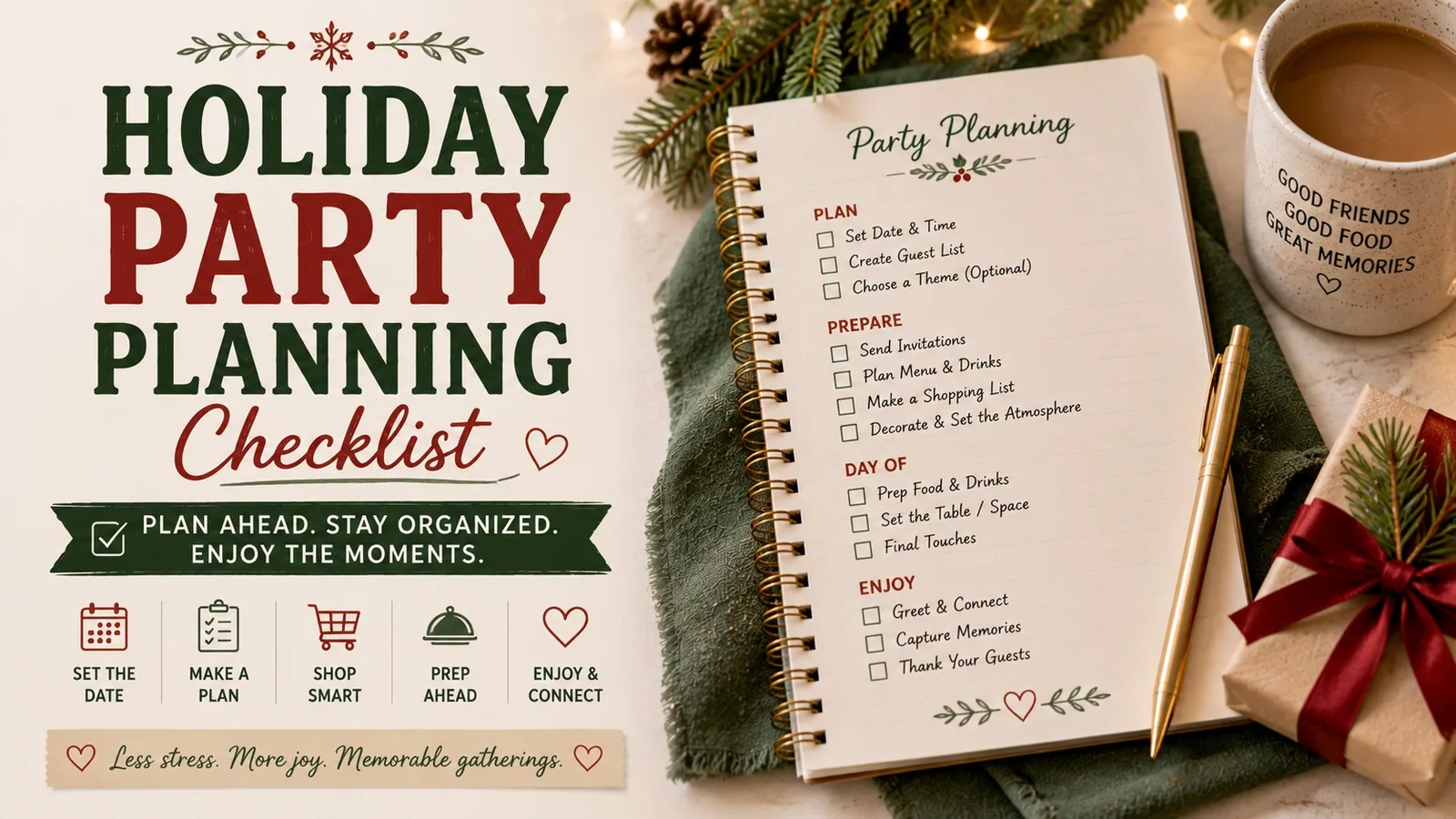
Free Holiday Party Planning Checklist
Open the printable checklist and use Print / Save as PDF to keep a copy.
A party checklist is only helpful if it tells you what to decide first.
Most holiday-party lists mix everything together: buy napkins, choose music, make dessert, clean the bathroom, send invitations. The result is a long list that looks organized but still leaves you wondering what actually needs attention today.
This version is built around dependencies. Decisions that unlock other decisions come first.
The Holiday Party Planning Order
People → Food → Space → Supplies → Timing → Cleanup
If you follow that order, later choices become easier because the important constraints are already known.
1. People: lock the numbers before planning food
Your guest count controls almost everything else: menu size, seating, serving dishes, drinks, and grocery quantities.
- Set the date and start/end time
- Create the guest list
- Send invitations
- Set an RSVP deadline
- Ask about allergies and dietary restrictions
- Confirm whether children are included
- Note any guests who may arrive late or leave early
Do not finalize the menu before you know roughly how many people you are feeding.
2. Food: assign every item a role
Rather than collecting recipes, build the menu by function.
For a casual party, a useful structure is:
- 1 substantial main or centerpiece;
- 2–3 filling sides or appetizers;
- 1 fresh/cold item;
- 1 dessert;
- drinks;
- one easy backup food.
The backup might be extra bread, a frozen appetizer, chips and dip, or another no-prep item. It exists so you do not panic-buy three additional dishes “just in case.”
Run the equipment test
Label each dish:
- oven;
- stovetop;
- slow cooker;
- refrigerator;
- room temperature;
- no cooking.
If too many dishes need the same appliance during the same hour, change the menu now.
3. Space: plan where things will physically happen
Parties feel chaotic when every activity happens in the kitchen.
Decide in advance:
- where coats go;
- where drinks live;
- where food is served;
- where used plates collect;
- where children can sit or play;
- where extra chairs come from;
- where dessert waits before serving.
4. Supplies: inventory before shopping
Do a quick count before buying anything disposable or decorative.
- Plates
- Bowls
- Forks, knives, spoons
- Napkins
- Cups/glasses
- Serving spoons and tongs
- Platters and bowls
- Trivets or heat-safe surfaces
- Ice
- Trash bags
- Food-storage containers or foil
One of the easiest ways to overspend on a party is to buy duplicates because you never checked what you already own.
5. Timing: use three checkpoints
One week out
- confirm RSVPs;
- finalize the menu;
- assign any potluck items;
- buy shelf-stable food and drinks;
- check serving pieces;
- clean or clear the main gathering spaces.
Two days out
- buy fresh food;
- prepare make-ahead dishes;
- chill drinks that need chilling;
- set out serving dishes and label them mentally or with sticky notes;
- clear refrigerator space;
- prepare guest bathroom supplies.
Day of
- finish only fresh dishes;
- set out cold food at the right time;
- put drinks and ice in their station;
- empty the dishwasher before guests arrive;
- put a fresh trash bag in every needed bin;
- give yourself a 20-minute no-cooking buffer before arrival time.
That last item matters. If your cooking plan ends at the exact minute guests arrive, the schedule is too tight.
6. Cleanup: make tomorrow easier before the party starts
A good hosting plan includes the end of the night.
Before guests arrive:
- empty the dishwasher;
- clear the sink;
- put food-storage containers together;
- have foil or wrap accessible;
- create one counter spot for leftovers;
- make sure trash and recycling have space.
During the party, do not attempt a full cleanup. Your only jobs are to keep obvious trash under control and move perishable food to the refrigerator when appropriate.
The five-minute host reset
About 30 minutes before guests arrive, stop doing optional tasks.
Use this order:
- Put away visible clutter.
- Check the bathroom.
- Check drinks and ice.
- Check serving utensils.
- Put on music.
- Change clothes if needed.
- Stop.
If a decorative detail is unfinished at this point, it probably does not matter.
The printable version should fit on one working page
The best party checklist is not an exhaustive record of every possible hosting task. It is a control panel for your actual party.
Your one-page version should contain:
| Section | What to write |
|---|---|
| People | guest count + dietary notes |
| Food | final menu + make-ahead marks |
| Space | drink station + serving area |
| Shopping | only what is still missing |
| Timeline | week out / two days / day of |
| Cleanup | leftovers + dishwasher + trash |
What not to put on the checklist
Do not add tasks simply because other hosts do them.
You do not need:
- a signature cocktail;
- matching tableware;
- homemade everything;
- multiple desserts;
- elaborate favors;
- a perfectly decorated house.
Add those only if they are genuinely part of what you enjoy about hosting.
The checklist exists to protect the parts of the party that matter: enough food, a workable kitchen, comfortable guests, and a host who is not still chopping vegetables when the doorbell rings.
Turn the idea into a system.
Keep Reading