Spring meal planning needs a slightly different rhythm than winter.
The slow cooker may not be doing as much work. Fresh produce starts sounding better. Schedules fill with activities, longer evenings, school events, weekend plans, and the first meals eaten outside.
The answer is not a more complicated planner.
It is a weekly template that makes room for fresh food, existing ingredients, flexible nights, and changing plans.
What this spring template is designed to solve
A useful meal planner should help you answer:
- What food needs using first?
- What do we already have?
- Which nights are actually busy?
- Which meals can share ingredients?
- Where will leftovers go?
- What do I truly need to buy?
If your planner only has seven blank boxes labeled Monday through Sunday, it leaves most of the hard decisions to you.
This spring edition adds the decisions that matter before you choose meals.
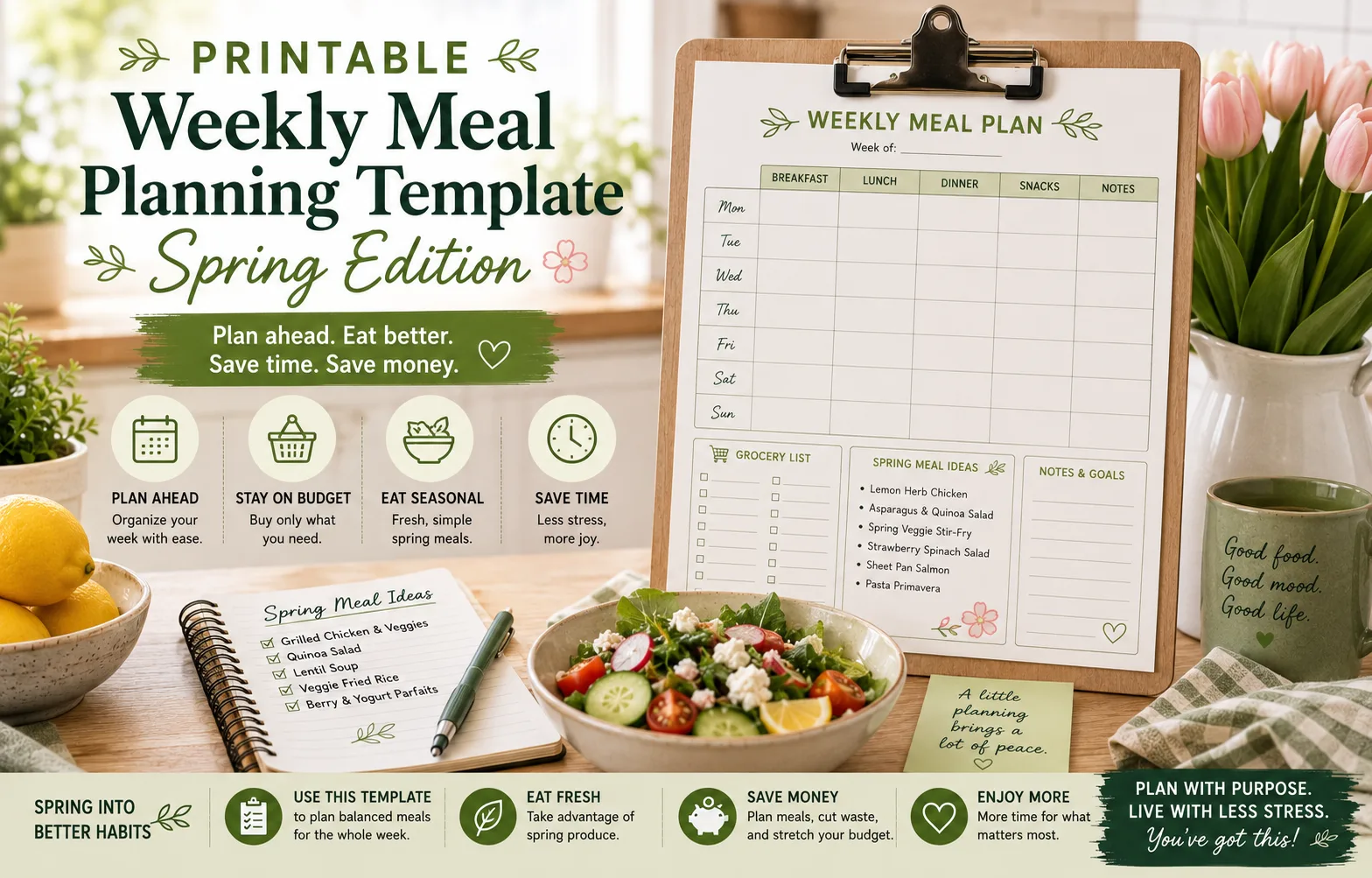
The spring planning template
Use these six sections:
1. USE FIRST
Fresh foods and leftovers that should influence the first meals of the week.
2. PANTRY/FREEZER ANCHORS
Food you already own that can carry a meal.
3. WEEK AT A GLANCE
Appointments, late workdays, sports, activities, or nights out.
4. DINNER PLAN
Seven spaces—but not necessarily seven recipes.
5. PREP ONCE
One or two tasks that make multiple meals easier.
6. GROCERY GAPS
Only the ingredients missing after the plan is built.
Step 1: start with “Use First”
Before writing Monday’s dinner, open the refrigerator.
Choose up to five foods that need attention.
Examples:
- asparagus;
- half bag spinach;
- strawberries;
- cooked chicken;
- open feta;
- leftover rice.
Do not write every condiment. The list should be short enough to influence decisions.
If spinach and chicken need using, you may already have the beginning of pasta, wraps, bowls, or a salad.
Step 2: add pantry and freezer anchors
Now choose three to five longer-lasting foods you already have.
Examples:
- pasta;
- rice;
- tortillas;
- frozen salmon;
- black beans;
- frozen peas;
- pizza dough;
- soup in freezer.
The combination of Use First + Anchors should generate several possible meals before you browse recipes.
Step 3: mark schedule pressure before meals
Write the week’s constraints first.
Example:
Monday: normal
Tuesday: soccer until 7
Wednesday: normal
Thursday: parent meeting
Friday: home
Saturday: out afternoon
Sunday: prep time available
Now match effort to reality.
Tuesday should not get the meal requiring 45 minutes of chopping. Thursday may need a freezer meal or leftovers. Sunday can carry a meal that intentionally creates components for Monday.
Meal planning works better when the calendar gets a vote.
Step 4: use dinner roles instead of seven recipes
Try this spring structure:
| Day | Role |
|---|---|
| Monday | Fresh-food priority |
| Tuesday | Fast/assembled |
| Wednesday | Cook once, use twice |
| Thursday | Leftovers/freezer |
| Friday | Family favorite |
| Saturday | Flexible/social |
| Sunday | Reset + prep-forward meal |
The roles can move to different days. Their purpose is to prevent every dinner from requiring a brand-new decision.
Step 5: build ingredient overlap
Spring shopping can become expensive when every meal contains a different collection of fresh ingredients.
Choose versatile produce and give it multiple jobs.
Example:
Spinach → pasta + eggs
Bell peppers → sheet-pan chicken + wraps
Strawberries → breakfast + snack
Cucumber → grain bowls + lunch
Fresh herbs → dinner sauce + salad + garnish
This helps you enjoy fresher meals without filling the refrigerator with half-used produce.
Step 6: choose one Prep Once task
You do not need a three-hour Sunday meal-prep session.
Choose the task with the biggest payoff.
Examples:
- cook a pot of rice;
- roast a tray of vegetables;
- cook chicken for two meals;
- wash/chop salad vegetables;
- make one versatile dressing;
- boil eggs;
- portion snacks;
- thaw tomorrow’s protein.
Write it in the PREP ONCE box.
If a prep task does not clearly support a planned meal, skip it.
Step 7: create the grocery list last
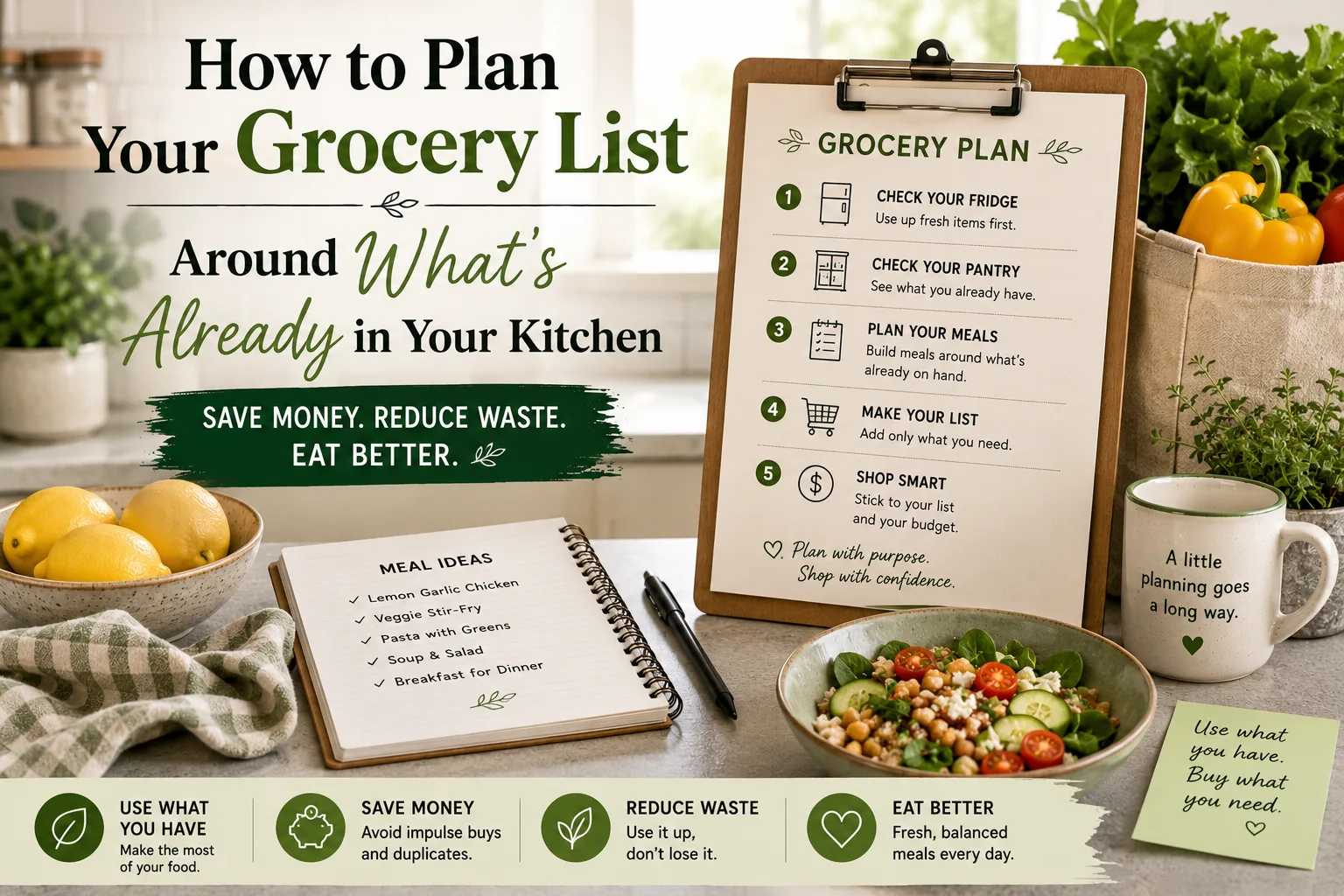
Only after meals are chosen should you write the shopping list.
For each dinner, ask:
What is missing?
Then add breakfast, lunch, snacks, and household essentials.
This sequence is important because it turns your grocery list into a gap-filling tool rather than a collection of seven recipe lists.
Printable: Spring Weekly Meal Planner
Use this layout each week:
USE FIRST
PANTRY + FREEZER ANCHORS
WEEK AT A GLANCE
- Mon: ______________________
- Tue: ______________________
- Wed: ______________________
- Thu: ______________________
- Fri: ______________________
- Sat: ______________________
- Sun: ______________________
DINNER PLAN
- Monday: ___________________
- Tuesday: __________________
- Wednesday: ________________
- Thursday: _________________
- Friday: ___________________
- Saturday: _________________
- Sunday: ___________________
PREP ONCE
GROCERY GAPS
Produce: ______________________________
Protein: ______________________________
Dairy: ________________________________
Pantry: _______________________________
Frozen: _______________________________
Other: ________________________________
A completed spring example
Use First
Spinach, strawberries, feta, cooked rice, half cucumber.
Anchors
Chicken breasts, tortillas, pasta, black beans, frozen peas.
Dinner plan
Monday: chicken-spinach pasta with feta
Tuesday: black bean quesadillas + cucumber salad
Wednesday: sheet-pan chicken and vegetables + extra chicken
Thursday: leftover chicken rice bowls
Friday: pasta primavera with peas
Saturday: flexible/out
Sunday: eggs, toast, fruit + prep rice for Monday
Notice that the plan is not seven ambitious recipes. It contains overlap, leftovers, a flexible night, and a low-effort meal.
Add a weather-flex option
Spring weather can change quickly.
Write one alternate meal at the bottom of the planner.
Warm-day option: salad bowls, wraps, sandwiches, grilled meal.
Cold/rainy option: soup, pasta, baked dinner.
Use ingredients that overlap with the main plan so switching does not require another grocery trip.
Keep one meal deliberately unplanned
If your household schedule changes often, one blank dinner can be more useful than a complete seven-night plan.
Label it:
FLEX / LEFTOVERS / FREEZER
This creates somewhere for leftovers to go and gives you permission to adapt without feeling that the meal plan “failed.”
The five-minute Friday review
At the end of the week, note:
- Which fresh food was wasted?
- Which dinner was too much work?
- Which meal should repeat?
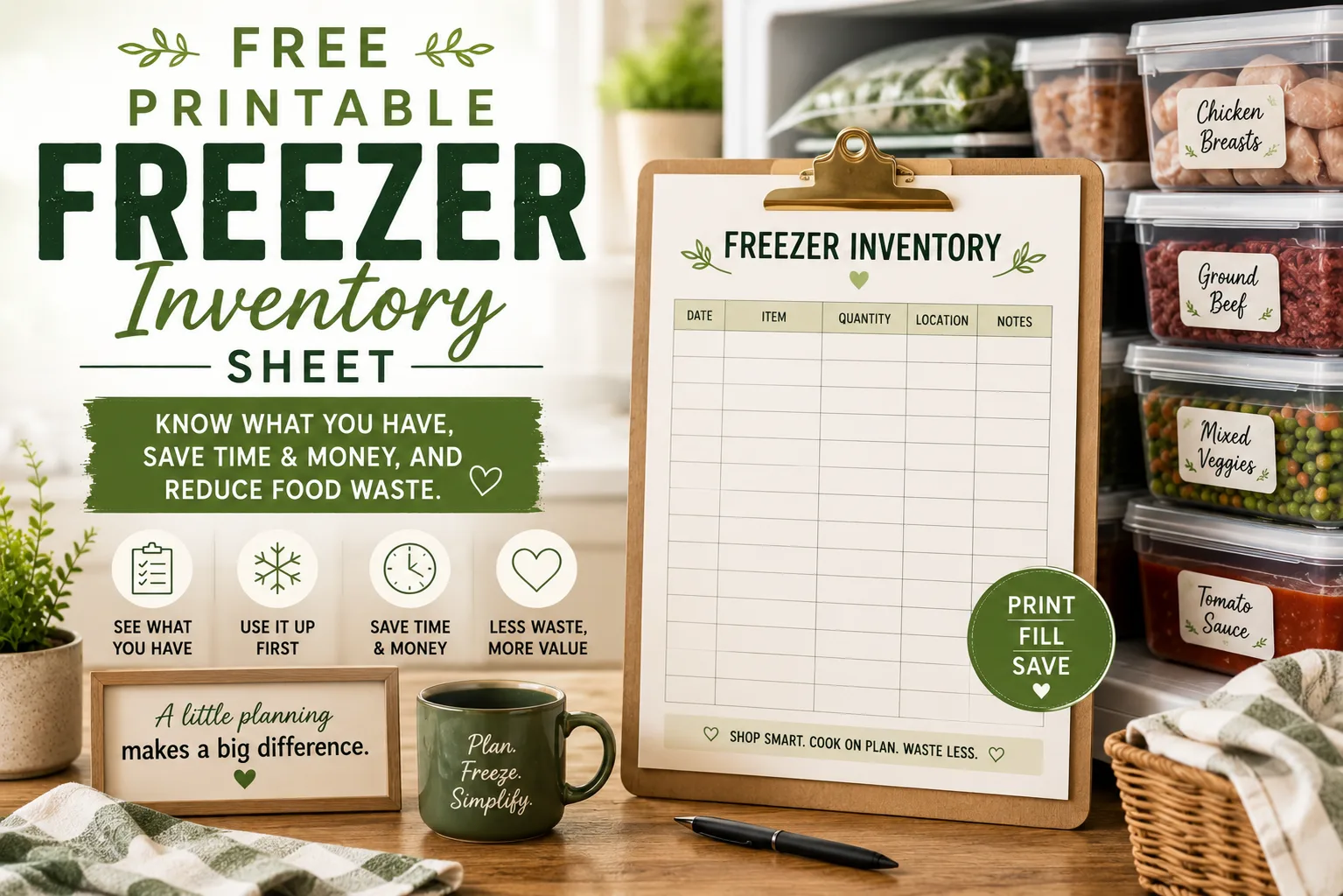
- What remains in the freezer?
- What ingredient needs using next week?
That tiny review improves the next plan more than searching for another batch of new recipes.
A spring plan should feel lighter
The purpose of a meal-planning template is not to control every dinner.
It is to make the important decisions early enough that busy nights become easier.
Start with what needs using. Add what you already own. Look at the calendar. Choose flexible meal roles. Prep one useful thing. Buy only the gaps.
That is enough structure to keep spring meals organized without turning Sunday into a planning project of its own.
Turn the idea into a system.
Keep Reading