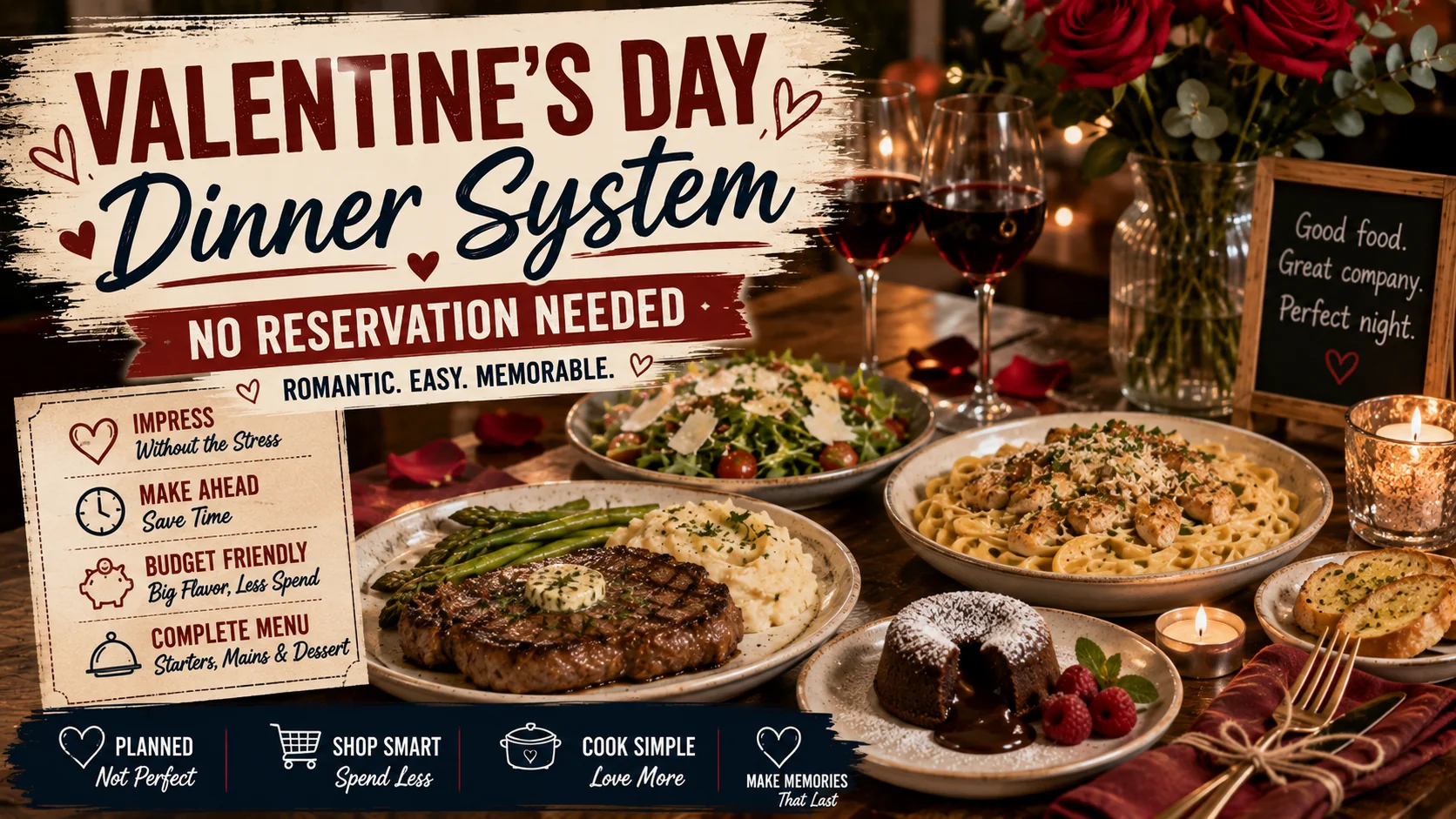
A Valentine’s Day dinner at home can be cheaper and more personal than a restaurant reservation—and somehow still become stressful if you choose three recipes that all need your attention at the same time.
The solution is to plan the evening as a system, not a performance.
Use this formula:
- one simple starter
- one main meal with a low-attention side
- one make-ahead dessert
- one intentional “special” detail
That is enough.
The goal is not to reproduce a restaurant tasting menu in your kitchen. It is to create a dinner that feels different from an ordinary Tuesday while leaving both people enough energy to enjoy it.
Rule 1: only one part of dinner gets to be difficult
If you want to cook a special main dish, make the starter and dessert easy.
If baking an elaborate dessert is the fun part for you, choose a familiar main.
If you want a beautiful appetizer board, do not also choose a main course that requires constant stovetop attention.
The One-Splurge Rule
Choose one place to spend extra money, time, or attention. Let the rest of the meal support it.
This rule protects both your budget and your evening.
Step 1: choose the mood before the menu
Decide what kind of dinner you actually want.
Cozy: pasta, garlic bread, simple salad, chocolate dessert.
Steakhouse-inspired: steak or another favorite protein, potatoes, green vegetable, simple dessert.
Bistro-style: roast chicken, crusty bread, salad, fruit or chocolate dessert.
Fun and casual: homemade pizza, salad, ice cream sundae or brownies.
Breakfast date: pancakes or waffles, eggs, fruit, coffee, pastries.
The mood narrows your choices. Without it, Valentine’s planning can become an endless search for “romantic recipes.”
Step 2: make the starter almost effortless
A starter creates a sense of occasion, but it should buy you time rather than create work.
Good options include:
- bread with olive oil
- a small cheese-and-cracker plate
- olives and nuts
- a simple salad
- soup made the day before
- sliced fruit with a savory accompaniment
Set it out while the main finishes. Now dinner has a first course and nobody is waiting hungrily while you cook.
Step 3: choose a main you can confidently execute
Valentine’s Day is not the ideal night to test three unfamiliar techniques at once.
Pick a meal you have cooked before or a new recipe with a forgiving process.
Useful choices include pasta, roast chicken, salmon, steak if you are comfortable cooking it, risotto if you genuinely enjoy the process, or a favorite vegetarian main.
Then pair it with sides that require little active attention.
For example:
- steak + oven-roasted potatoes + green beans
- salmon + rice + roasted asparagus
- pasta + salad + bread
- roast chicken + potatoes + carrots cooked in the same pan
The more components that share equipment and timing, the easier the evening becomes.
Step 4: make dessert ahead
Dessert is the easiest course to remove from the last-minute timeline.
Choose something that can be fully prepared earlier:
- brownies
- chocolate mousse
- cheesecake cups
- cookies
- panna cotta
- a simple cake
- strawberries with chocolate
- store-bought dessert plated nicely
There is no prize for turning on the mixer after dinner.
A make-ahead dessert lets you clear the plates, make coffee or tea, and serve the final course without returning to cooking mode.
A complete menu example
Here is a low-stress Italian-inspired system:
| Course | Menu |
|---|---|
| Starter | Small antipasto plate |
| Main | Pasta with a favorite sauce |
| Side | Simple green salad + bread |
| Dessert | Chocolate mousse made the day before |
| Special detail | Candles + favorite playlist |
The menu feels intentional, but only the pasta needs real attention close to dinner.
That is the balance you want.
Build the budget around one splurge
A dinner at home can become unexpectedly expensive when every ingredient is upgraded because it is Valentine’s Day.
Instead, choose one category for the splurge.
Maybe it is a better cut of meat, a favorite dessert from a local bakery, fresh flowers, or an ingredient you normally skip.
Then use normal grocery staples everywhere else.
If your special purchase is the main protein, potatoes and seasonal vegetables can be inexpensive sides. If dessert is the highlight, pasta can keep the main course affordable.
A budget creates contrast: one special item feels more special when everything is not competing for attention.
The day-before checklist
Do as much as possible before February 14.
The day before:
- make dessert
- prepare any sauce that reheats well
- wash and chop vegetables
- set aside serving dishes
- chill drinks
- check candles, matches, or playlist
- set the table if practical
This moves Valentine’s Day from “event production” to “finish dinner.”
The 60-minute timeline
A sample countdown might look like this:
60 minutes before: preheat oven; take out ingredients; start potatoes or other long-cooking side.
40 minutes before: prepare main protein or sauce; set out starter.
25 minutes before: finish salad/vegetable; boil pasta or begin final cooking step.
10 minutes before: plate starter if needed; clear prep clutter; lower the lights or start music.
Dinner: serve the main without simultaneously trying to bake dessert.
Your exact timing will depend on the menu. The important part is writing it once instead of mentally juggling every component.
Remove the invisible hosting work
If two people are sharing the meal, one person does not need to become the restaurant staff.
Split the easy jobs:
- one cooks; one clears
- one handles drinks; one plates food
- one cooks dinner; the other handles dessert
Or cook together if that is genuinely enjoyable.
The system should fit the relationship. “Romantic” does not have to mean one exhausted person producing an experience for the other.
Make the table special with what you have
Atmosphere is often cheaper than another premium ingredient.
Try:
- cloth napkins you already own
- candles
- a clean table without everyday clutter
- a small vase or jar with flowers
- a handwritten note
- a playlist
- using the plates or glasses you save for guests
The goal is visual separation from an ordinary meal.
You do not need heart-shaped serving ware that will sit in a cabinet for the next 364 days.
Create a backup plan
Even a special dinner needs a failure mode.
If the new sauce breaks, the steak overcooks, or the day becomes unexpectedly exhausting, know what your easy alternative is.
That might be favorite takeout, frozen pizza with the prepared starter and dessert, or pasta with a simple pantry sauce.
The evening is not ruined because the menu changed.
A system protects the experience from one imperfect dish.
Save the winning version
The next morning, write down the menu and anything you would change.
If the meal was easy and enjoyable, you now have a Valentine’s default. Repeat it next year with one small variation.
Traditions are decision-elimination systems with sentimental value attached.
You do not need a brand-new romantic concept every February.
A relaxed Valentine’s dinner at home comes from controlling complexity: one starter, one manageable main, one make-ahead dessert, and one special detail.
Choose where to spend your attention, prepare early, and give the evening an endpoint for cooking. The most successful menu is the one that lets you sit down and enjoy it too.
Turn the idea into a system.
Keep Reading