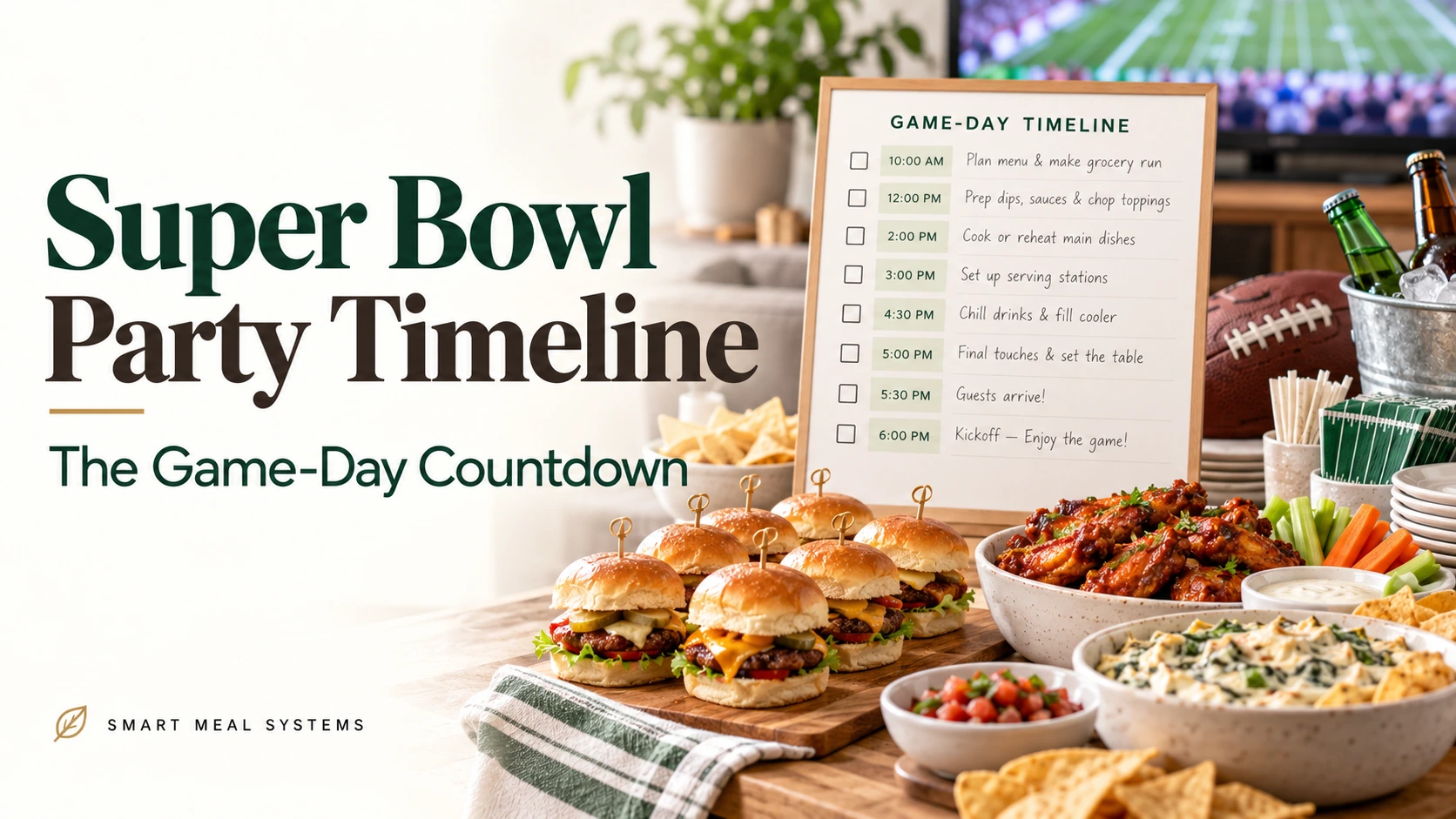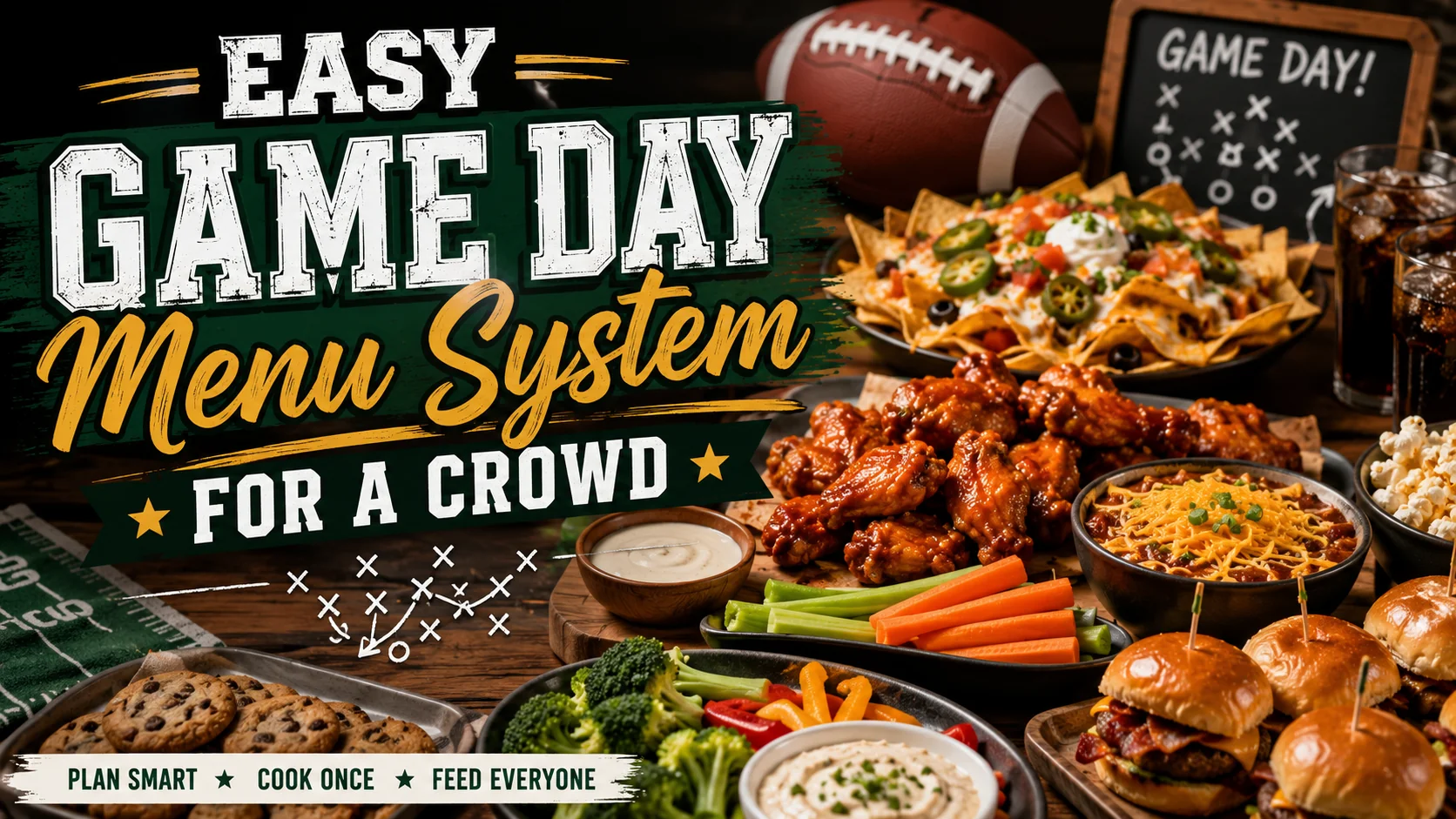
Game day food gets complicated for one reason: we plan it like a collection of exciting recipes instead of a meal system.
A dozen clever appetizers look great on a saved board. They are much less appealing when four need the oven at different temperatures, two must be fried at the last minute, and everyone arrives just as you are trying to finish the food.
For a crowd, the goal is not more dishes. The goal is enough food, enough variety, and almost no last-minute decisions.
This system uses five parts:
- one filling anchor
- two low-effort sides
- one fresh option
- one self-serve snack zone
- one easy dessert
That is enough to make the table feel abundant without turning you into the kitchen staff.
Start with the crowd, not the recipes
Before choosing food, answer three questions:
- How many adults and children are coming?
- Is this replacing a meal or supplementing one?
- Will people eat at a table or graze while watching the game?
If kickoff overlaps lunch or dinner, assume people need a real meal. If it falls between meals, you can lean more heavily on snacks.
For a meal-time party, plan the anchor first. Everything else supports it.
Step 1: choose one filling anchor
The anchor should be warm, substantial, forgiving, and easy to serve without your help.
Good choices include:
- chili with toppings
- pulled chicken or pork sandwiches
- taco meat with tortillas
- baked sliders
- a large pan of baked pasta
- slow-cooker meatballs with rolls
The best anchor is not necessarily the most impressive recipe. It is the dish that can sit safely at serving temperature, feeds many people, and does not demand attention during the game.
A slow cooker is especially useful because it becomes both cooking equipment and serving equipment.
The Game Day Anchor Rule
If the main dish requires you to cook individual portions after guests arrive, choose something else.
Step 2: add two sides with different jobs
Do not choose two more complicated hot dishes. Give each side a job.
Side one: the filling side. Think chips and queso, potato wedges, mac and cheese, cornbread, or a sturdy pasta salad.
Side two: the easy grab-and-eat side. Think tortilla chips and salsa, pretzels, popcorn, crackers, or store-bought rolls.
At least one side should require no oven space in the final hour. This protects you from the classic party problem where five foods all need to be hot at kickoff.
Step 3: include one fresh option
Game day menus become heavy quickly. One fresh option makes the entire spread feel more balanced without creating much work.
Try:
- vegetable sticks with ranch or hummus
- a simple chopped salad
- fruit skewers
- grapes and berries
- cucumber and tomato salad
- a crunchy slaw that can be made ahead
You do not need a giant healthy-food section. One bowl or platter is enough.
It also gives guests with different appetites something useful to add to their plates.
Step 4: build a snack zone before anyone arrives
The snack zone keeps people out of the kitchen while you finish anything that actually matters.
Set it up away from your main prep area if possible. Include two or three inexpensive, ready-to-eat options such as popcorn, pretzels, chips, nuts, or crackers.
Put napkins and small bowls nearby. Open packages before guests arrive. If you want to reduce refilling, use larger bowls than you think you need.
The snack zone has another benefit: it buys time. Guests can eat immediately, so your anchor does not have to be served the second the doorbell rings.
Step 5: make dessert almost automatic
Dessert is not where you need to prove anything.
Choose one item that can be prepared the day before or bought ready-made:
- brownies
- cookies
- blondies
- rice cereal treats
- cupcakes
- a tray of bars
Cut large desserts into small portions. After a snack-heavy meal, people usually want a taste rather than a restaurant-size serving.
A sample menu for 10–12 people
Here is what the system looks like in practice:
| Menu role | Food |
|---|---|
| Anchor | Slow-cooker chili |
| Filling side | Cornbread |
| Easy side | Tortilla chips + salsa |
| Fresh option | Veggie tray + ranch |
| Snack zone | Popcorn + pretzels |
| Dessert | Brownies |
Add shredded cheese, sour cream, sliced green onions, and jalapeños beside the chili and guests customize their own bowls.
That is a full party menu with very little active cooking during the event.
Use the 70/30 make-ahead rule
Aim to have 70% of the food completely finished before game day and the remaining 30% limited to reheating, assembling, or setting out.
The day before, you can:
- make dessert
- chop vegetables
- mix dips
- cook chili or pulled meat
- portion toppings
- set out serving dishes
- chill drinks
On game day, you reheat the anchor, assemble one or two items, fill bowls, and stop cooking.
If your plan has you beginning six recipes two hours before guests arrive, simplify it.
Protect your oven space
Write the cooking temperature next to every hot item on your menu.
If everything needs a different temperature, you have found a problem before it happens.
A better mix is:
- one slow-cooker item
- one oven item
- one room-temperature side
- one cold item
- ready-to-eat snacks
That equipment mix matters more than adding another recipe.
Create one self-serve drink station
Drinks can create as much host work as food. Put cups, ice, water, and other drinks together in one place and let guests help themselves.
For a family-friendly party, a simple station might include water, sparkling water, soda, and a pitcher of lemonade or iced tea.
Keep a marker near disposable cups so people can write their names. Fewer abandoned cups means fewer replacements and less cleanup.
How much food should you make?
Exact quantities depend on your crowd, but you can make planning easier by treating the anchor as the meal and everything else as support.
For 10–12 people, you do not need 12 servings of every side. People choose different things.
Make enough anchor for everyone, then offer moderate quantities of several supporting foods. Keep one inexpensive backup item—extra chips, popcorn, bread, or tortillas—in the pantry. If the table starts looking empty, refill it. If not, the unopened package stays usable.
This is better than opening every backup food before the party begins.
The 20-minute reset before kickoff
Twenty minutes before the game:
- stop cooking new things
- transfer hot food to serving dishes or warmers
- fill snack bowls
- put out toppings and sauces
- add ice to the drink station
- clear the kitchen counter
- put trash and recycling somewhere obvious
Then you are done.
A party system should include an endpoint. Otherwise, hosts keep noticing tiny tasks and spend the entire event working.
Save the menu for next time
After the party, write down three things:
- what disappeared first
- what had too many leftovers
- what was annoying to prepare
That note becomes next year’s shortcut.
Maybe the chili was perfect but nobody touched the second dip. Maybe you needed twice as much ice and half as many chips. Those details are more valuable than starting from a new Pinterest board every season.
The best game day menu is not the one with the most football-shaped food. It is the one that feeds everyone while letting the host watch the game too.
Build around one anchor, give every side a purpose, move most work to the day before, and let guests serve themselves. Once you have that structure, changing the actual foods is easy.
Make this easier
Not sure how much to buy? Enter your guest count and menu in the free Party Food Calculator to get amounts for every dish, then add them to your grocery list.
Turn the idea into a system.
Keep Reading