If your grocery budget stopped making sense over winter, spring is a good time to rebuild it.
Prices change. Family routines change. Children eat more. Work schedules shift. You start buying different produce. A budget that worked six months ago may now be an imaginary number you exceed every week.
The answer is not necessarily to “try harder.”
A useful grocery budget starts with what your household is actually spending and eating now.
Step 1: find your real weekly baseline
Look at the last four weeks of normal grocery spending.
Exclude unusual purchases if they truly were one-offs, but do not remove every expensive week just because you dislike the total.
Add the four weeks and divide by four.
Example:
- Week 1: $168
- Week 2: $181
- Week 3: $159
- Week 4: $192
Total: $700
Average: $175 per week
If your official budget is $130 but you have spent around $175 for months, $130 is not currently functioning as a budget. It is a wish.
Start with reality, then decide what you can reasonably change.
Step 2: separate food from grocery-store spending
A receipt from the grocery store may include:
- food;
- paper products;
- cleaning supplies;
- toiletries;
- pet supplies;
- medicine;
- seasonal items.
If you are trying to understand food costs, separate these categories at least once.
You may discover that “groceries went up $40” actually means you bought detergent, shampoo, trash bags, and dog food in the same week.
You can still budget for all of it, but the categories tell you which problem you are solving.
Step 3: choose a realistic reset target
Do not slash the budget by 30% overnight.
Try reducing your current average by 5–10% first.
If you average $175 per week, a first target might be $160–$165.
That is enough to force better decisions without creating a plan so restrictive that you abandon it after one difficult week.
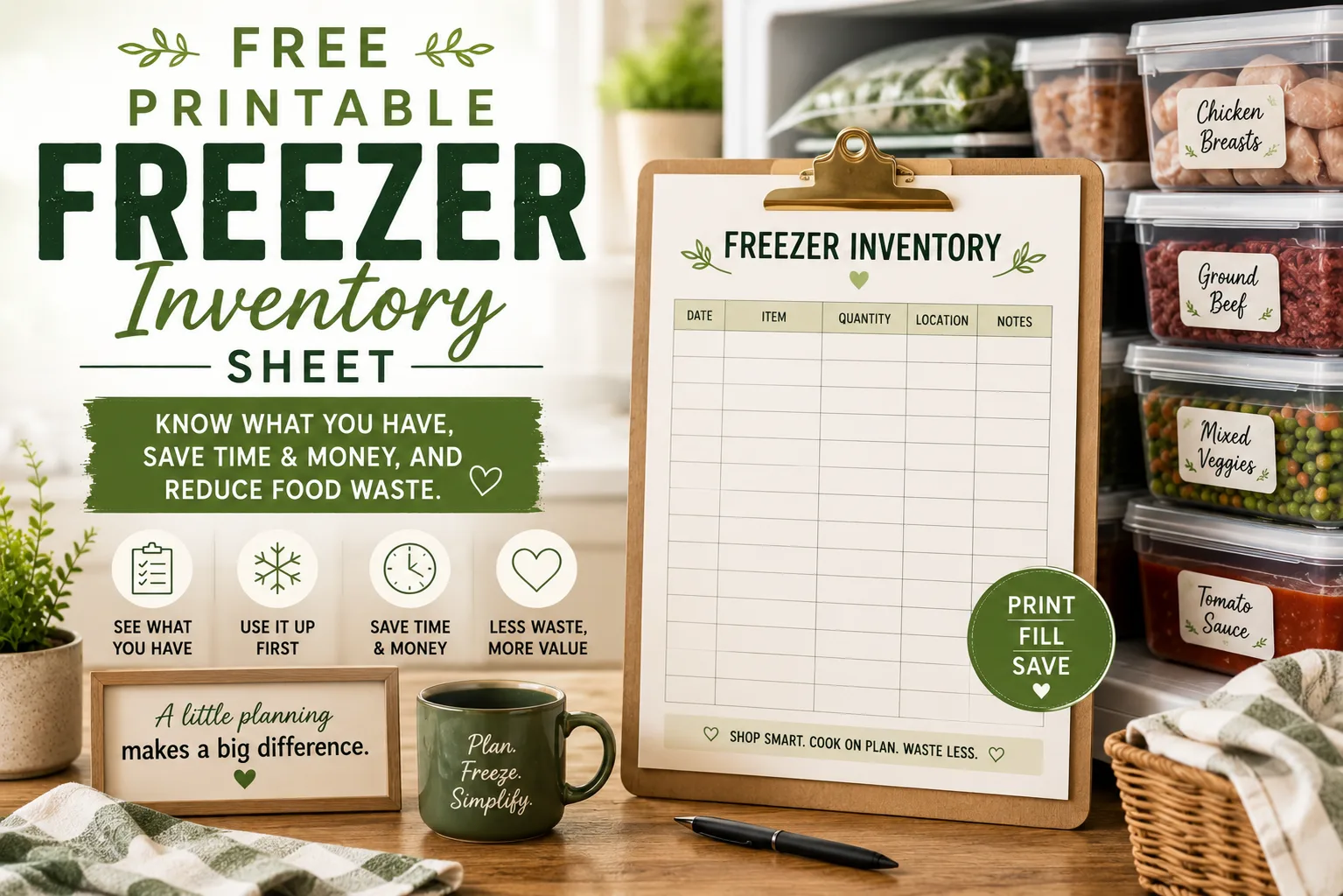
Step 4: inventory before the first reset shop
Before building the new budget week, check:
- pantry meal bases;
- freezer proteins;
- frozen vegetables;
- ready meals;
- refrigerator produce;
- open sauces and condiments;
- breakfast and lunch supplies.
Choose three to five foods you already own and make them meal anchors.
Every meal anchored by existing food reduces the amount your new grocery budget has to carry.
Step 5: build a low-cost dinner structure
Instead of finding seven unrelated recipes, assign flexible meal types.
For example:
| Day | Dinner type |
|---|---|
| Monday | Pasta or grain bowl |
| Tuesday | Tacos/wraps |
| Wednesday | Soup or leftovers |
| Thursday | Sheet-pan dinner |
| Friday | Homemade fun food |
| Saturday | Flexible/freezer |
| Sunday | Cook once, create leftovers |
Now choose ingredients that overlap.
Chicken can appear in sheet-pan dinner and wraps. Spinach can go into pasta and eggs. Rice can become a side one night and fried rice later.
Overlap is where grocery savings become practical.
Step 6: use spring produce strategically
Seasonal availability varies by region, so do not assume a produce item is cheap simply because it feels “spring-like.”
Compare unit prices and buy what is actually good value where you shop.
Spring can be a useful time to rotate away from some heavy winter meals and toward:
- simple salads paired with filling proteins or grains;
- vegetable pasta;
- grain bowls;
- egg-based dinners;
- lighter soups;
- sheet-pan vegetables;
- wraps and sandwiches.
Fresh food does not have to mean expensive food. The key is choosing versatile ingredients that appear in multiple meals.
Step 7: create three budget guardrails
Rather than micromanaging every item, use three rules.
Guardrail 1: limit “single-recipe” ingredients
If an ingredient is expensive and will only be used once, ask whether you can substitute something already available.
Guardrail 2: choose one convenience priority
You do not need to eliminate all convenience foods.
Decide which ones genuinely protect your routine: prewashed salad, frozen vegetables, rotisserie chicken, lunchbox snacks, or a backup frozen pizza.
Keep the convenience that prevents more expensive decisions later.
Guardrail 3: plan one rescue dinner
Have at least one dinner requiring almost no effort.
Examples:
- freezer meal;
- eggs and toast;
- quesadillas;
- pasta and jarred sauce;
- soup and sandwiches.
A $7 rescue meal can prevent a $40 unplanned takeout order.
Step 8: calculate cost by week, not perfection by item
You do not need every dinner to be cheap.
Balance higher-cost meals with lower-cost ones.
A week could include:
- two bean/egg/pasta-based dinners;
- three moderate-cost meals;
- one more expensive favorite;
- one leftover/freezer night.
The weekly total matters more than whether every plate meets an arbitrary cost target.
Step 9: stop automatic restocking
A pantry staple does not need to be replaced immediately just because you finished it.
Ask:
Will this be used in the next two or three weeks?
If not, wait.
This is especially helpful during a spring pantry reset because it creates space and prevents money from immediately flowing back into foods you just worked to use up.
Step 10: track only the number that changes behavior
If detailed budgeting motivates you, track categories.
If it makes you quit, track one number:
Total grocery spend this week: $_____
Then add one sentence:
What pushed the total up or down?
Examples:
- stocked up on chicken sale;
- bought toiletries;
- used freezer meals twice;
- hosted family;
- too many snack extras;
- skipped meal planning.
After four weeks, patterns become visible.
A sample spring reset week
Suppose the pantry contains rice, pasta, black beans, canned tomatoes, oats, and tortillas. The freezer has chicken and peas.
Plan:
Monday: chicken rice bowls
Tuesday: black bean tacos
Wednesday: tomato pasta with spinach
Thursday: chicken and vegetable sheet pan
Friday: quesadillas + fruit
Saturday: leftovers/freezer
Sunday: egg fried rice with peas
Your grocery list can focus on fresh produce, dairy, breakfast/lunch gaps, and a few completion ingredients rather than seven complete recipe ingredient lists.
What to do when you go over budget
Do not “punish” the following week with an unrealistically tiny shop.
Identify why.
If you stocked up on sale-priced meat you will use later, the higher week may reduce future spending. If you bought lots of unplanned snacks, that is a different pattern. If prices increased, your target may need adjustment.
Budgets are feedback systems, not grades.
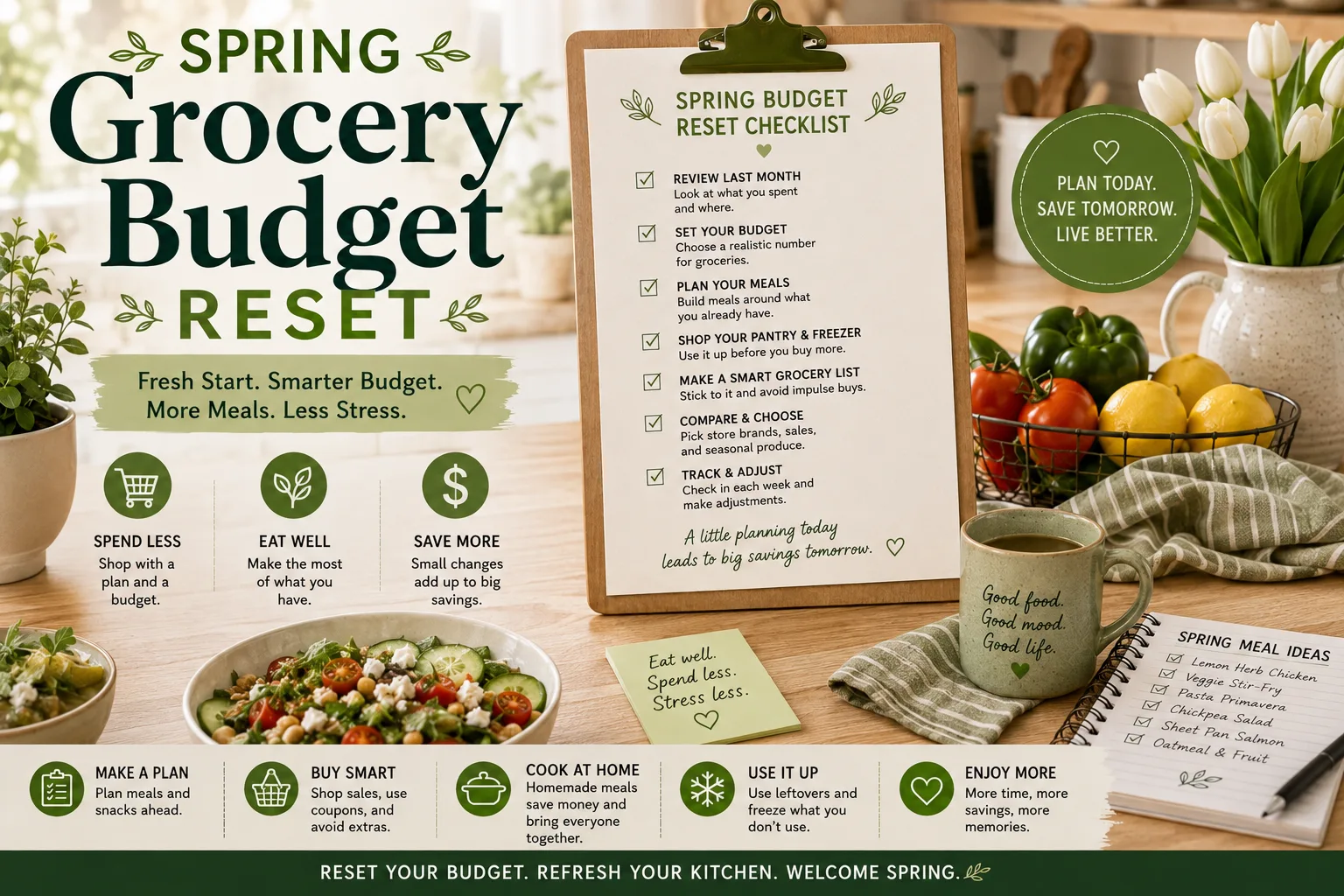
Your spring grocery reset checklist
- Calculate the last four weeks’ average.
- Separate food from household purchases.
- Set a realistic 5–10% improvement target if needed.
- Inventory pantry, fridge, and freezer.
- Choose existing-food meal anchors.
- Plan overlapping ingredients.
- Keep one rescue dinner.
- Delay unnecessary restocking.
- Track weekly total.
- Review after four weeks.
The best grocery budget is not the lowest number you can survive for one week.
It is the amount you can repeatedly support with your real household, real schedule, and real food preferences—while wasting less of what you already paid for.
Turn the idea into a system.
Keep Reading