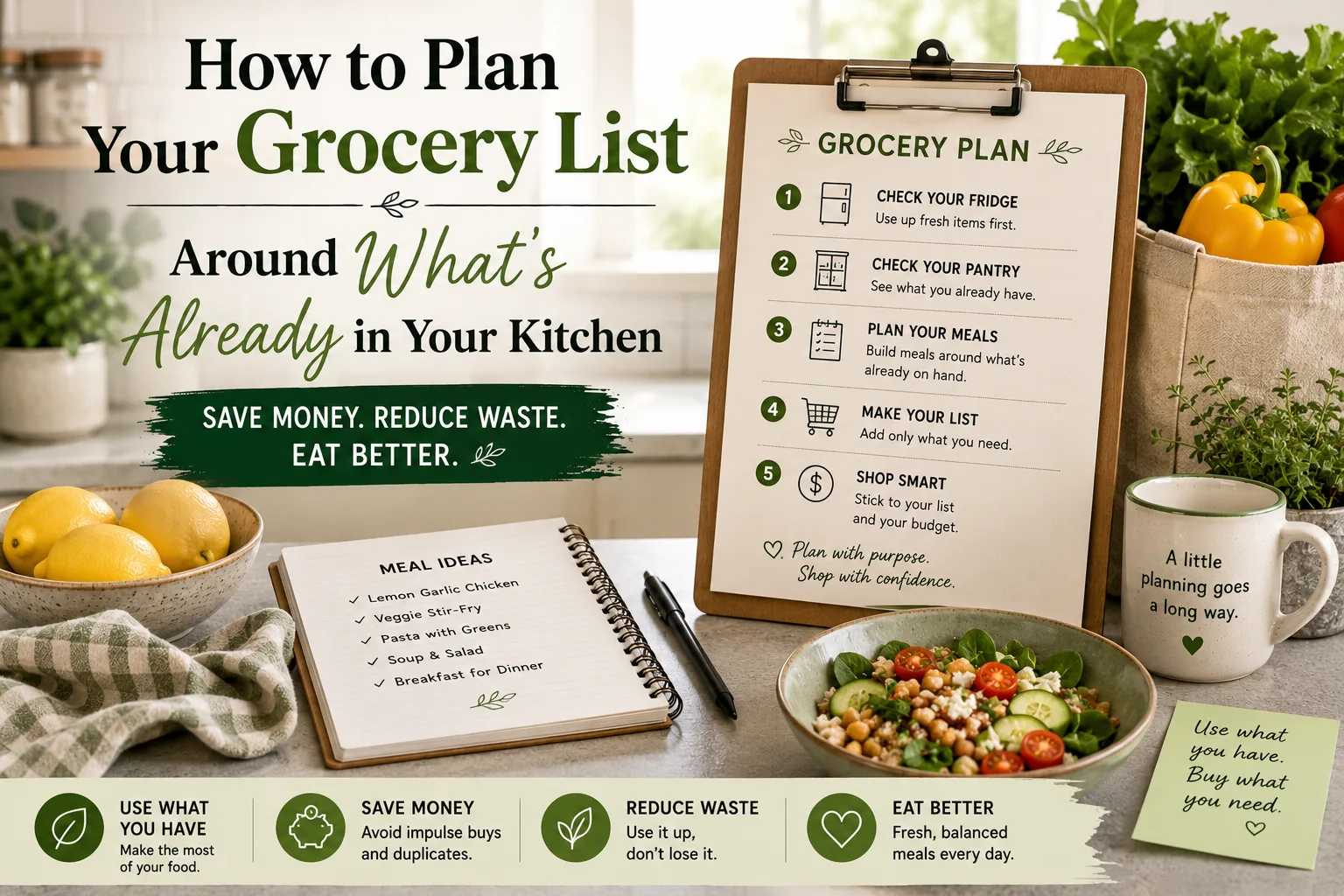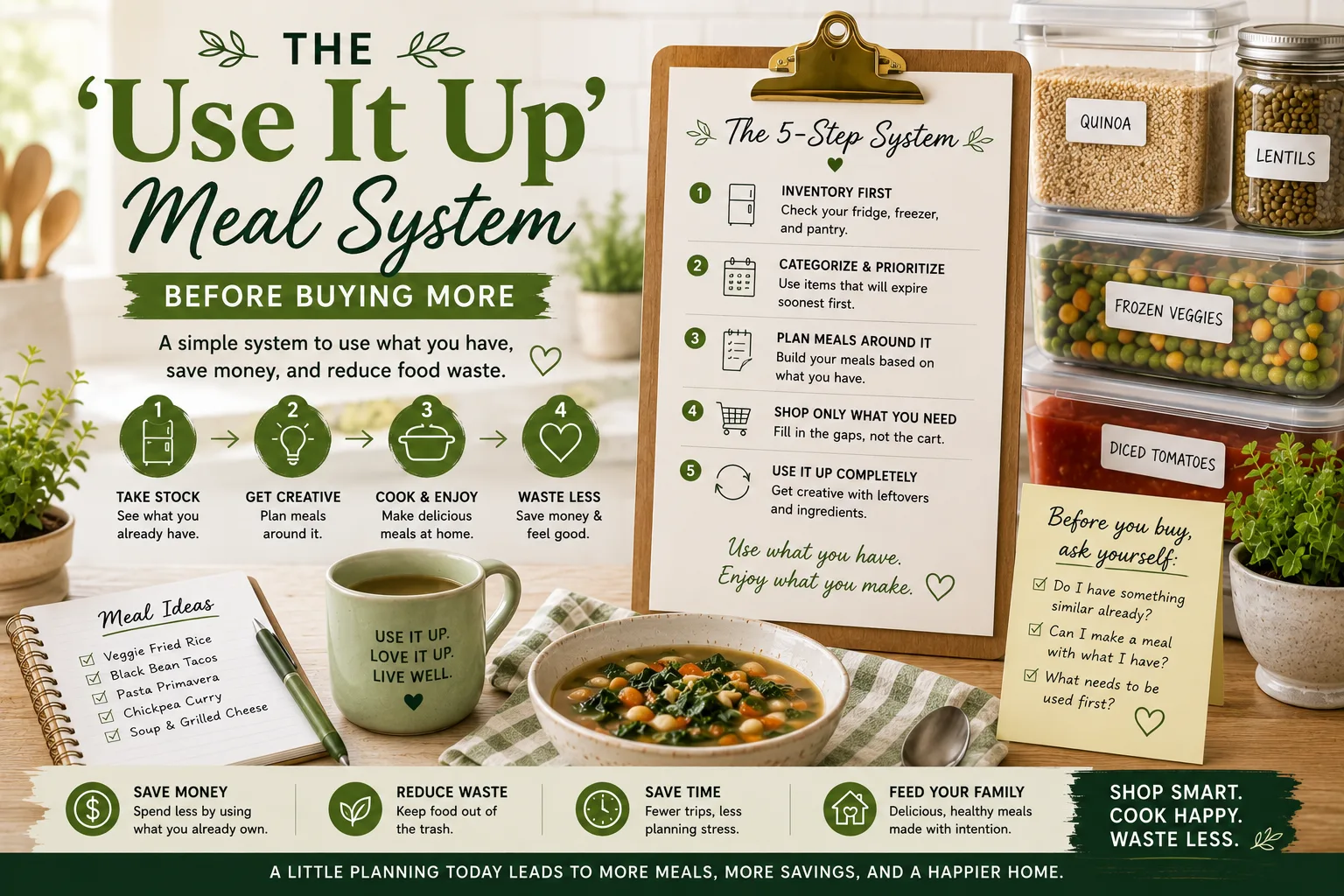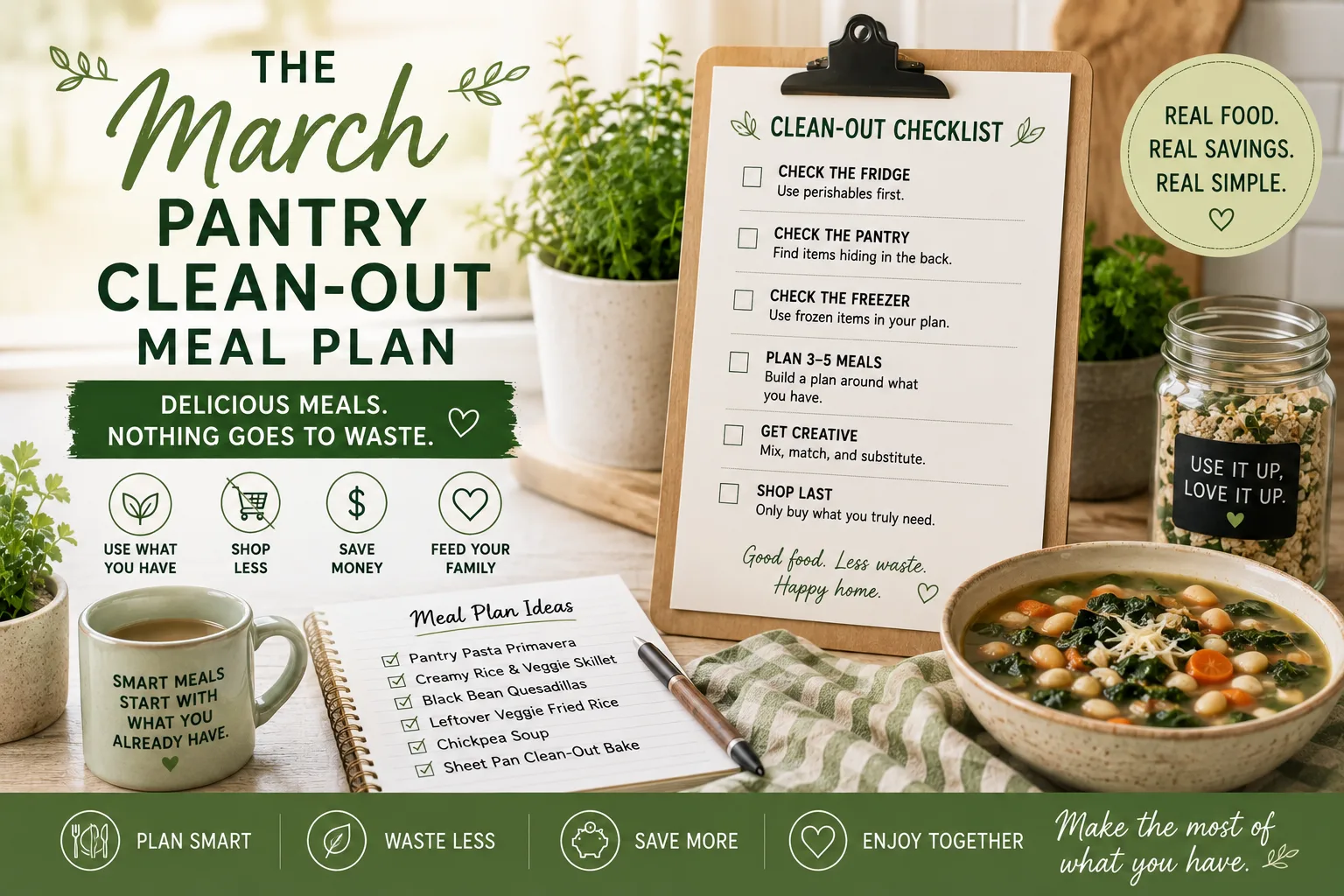
March is a useful time to reset the kitchen.
The heavy winter cooking season is winding down, spring routines are beginning, and the pantry often contains the evidence of several months of good intentions: half-used grains, extra canned beans, soup ingredients, baking supplies, sauces, and bulk purchases that never quite made it into the plan.
Instead of reorganizing all of it and putting it back, use it.
This pantry clean-out meal plan is designed to move food through your kitchen—not simply make the shelves look neater.
The goal: seven dinners, fewer new ingredients
This is not a no-spend challenge.
Fresh produce, dairy, bread, or a few proteins can make pantry food far easier to use. The goal is to buy strategically while making existing ingredients the foundation of the week.
Use this formula:
Pantry anchor + fresh completion ingredient + flexible meal format
For example:
- pasta + spinach + parmesan = pasta night;
- beans + lettuce + avocado = taco bowls;
- rice + eggs + fresh vegetables = fried rice;
- canned tomatoes + broth + greens = soup.
Step 1: choose 10 pantry ingredients to move
Do not try to clean out everything at once.
Choose about ten items that meet at least one of these conditions:
- package already open;
- older than your usual stock;
- duplicate item;
- purchased for a recipe you never made;
- taking up disproportionate space;
- easy to turn into a meal this week.
A realistic list might be:
- half box spaghetti;
- brown rice;
- two cans chickpeas;
- black beans;
- canned tomatoes;
- chicken broth;
- tortillas;
- breadcrumbs;
- jarred pesto;
- oats.
Now check the refrigerator and freezer for ingredients that pair with them.
Step 2: add fridge and freezer anchors
Suppose you also find:
- frozen chicken breasts;
- frozen peas;
- half bag shredded cheese;
- carrots;
- celery;
- eggs;
- one lemon.
You now have enough structure to plan most of the week.
The grocery shop only needs to fill the gaps.
The 7-night March pantry clean-out plan
Night 1: Pantry Pasta + Greens
Use: pasta, pesto or tomato sauce, frozen or fresh greens, cheese.
Cook the partial box of pasta first. Add pesto, marinara, canned tomatoes, or a simple olive-oil sauce. Stir in spinach, peas, broccoli, or another vegetable.
Clean-out target: open pasta + open sauce.
Night 2: Build-Your-Own Bean Bowls
Use: rice, beans, tortillas or chips, salsa/condiments.
Cook rice and warm black beans or chickpeas with seasoning. Add whatever fresh toppings fit your budget: lettuce, tomato, avocado, cilantro, lime, or yogurt.
Clean-out target: rice + canned beans.
Night 3: Flexible Pantry Soup
Use: broth, canned tomatoes, beans, small pasta or rice, aging vegetables.
Soup is ideal for quantities too small to become separate side dishes. Add carrots, celery, frozen vegetables, leftover grains, or shredded chicken.
Clean-out target: broth + tomatoes + vegetable odds and ends.
Night 4: Crispy Chicken or Bean Patties
Use: breadcrumbs, chicken or mashed beans, seasoning.
Turn breadcrumbs into a useful coating rather than letting the open container sit for another month. Serve with a simple salad, roasted vegetables, or leftover rice.
Clean-out target: breadcrumbs + freezer protein or beans.
Night 5: Fried Rice Reset
Use: cooked rice, eggs, frozen peas, small amounts of vegetables and protein.
Fried rice works best with cooked, chilled rice, so make extra on Night 2. Add eggs, peas, carrots, leftover chicken, or any compatible vegetables.
Clean-out target: leftover rice + freezer odds and ends.
Night 6: Pantry Quesadillas or Wraps
Use: tortillas, beans, cheese, leftover cooked vegetables or chicken.
This is the “finish the week” meal. Fill tortillas with whatever remains from earlier dinners.
Clean-out target: tortillas + cheese + leftovers.
Night 7: Planned Leftovers or Freezer Rescue
Do not automatically plan a seventh new recipe.
Eat remaining portions from the week or choose one older freezer meal.
Clean-out target: leftovers + one freezer item.
Your completion grocery list
After choosing meals, buy only what improves or completes them.
A sample list could be:
Produce
- spinach;
- lettuce;
- onions;
- fresh fruit;
- avocado;
- one or two versatile vegetables.
Dairy
- parmesan or shredded cheese if needed;
- yogurt or sour cream.
Other
- bread if needed for soup night;
- one fresh protein only if your freezer cannot cover the plan.
The exact list depends on your kitchen. That is the point.
Use the “two meals per ingredient” rule
If you buy a fresh ingredient specifically for clean-out week, give it at least two jobs.
Examples:
Spinach: pasta + soup
Cilantro: bean bowls + quesadillas
Avocado: bowls + wraps
Onions: soup + fried rice + almost everything else
Yogurt: bowl topping + breakfast
This prevents a pantry clean-out from creating a refrigerator clean-out problem next week.
What not to force yourself to use
A clean-out plan is not punishment for past purchases.
If you bought an ingredient, tried it, and genuinely dislike it, do not build three miserable dinners around it simply because it cost money.
Likewise, discard food that is spoiled or unsafe rather than trying to “save” it.
The useful question is:
Would we realistically enjoy eating this?
If yes, plan it. If no, learn from the purchase and move on.
Create a visible clean-out basket
Put the shelf-stable ingredients you selected for the week in one basket or section.
Every time you plan dinner, look there first.
This works because the pantry no longer presents 70 choices. It presents the ten foods you already decided to prioritize.
As ingredients are used, the basket empties. That visual progress is far more satisfying than reorganizing the same food again.
The March “do not replace yet” list
When you finish an ingredient, pause before adding it automatically to your grocery list.
Ask:
- Do we use this every month?
- Did it take too long to finish?
- Is there a substitute already in the pantry?
- Would I buy it again today?
If the answer is no, let the shelf space remain empty.
Pantry clean-out is also a chance to reduce the number of foods you routinely stock.
Repeat the system for four weeks
You do not need to empty the pantry in seven days.
For the rest of March, repeat a lighter version:
- Choose five to ten pantry/freezer foods.
- Make them visible.
- Build three to five meals around them.
- Buy completion ingredients.
- Delay replacing low-priority foods.
By the end of the month, you will have a much clearer picture of what your household actually eats.
The real spring reset
A useful pantry reset is not rows of matching jars.
It is fewer forgotten ingredients, more visible meal options, and a grocery list that reflects what you truly need.
Start with ten foods. Give them jobs. Let flexible meals absorb leftovers. Buy fresh ingredients that complete—not compete with—what is already in your kitchen.
By the time spring arrives, your pantry will be lighter because you ate the food, not because you moved it into prettier containers.
Turn the idea into a system.
Keep Reading