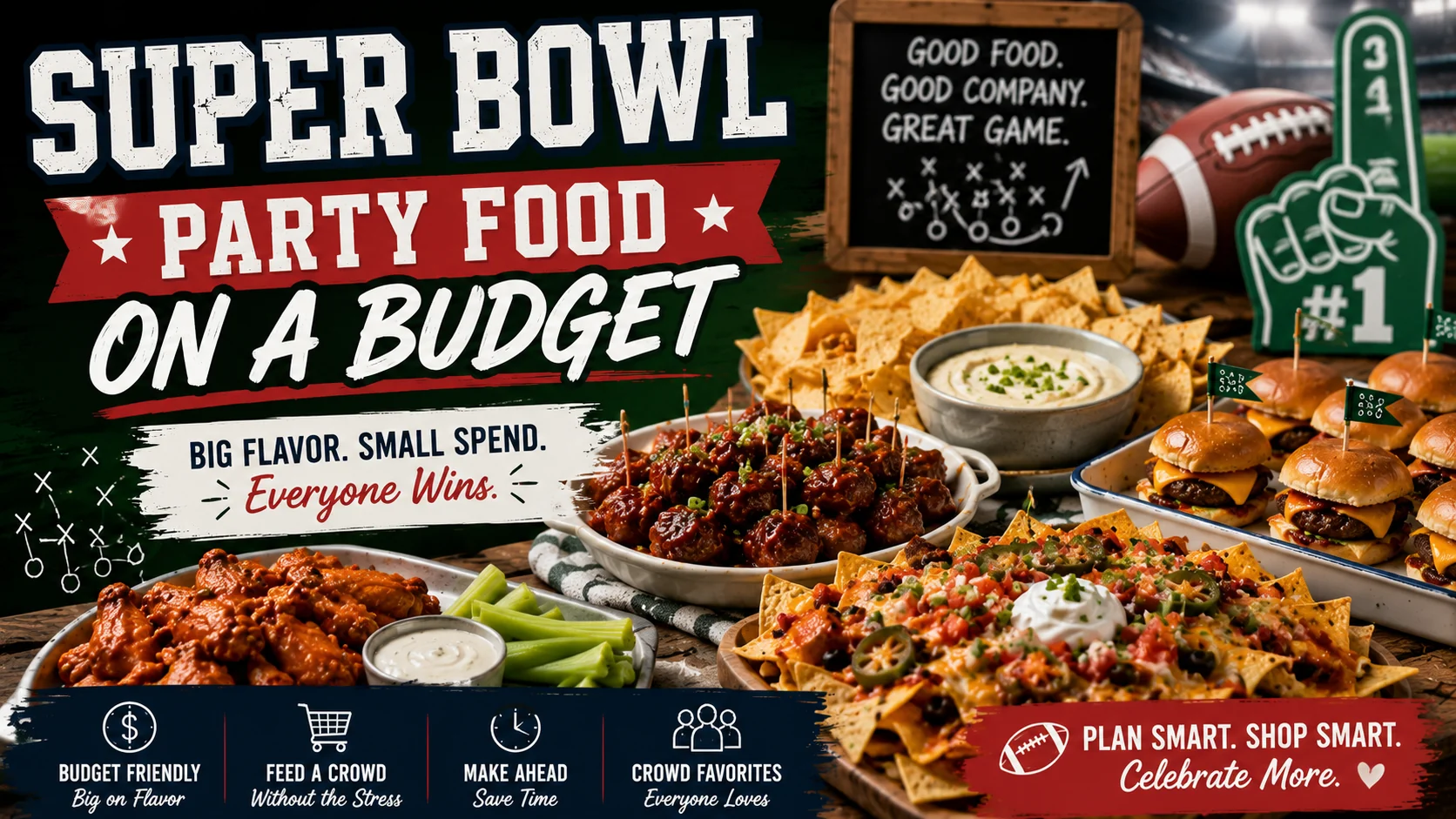
Super Bowl food gets expensive when the shopping list grows one appetizer at a time.
Wings sound good, so they go on the list. Then nachos. Then sliders. Then three dips, a vegetable tray, cookies, soda, and several bags of chips. Nothing feels extravagant by itself, but together you have bought enough food for two parties.
The fix is to set the menu structure and budget before choosing recipes.
For a casual game-day crowd, use this formula:
- 40% of the food budget: filling anchor
- 25%: sides and snacks
- 15%: fresh food
- 10%: dessert
- 10%: buffer for toppings, condiments, or price differences
Drinks can be included in the overall budget or tracked separately depending on what you are serving.
The percentages do not need to be exact. Their job is to stop one category from quietly consuming the entire budget.
Step 1: decide what “feeding a crowd” means
Write down the number of guests and whether the party replaces dinner.
A 6:30 p.m. kickoff means people will expect substantial food. An afternoon gathering may need less.
Also think about the crowd. Six adults and six young children do not eat the same amount as twelve hungry adults.
You are not calculating restaurant portions. You are preventing the vague fear of “not having enough” from doubling every item on the list.
Step 2: choose one inexpensive anchor
The anchor should do most of the work of filling people up.
Budget-friendly options include:
- chili
- pulled chicken sandwiches
- taco bar
- baked potato bar
- pasta bake
- sloppy joes
- slow-cooker meatballs with rolls
These foods use inexpensive bases and are easy to stretch with toppings and sides.
Wings can absolutely be part of a Super Bowl party, but if they are expensive where you shop, treat them as a special side rather than the only main food.
Budget Rule
Spend first on the food that makes people full. Spend last on decorative extras.
Step 3: choose two snacks, not seven
Snack aisles make party spending expand quickly because every bag feels like a small purchase.
Pick two categories and make them generous.
For example:
- tortilla chips + salsa/queso
- popcorn + pretzels
- chips + onion dip
- crackers + cheese spread
Large bowls create abundance better than six half-empty packages.
Compare unit prices rather than package prices when choosing sizes. Store brands can be especially useful for basic chips, pretzels, popcorn, crackers, and salsa.
Step 4: use one fresh platter
A fresh option breaks up a heavy menu and does not need to be expensive.
Instead of buying a prepared vegetable tray, compare the cost of whole carrots, celery, cucumber, peppers, or whatever is reasonably priced in your store. Wash and cut them yourself if the savings are worth the time.
Or use fruit that is affordable that week.
You need one fresh counterpoint, not an elaborate grazing board.
Step 5: make dessert simple and portionable
Brownies, cookies, bars, and rice cereal treats work well because they can be made ahead and cut into small pieces.
A sheet of brownies cut into 24 small squares often serves a party better than 12 oversized portions.
If baking is not your thing, buy one dessert. Avoid the “one of everything” effect where cookies, cupcakes, candy, and ice cream all appear because each sounded fun separately.
A $75-style menu framework
Prices vary widely by location, store, brand, and year, so treat this as a percentage example, not a current price quote.
If your food budget were $75, the framework would roughly reserve:
| Category | Planning amount |
|---|---|
| Filling anchor | $30 |
| Snacks/sides | $19 |
| Fresh option | $11 |
| Dessert | $8 |
| Buffer/toppings | $7 |
You then build the menu to fit those limits using the prices available to you.
If wings would consume the entire $30 anchor budget, you can reduce the quantity and pair them with chili, sliders, or another lower-cost main.
The budget decides the role of the food—not the other way around.
Example: chili bar for 10–12
A simple menu could be:
Anchor: big pot of beef-and-bean or bean chili
Toppings: shredded cheese, sour cream, green onions
Sides: tortilla chips and cornbread
Fresh: carrots/celery with ranch
Dessert: brownies
Snack: popcorn set out before the main food
The beans, cornbread, chips, and popcorn provide inexpensive volume. Chili can be made the day before. Guests serve themselves.
That combination addresses cost, labor, and quantity at the same time.
Shop your kitchen first
Before writing the grocery list, check:
- chips and crackers
- canned beans and tomatoes
- baking ingredients
- sauces and condiments
- frozen meat
- cheese
- onions and potatoes
- paper goods
Party shopping often causes duplicate purchases because we mentally classify the event as separate from normal groceries.
If you already have two unopened bags of tortilla chips, your menu can use them.
Build around what is available rather than saving those ingredients for an imaginary future dinner.
Avoid single-purpose decorations in the food budget
Football-shaped cheese, elaborate themed desserts, and decorative serving accessories can be fun. They are not required to make a game-day table feel festive.
If you want themed presentation, use low-cost cues:
- team-color napkins you already have
- a simple table runner
- labels on bowls
- one football-themed centerpiece
- the game itself on the television
Let the food look like good food.
Control quantity with staged refills
Do not open every package at kickoff.
Put out one bowl of chips and keep the second bag sealed. Set out part of the cookies and refill if needed. Keep backup rolls packaged until the first tray is nearly gone.
This does two things:
- the table stays fresher and less cluttered
- unopened food remains useful after the party
The fear of running out often causes waste because all backups are opened automatically.
Make expensive foods accents
If your crowd loves a higher-cost item, keep it—just change its role.
Wings can sit beside a large tray of sliders. A premium cheese can be one topping rather than the center of a huge board. Guacamole can be one dip beside salsa rather than the only dip for four giant bags of chips.
Budget planning works best when it preserves the foods people care about and reduces spending on things nobody would miss.
Use a BYO contribution strategically
For informal gatherings, it is reasonable to accept offers from guests.
Instead of saying “bring anything,” assign a low-risk category:
- a bag of ice
- soda
- a dessert
- chips
- a favorite dip
Keep the core meal under your control so dinner does not depend on whether someone remembers to bring it.
Save the real numbers after the game
When the party ends, note:
- number of guests
- approximate food spend
- what ran out
- what remained unopened
- what produced too many leftovers
Next year’s Super Bowl plan now has evidence.
If you bought four bags of chips and opened two, you know your likely quantity. If everyone ate chili and barely touched the second appetizer, that tells you where the budget should go next time.
A budget-friendly Super Bowl party is not about making the table look sparse. It is about spending on structure: one filling main, a few high-volume sides, one fresh option, and one dessert.
Set the budget first, give every dish a role, and keep backups sealed until needed. You can feed a crowd generously without turning one football game into an entire week’s grocery bill.
Make this easier
Not sure how much to buy? Enter your guest count and menu in the free Party Food Calculator to get amounts for every dish, then add them to your grocery list. Then set the budget side with the Menu Budget Calculator, which splits it by category and tracks what you spend.
Turn the idea into a system.
Keep Reading