Every other month, your grocery budget covers one thing: groceries. In October, it quietly covers two — your regular meals, and candy, party food, and classroom treats that don’t show up on a normal shopping list. Treat it as one number, and Halloween spending eats into next week’s dinner money without you noticing until the account’s low.
The problem with one October grocery number
An October grocery budget planning session that skips this split runs into the same issue every year: candy gets bought in the same cart as dinner ingredients, on the same card, out of the same number. There’s no way to tell, three weeks in, whether you’re on track for dinners or already behind because of two bags of candy and a party tray.
The 75/25 October Split
Instead of one number, split October’s grocery budget into two tracked totals from day one:
Everyday Food
Halloween
The Split
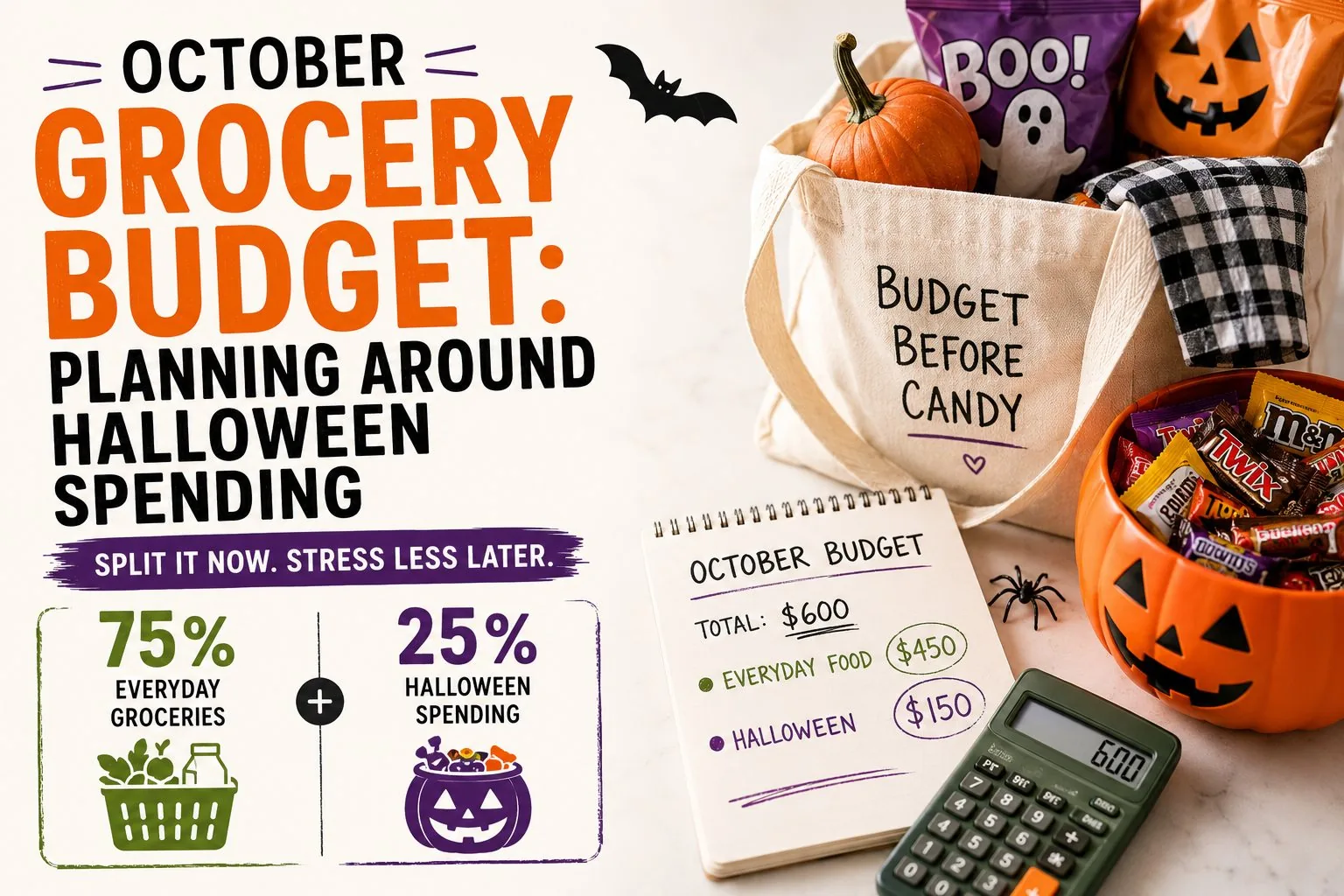
- Everyday groceries — 75% (your normal weekly meals, unchanged from any other month)
- Halloween spending — 25% (candy, party food ingredients, classroom treats — everything tied to October 31st specifically)
Split your own October grocery budget
October Grocery Budget Splitter
When to spend the Halloween 25%
The 25% isn’t one purchase — it lands in waves across the month. Spreading it out on a schedule keeps any single week from feeling like a budget spike:
Print a blank grocery budget worksheet
🎃 75/25 Grocery Budget Worksheet 🎃
Total October grocery budget: $_______
- Everyday groceries (75%): $_______
- Halloween spending (25%): $_______
Halloween 25% breakdown
- Party food: $_______
- Classroom treats: $_______
- Candy: $_______
- Decorations: $_______

What counts as Halloween?
The most common way this budget breaks: nobody agreed on what “Halloween spending” actually includes.
✅ Candy
✅ Classroom treats
✅ Decorations (if they're coming out of the grocery budget at all)
✅ Party food ingredients
❌ Weekly milk
❌ Bread
❌ Fruit
❌ Lunches
What typically fills the Halloween 25%
- Candy
- Classroom snacks
- Party food
- Drinks
- Ice
- Disposable plates
- Decorations
A worked example
Halloween spending, on a $600 October budget$150
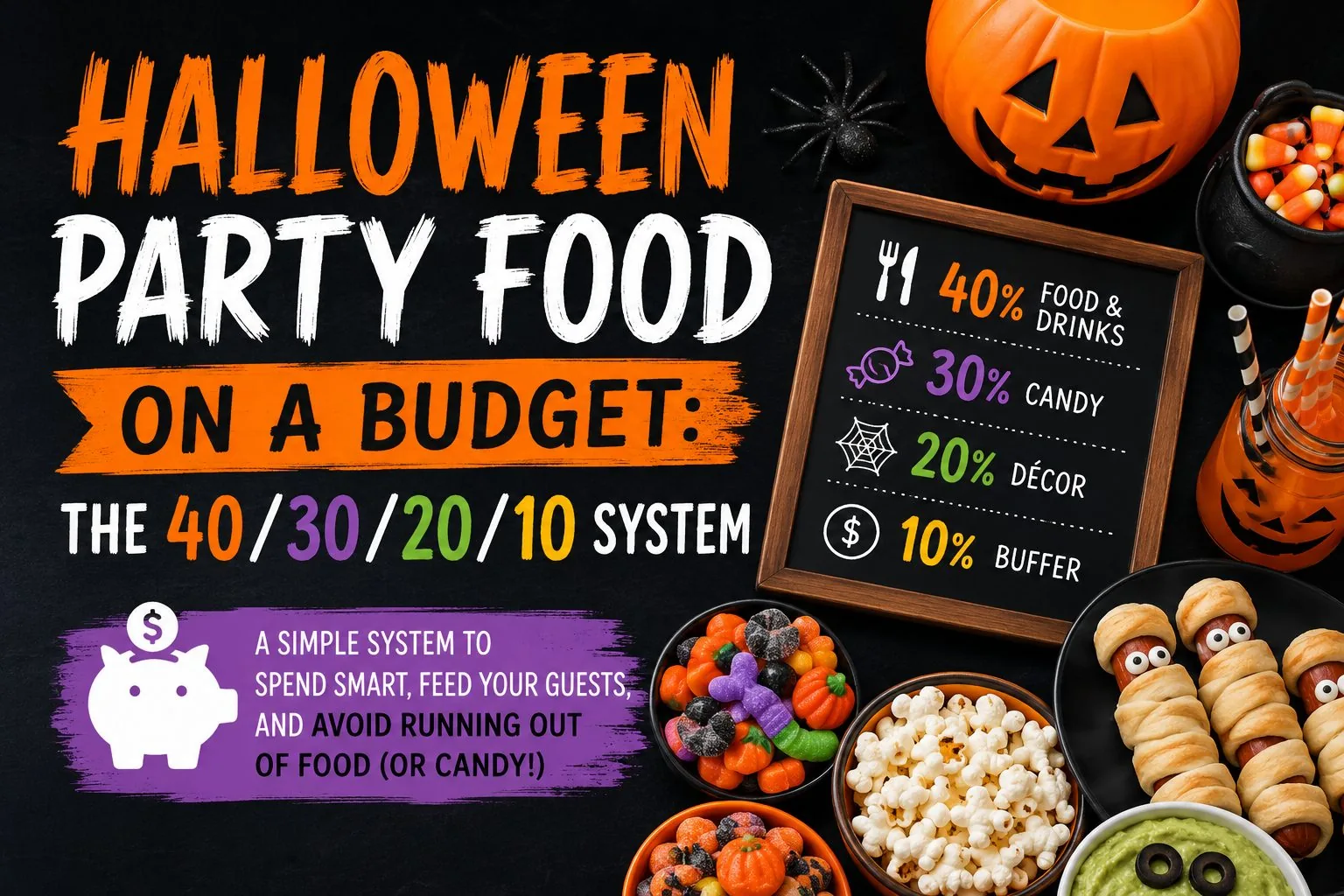
A $600 October grocery budget splits into $450 for everyday meals and $150 for everything Halloween — candy, the party food from the 40/30/20/10 system, and classroom treats. That $150 is exactly the number to track separately, so a candy run doesn’t quietly borrow from next week’s dinner money.
Keeping the two totals separate in practice
- Buy Halloween items in a separate transaction from your weekly grocery run when you can
- If your store or app allows it, use a separate list or category for "Halloween" purchases
- Buy candy in the last week of October — prices and selection are worse in early October, but buying too early also invites snacking through your own stash
- Track the Halloween 25% against the actual party food and classroom budgets from this site's other posts, not as one lump guess
Why splitting the month beats one big number
A single October grocery budget number tells you when you’ve overspent — after it’s already happened. The 75/25 October Split tells you which spending is over, while there’s still time to adjust either side. That’s the difference between a grocery budget with halloween spending built in, and one that gets blindsided by it every year.
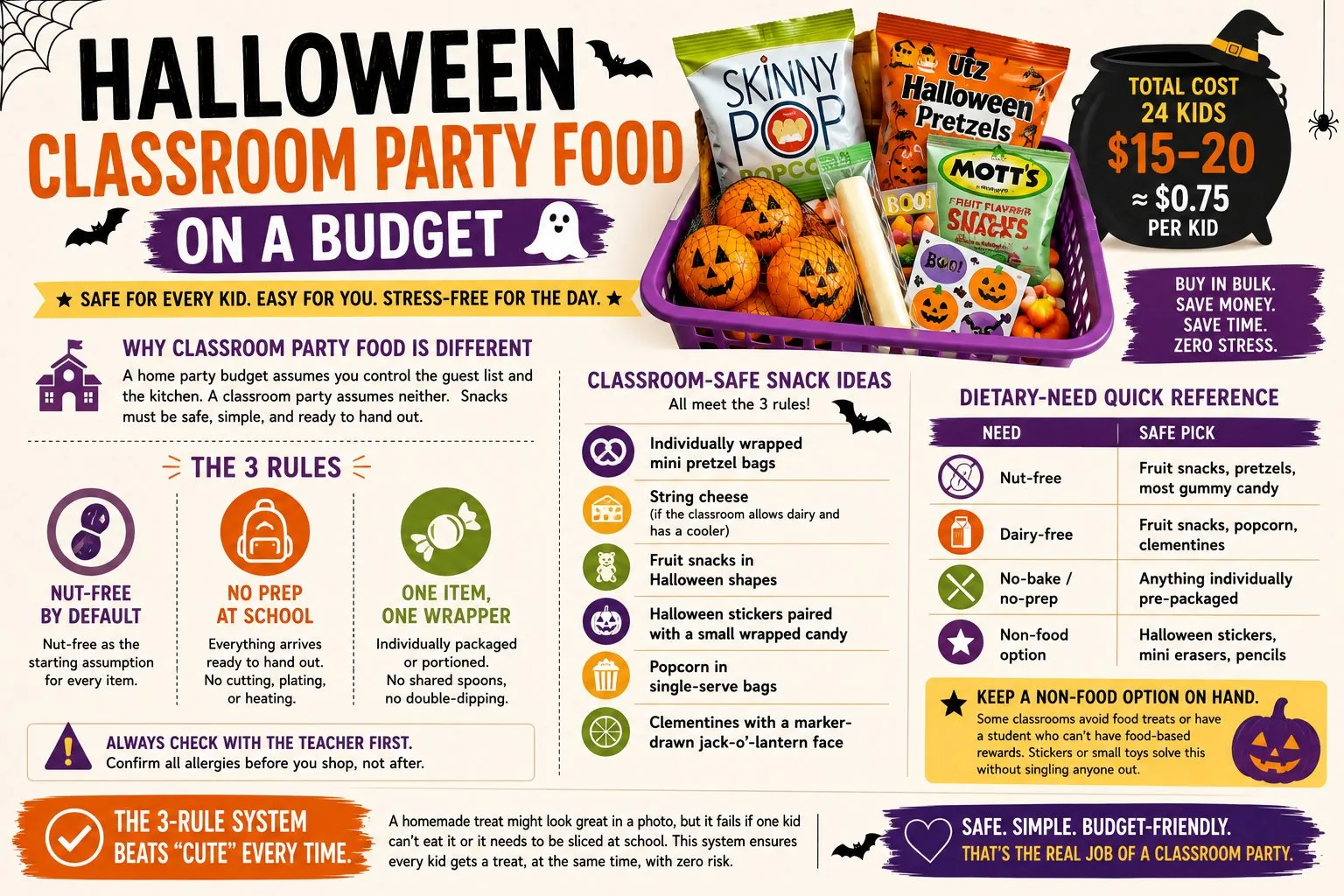
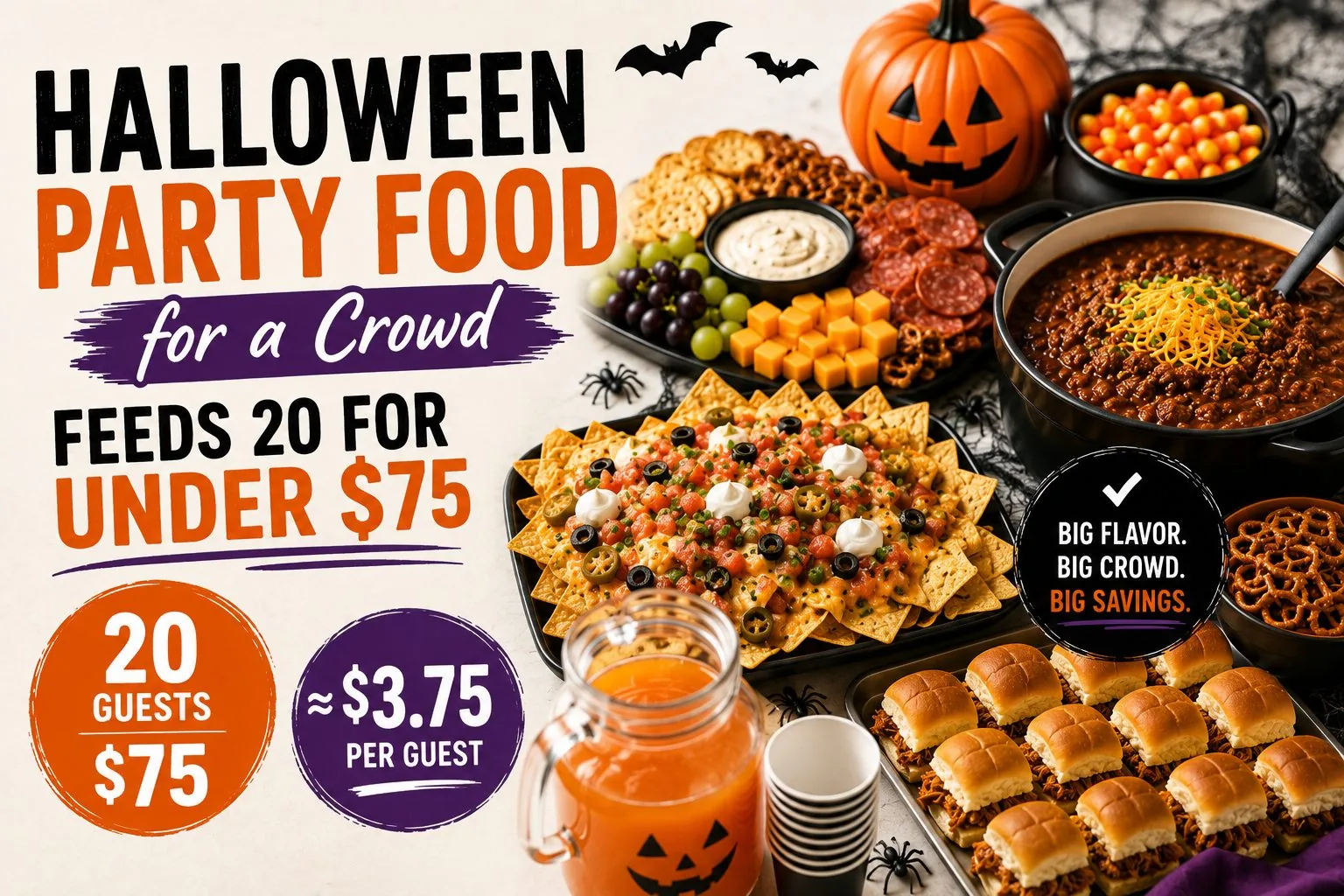
For the two biggest chunks of that 25%, see Halloween Classroom Party Food on a Budget and Halloween Party Food for a Crowd — both are built to fit inside this same split.
Turn the idea into a system.
Keep Reading