Most Halloween party budget advice stops at “set a budget.” It never tells you how much of that number should actually go to food versus candy versus decorations — so you end up guessing, overspending on string lights, and scrambling for food money the week of. This is a system for Halloween party planning instead of a guess.
The problem with a single Halloween number
A round number like “$150 for the party” feels like a Halloween party budget, but it isn’t one until it’s split. Without a split:
- The food table gets whatever’s left after décor, which is usually not enough
- Candy gets bought last, in a panic, at whatever price is left on the shelf
- Décor — the most “optional” category — quietly eats 40%+ of the Halloween food budget because it’s the most fun to shop for
The 40/30/20/10 System
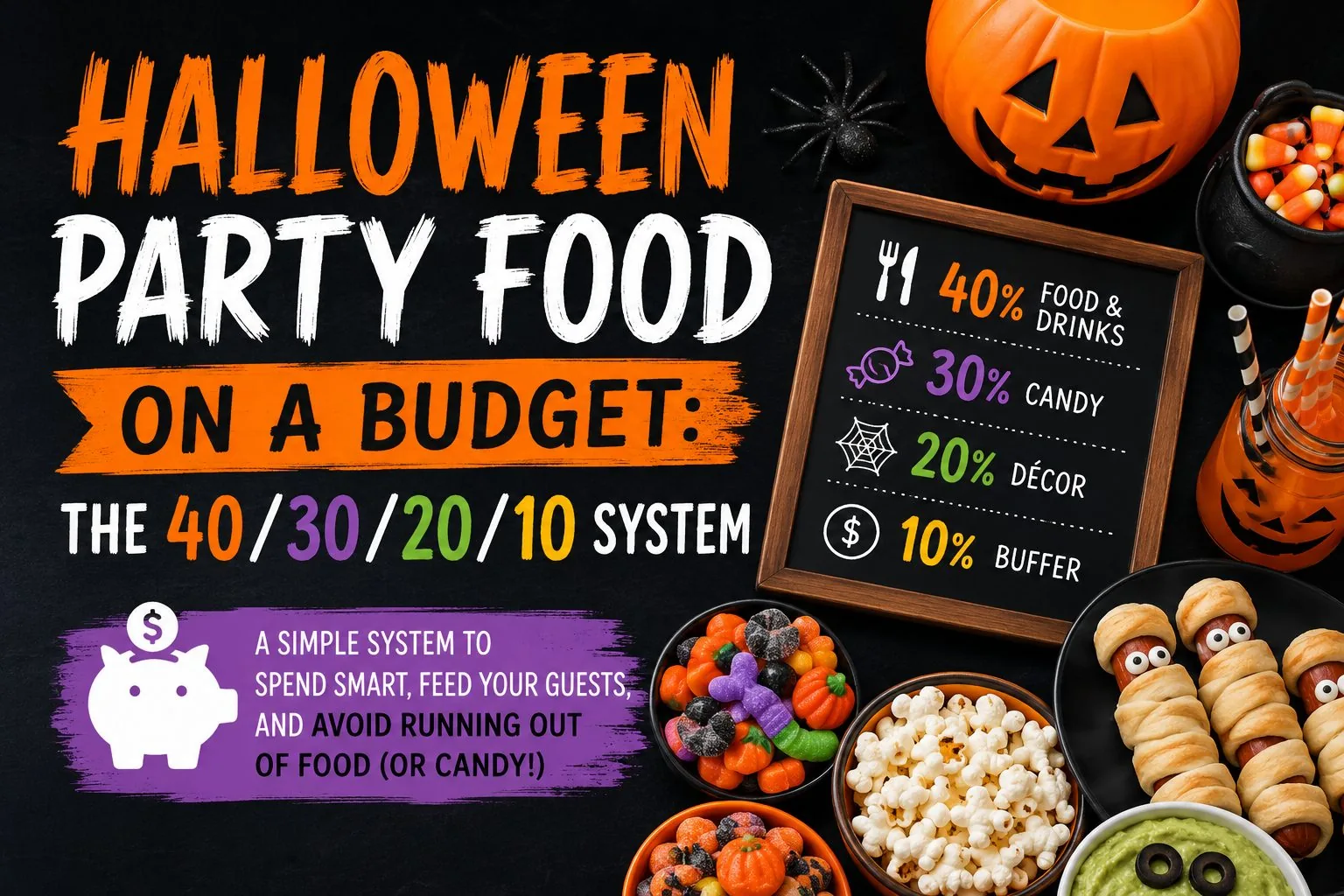
Instead of one lump sum, this system divides any Halloween party food budget into four fixed categories, in this exact order of priority:
The 40/30/20/10 Split
- Food & Drinks — 40% (the main event — this is what guests actually eat and remember)
- Candy — 30% (the one category that runs out mid-night if under-funded)
- Décor — 20% (capped on purpose — this is where overspending happens)
- Buffer — 10% (the always-something category — more on this below)
Why 40%? Not 50%, not 35%
Most guests remember two things after a Halloween party:
- Was there enough food?
- Was there enough candy?
Almost nobody remembers whether you bought three spiderwebs or five. That’s the whole logic behind the ratio:
- Food gets the largest share (40%) because it’s the single biggest driver of whether adult guests think the party was actually good.
- Candy gets the second-largest share (30%) because trick-or-treaters — and their parents — are the loudest, fastest critics of a house that runs out.
- Décor is capped at 20%, not because it doesn’t matter, but because it’s the category most likely to balloon past what anyone will actually notice.
- Buffer holds 10% because on the one night of the year when your door won’t stop opening, something always comes up.
Find your Halloween party budget
Don’t guess. Enter your total budget below and instantly see exactly how much to spend on food, candy, decorations, and your emergency buffer.
40/30/20/10 Halloween Budget Calculator
Print a blank worksheet
Prefer pen and paper, or planning without a screen? Print this and fill in the blanks.
🎃 40/30/20/10 Budget Worksheet 🎃
Total party budget: $_______
- Food & Drinks (40%): $_______
- Candy (30%): $_______
- Décor (20%): $_______
- Buffer (10%): $_______

Example Halloween party budgets
Here’s what the split actually looks like at five common budget levels, with real halloween party food ideas on a budget for each one.
$50 party — the bare-bones budget
Food $20 · Candy $15 · Décor $10 · Buffer $5
Ideas: frozen pizza, a popcorn bar, DIY punch, chips and dip, dollar-store décor, one string of orange lights.
$100 party — the standard budget
Food $40 · Candy $30 · Décor $20 · Buffer $10
Ideas: a hot dog or chili bar, a veggie tray, 2-liter sodas, name-brand mini candy split across two varieties, a small fog machine rental, yard string lights.
Food & Drinks, on a $150 budget$60
$150 party — the full hosting budget
Food $60 · Candy $45 · Décor $30 · Buffer $15
Ideas: a taco or sloppy joe bar, a full drink station, a dessert table, enough candy for 60-80 trick-or-treaters, a fog machine, full yard lighting, a designed entry display.
$250 party — the go-big budget
Food $100 · Candy $75 · Décor $50 · Buffer $25
Ideas: a full taco or chili bar plus apps and desserts for 20-25 guests, name-brand bulk candy for a high-traffic block, a professional-style yard display with lighting and fog, an allergy-friendly treats table.
Quick reference: every budget, broken down
A cheap Halloween party doesn’t need a calculator every time — here’s the split at a glance.
| Budget | Food | Candy | Décor | Buffer |
|---|---|---|---|---|
| $50 | $20 | $15 | $10 | $5 |
| $75 | $30 | $22.50 | $15 | $7.50 |
| $100 | $40 | $30 | $20 | $10 |
| $150 | $60 | $45 | $30 | $15 |
| $200 | $80 | $60 | $40 | $20 |
The Buffer is the category that saves the party
Ten percent feels small when you’re building the budget — until the night of Halloween entertaining actually happens. The Buffer is the category that almost always gets used, because something always comes up:
- Extra ice
- Batteries for decorations that die mid-party
- More cups than you planned for
- A forgotten ingredient run
- Pumpkin carving tools
- Backup pizza delivery if food runs low
- Extra candy for a bigger-than-expected crowd
- Allergy-friendly treats for one more kid than you planned for
Skip the Buffer, and any one of these comes straight out of Food or Candy — the two categories you can least afford to shortchange.
Biggest Halloween party budget mistakes
A quick halloween party checklist of the mistakes that blow up a budget before the party even starts:
- Buying decorations before planning food
- Waiting until October 30 to buy candy, when prices spike and selection disappears
- Forgetting drinks entirely
- Ignoring serving supplies — plates, cups, and napkins add up fast
- Not leaving any emergency money (see: the Buffer, above)
Adjusting the split for your situation
- Not doing trick-or-treaters at your event? Shift 10-15 points from Candy to Food & Drinks.
- Décor already own from last year? Redirect that 20% to Food & Drinks or Candy.
- Big trick-or-treat street (100+ kids)? Shift 10 points from Décor to Candy.
Why a split beats a single number
A single Halloween food budget number tells you the ceiling. The 40/30/20/10 system tells you where every dollar under that ceiling is supposed to go before you start shopping — so décor doesn’t quietly eat the food money, and the two things guests actually notice (food and candy running out) never run dry.
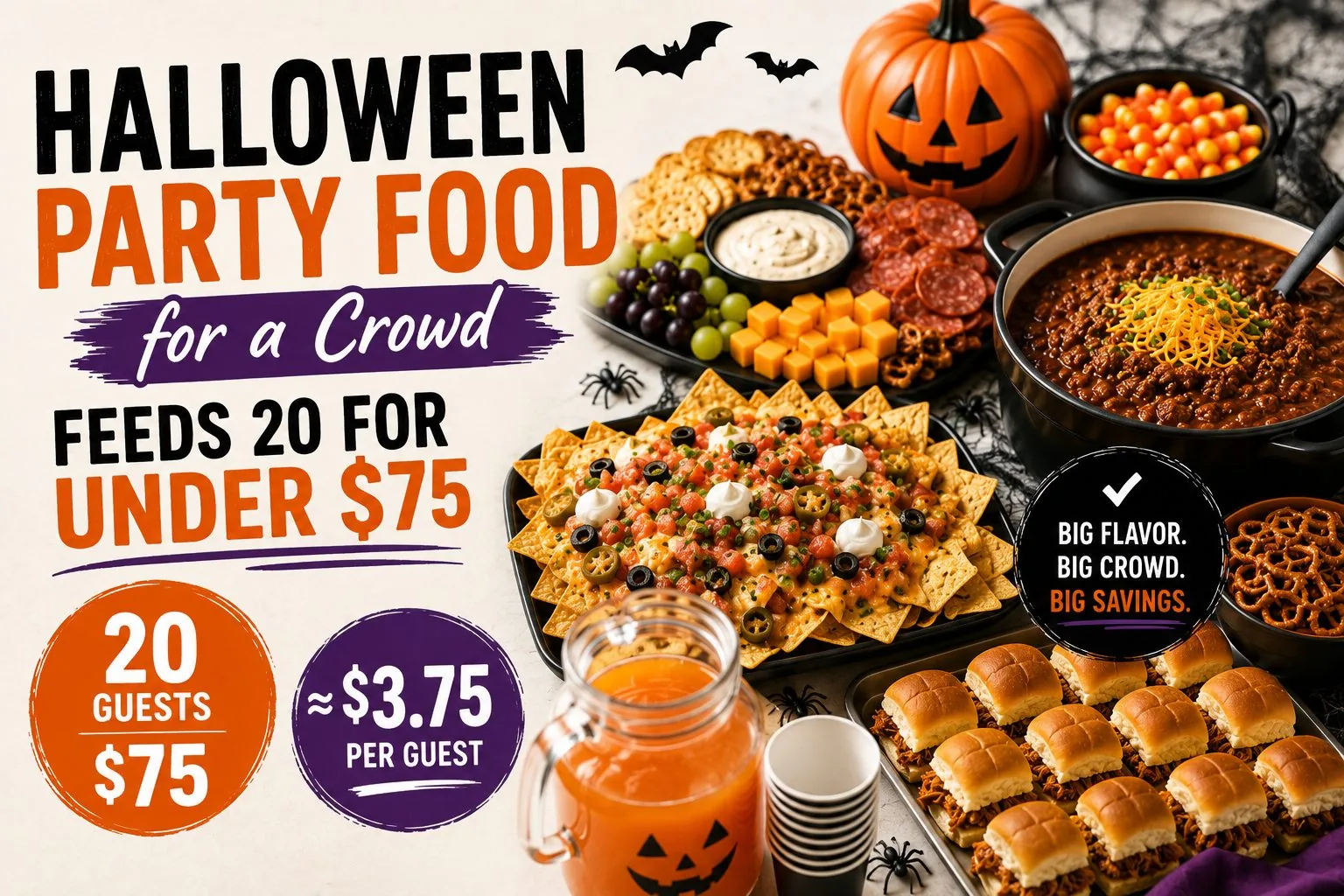
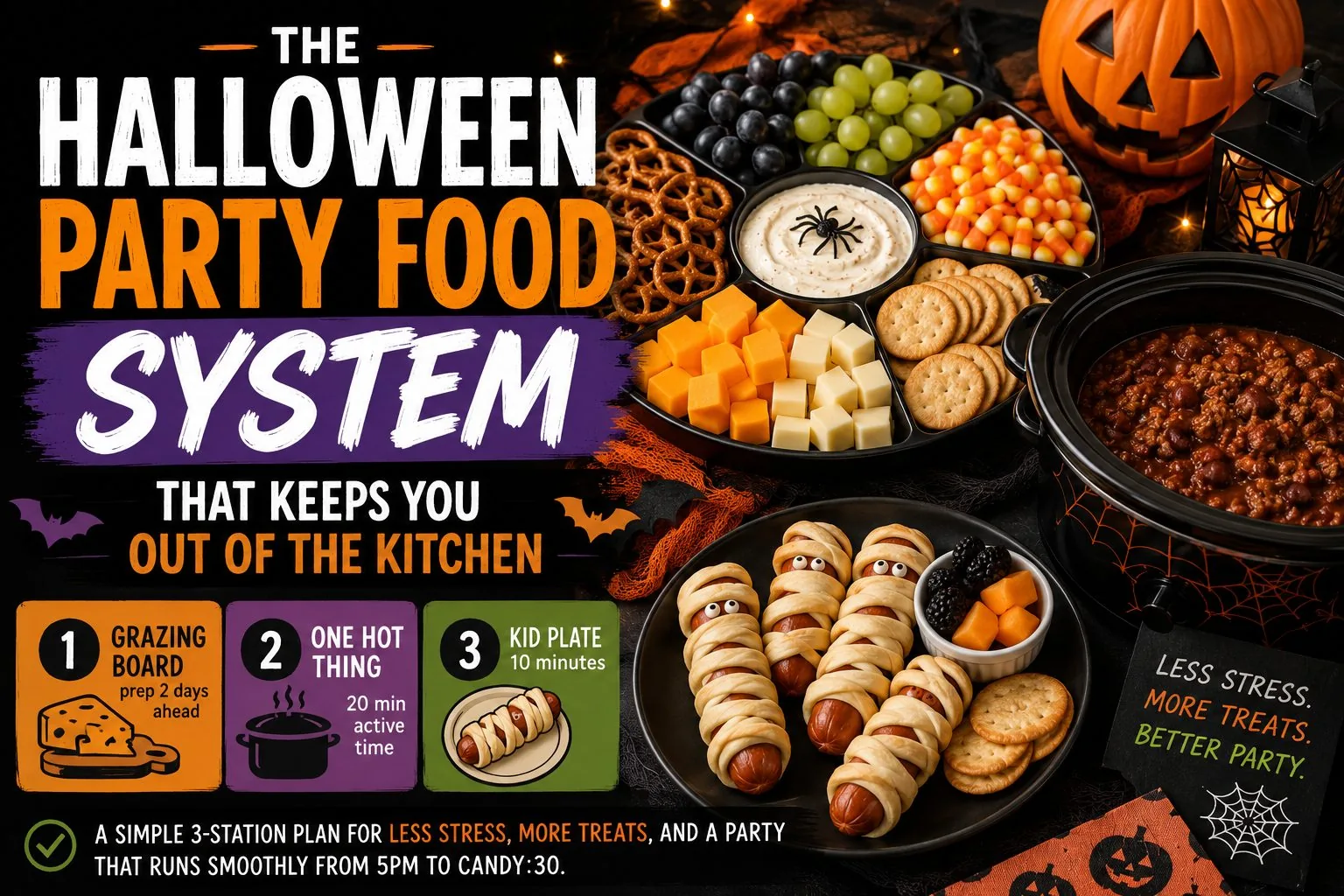
Hosting more than 12-15 people? See Halloween Party Food for a Crowd for how this same food share scales past 20 guests. And if you want the actual station-by-station cooking plan behind the “Food & Drinks” 40%, that’s The Doorbell-Proof Party System. Want this whole split on one page instead of a calculator? Grab the free Halloween Party Meal Planner printable.
Want every worksheet in one place? Grab the free Halloween Planning Kit — this budget split, plus 11 more, in one printable workbook.
Turn the idea into a system.
Keep Reading