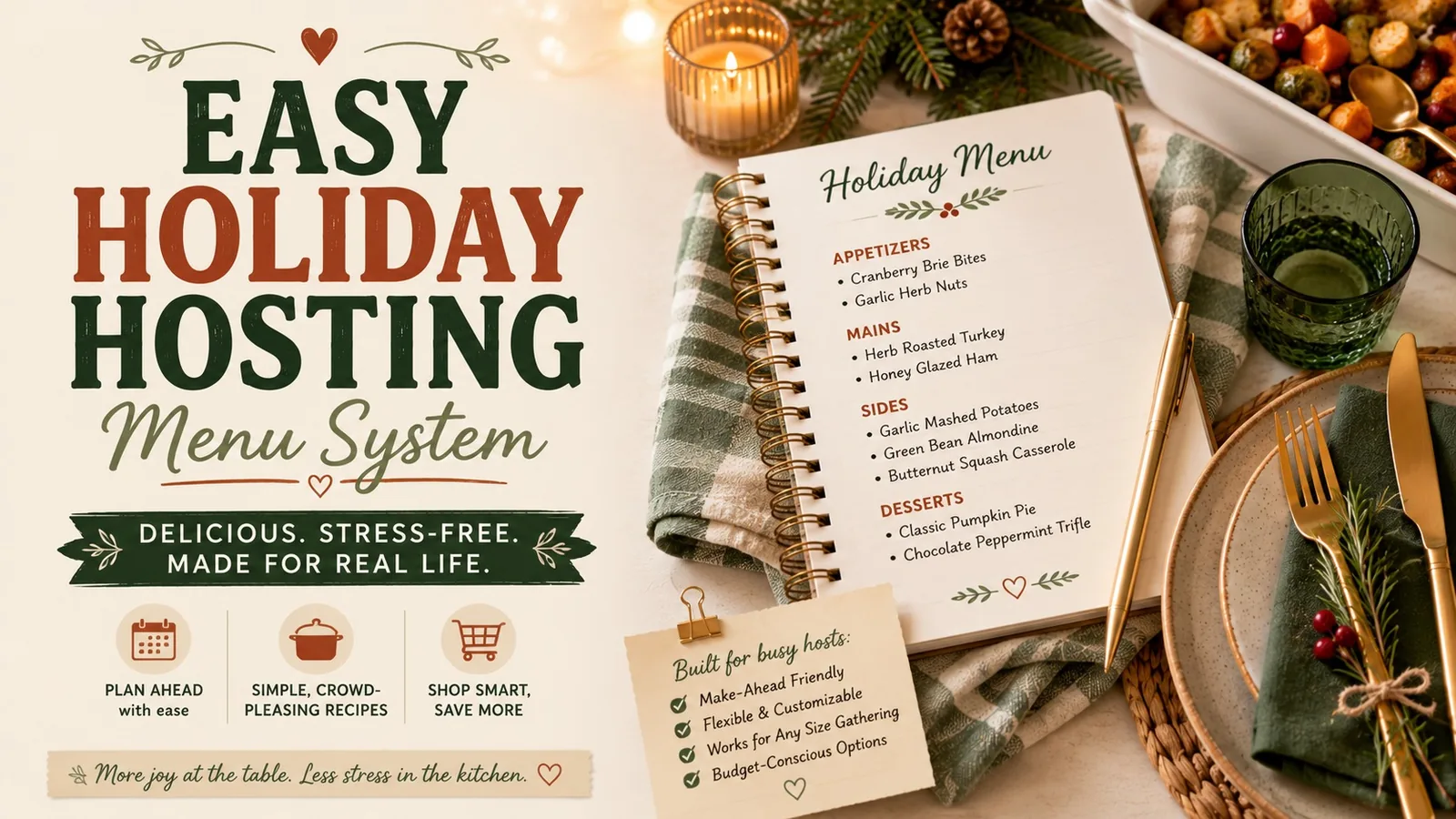
Holiday hosting gets difficult when every dish is planned independently. You end up with a menu that looks good on paper but fails in the kitchen: three things need the oven at different temperatures, two sauces need whisking at the same moment, and the one dish you meant to make ahead somehow still needs chopping while guests are arriving.
The fix is not a longer recipe list. It is a menu system that plans around attention, equipment, and timing.
The 2–2–1 Holiday Menu System
Build your menu from five roles:
- 2 anchor dishes — the foods people expect and care about most
- 2 low-attention sides — dishes that can be made ahead, held warm, or finished quickly
- 1 flexible extra — salad, bread, cold platter, or another dish that never competes for oven space
This is enough food for a complete-feeling meal without turning your kitchen into a production line.
Step 1: Pick the two dishes that actually matter
Every holiday table has a few foods people would notice if they were missing. Those are your anchors.
For one family, that might be roast chicken and mashed potatoes. For another, ham and macaroni and cheese. The point is to identify what deserves the most effort before you start adding extras.
Ask two questions:
- What will people genuinely remember?
- What would feel disappointing if it were missing?
Everything else is supporting cast.
Step 2: Give every dish an equipment label
Before finalizing the menu, label each item:
- oven
- stovetop
- slow cooker
- cold
- room temperature
- reheat only
Then look for collisions.
| Dish | Equipment | Active attention | Can be made ahead? |
|---|---|---|---|
| Roast | Oven | Low | Partly |
| Mashed potatoes | Stovetop | Medium | Yes |
| Green beans | Stovetop | Medium | Partly |
| Salad | Cold | Low | Mostly |
| Rolls | Oven | Low | Yes |
If four items say “oven,” you do not have a menu yet. You have a scheduling problem.
Step 3: Use the one-live-dish rule
A live dish is anything that needs your hands during the final 20 minutes before serving: sautéing, whisking, frying, carving while something else burns, or assembling something delicate.
Try to have no more than one live dish in that final window.
Everything else should be:
- holding warm;
- already plated;
- reheating unattended;
- cold and ready;
- or waiting to be carved/served.
This rule changes holiday cooking immediately because it forces you to design for the moment when your kitchen is busiest.
Step 4: Make the menu backwards from serving time
Pick the time you want people to eat. Then assign every dish a finish state.
For a 5:00 pm meal:
| Time | What should be true |
|---|---|
| 4:00 | table set, cold dishes finished |
| 4:15 | make-ahead sides reheating |
| 4:30 | main dish resting or nearly done |
| 4:40 | one live side begins |
| 4:50 | carve, garnish, move food to serving dishes |
| 5:00 | eat |
The exact times will vary, but the structure matters: you are planning finish states, not just recipes.
Step 5: Build a make-ahead ladder
Divide prep into three levels.
Two days before
Do anything that improves or holds well:
- sauces
- desserts
- casseroles
- chopping sturdy vegetables
- dressings
- table setup
The day before
Do assembly work:
- prepare sides for reheating
- portion ingredients
- set serving utensils with the correct dishes
- move frozen items to the refrigerator if needed
Day of
Only keep tasks that actually benefit from being fresh.
- Main dish cooking
- One live side
- Final reheating
- Fresh salad or garnish
- Carving and serving
If your day-of list is much longer than that, move something backward.
A complete menu example
Here is what the system looks like in practice:
Simple Holiday Dinner for 8
Anchor 1: herb roast chicken
Anchor 2: creamy mashed potatoes
Low-attention side 1: make-ahead roasted carrots, reheated
Low-attention side 2: green bean casserole, assembled the day before
Flexible extra: winter salad + store-bought rolls
Only the chicken truly owns the oven for a long period. The casserole can reheat while the chicken rests. The potatoes can be made ahead and warmed gently. The salad needs no heat at all.
That is what a workable menu looks like: not fewer flavors, just fewer simultaneous demands.
What to remove first when the menu gets too big
When you have added too much, cut in this order:
- duplicate starches;
- a second complicated vegetable;
- any appetizer that requires cooking right before guests arrive;
- homemade bread if bread is not central to the meal;
- the dessert that exists only because “we should probably have another dessert.”
Keep the dishes people actually care about.
The emergency substitution list
Write one substitution beside every major menu component before shopping.
- homemade rolls → bakery rolls
- scratch dessert → bakery pie + whipped cream
- sautéed vegetable → bagged salad
- elaborate appetizer → cheese, crackers, fruit
- second hot side → cold side
You may never use these, but they prevent one missing ingredient or bad day from forcing you to redesign the entire meal.
The hosting question that saves the most work
Before adding any dish, ask:
What does this dish cost me in the final hour?
Not dollars. Attention.
A beautiful side that needs 25 minutes of constant attention at 4:30 pm is expensive. A casserole assembled yesterday and reheated while the roast rests is cheap.
That is the real logic behind an easy holiday menu: spend your attention where guests will notice it most, and design everything else to stay out of the way.
Turn the idea into a system.
Keep Reading